Buffalo Dreaming
Buffalo History Museum, Portico Gallery
Buffalo, New York
September 30, 2022
In Japan, the sixtieth year carries a weight that the number alone does not convey. Kanreki, the return of the calendar, marks the completion of the sixty-year cycle of the Japanese calendar, the point at which the cycle closes and begins again. It is understood not as an ending but as a threshold, the beginning of a second life. When Buffalo and Kanazawa reached that threshold in 2022, the Japan Culture Center of Western New York commissioned Cooley to make a work for the occasion. The form the work took was not incidental.
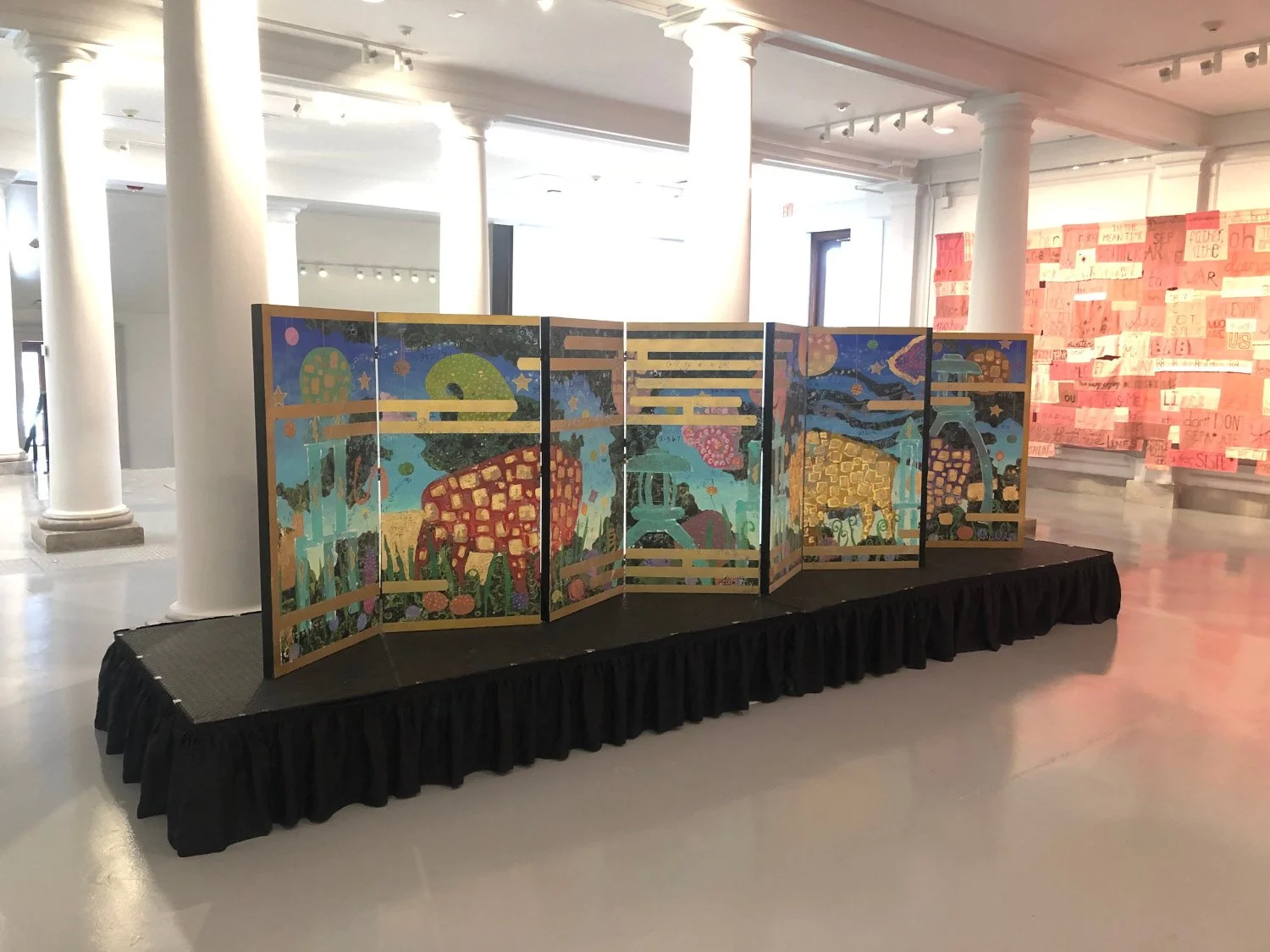
The byobu, the wooden Japanese folding screen, is one of the oldest formats in East Asian art, and one of the most spatially intelligent. It does not hang flat against a wall. It stands in the room, its hinged panels angled into three dimensions, the painted world it carries stepping forward into the space around it. To commission a byobu for this particular anniversary, a relationship between a Japanese city and an American one, was to choose a form that had always understood how to hold more than one world at once.
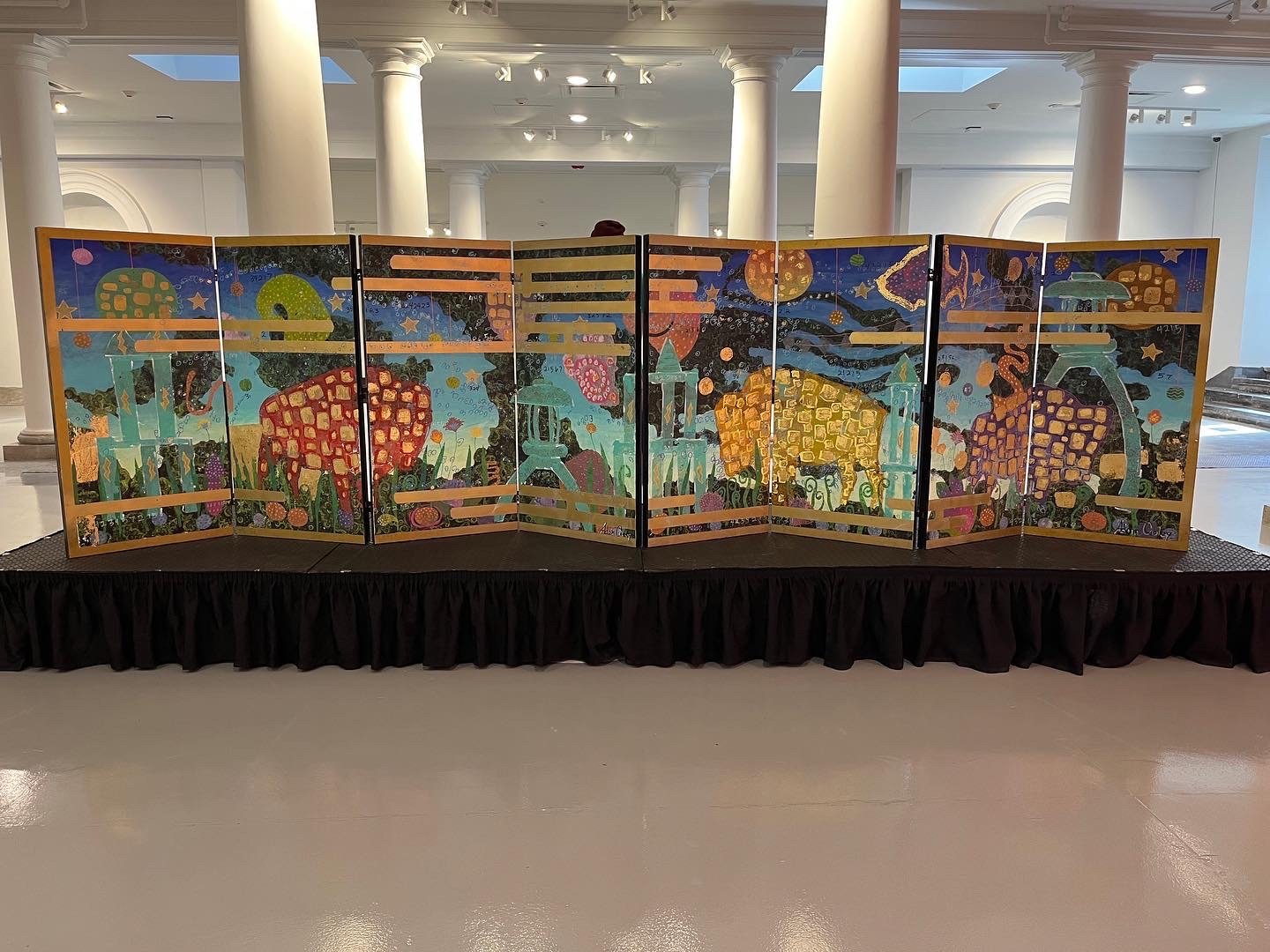
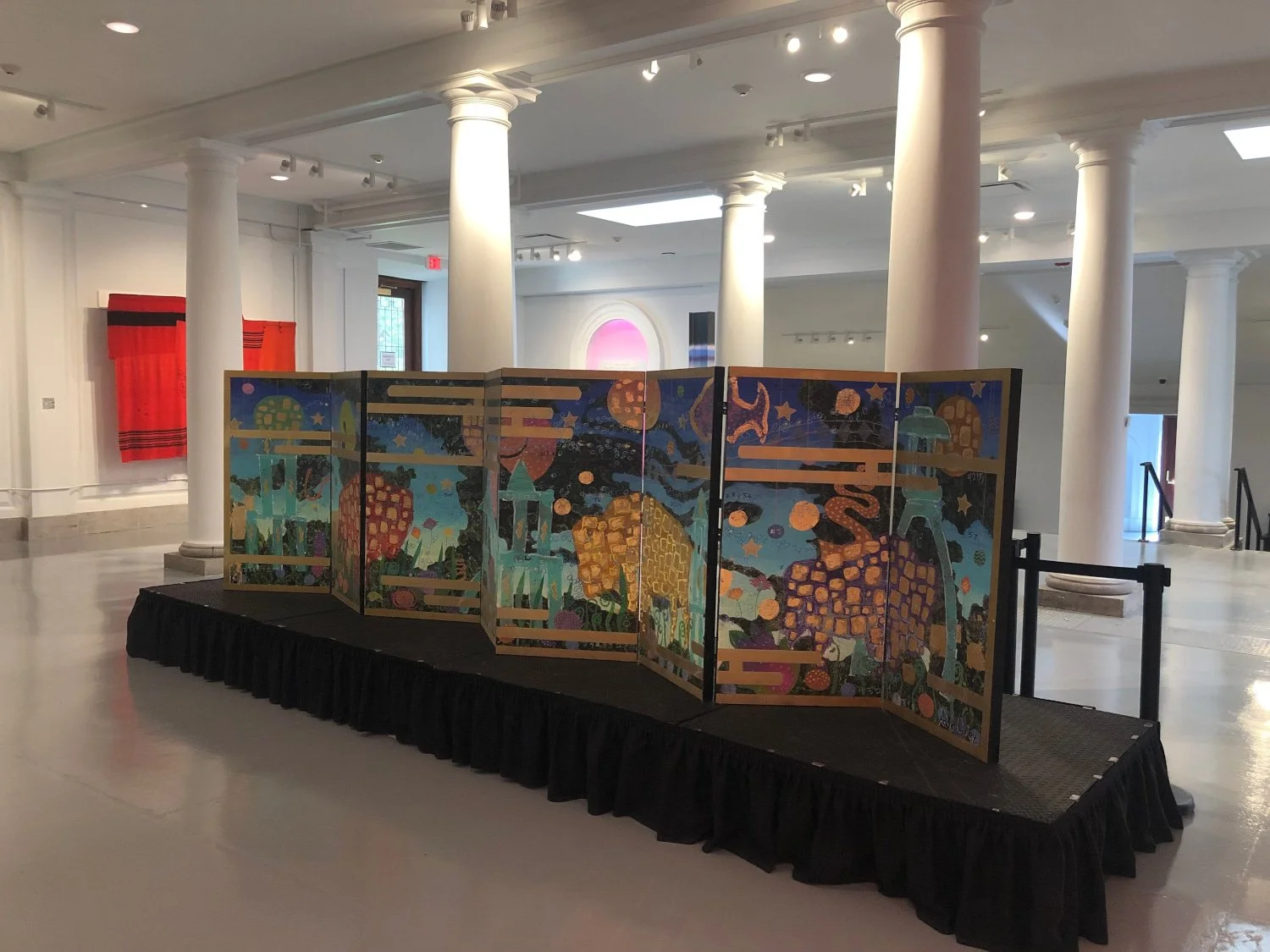
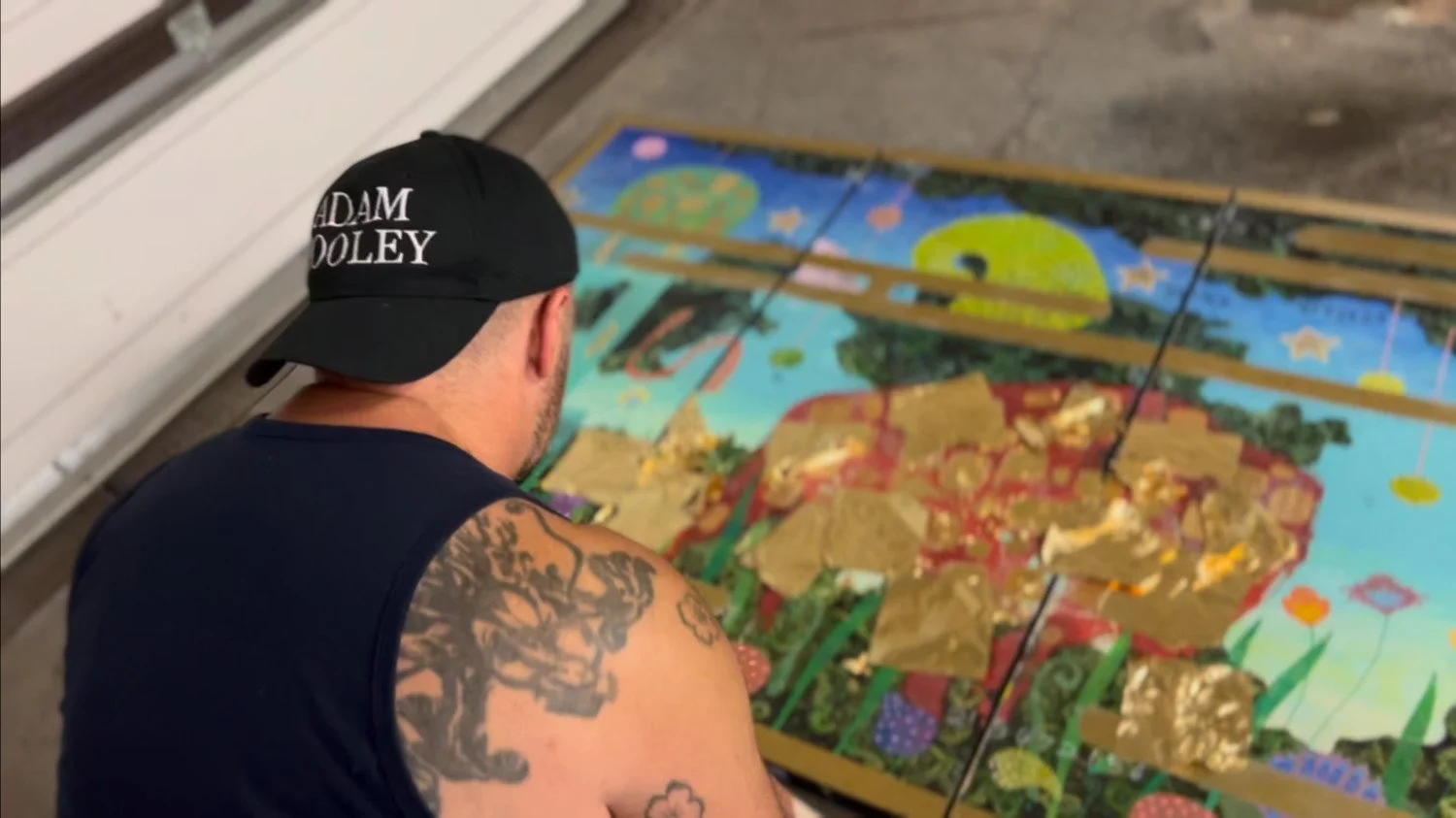
Buffalo Dreaming is four feet tall and sixteen feet wide, painted in acrylic and wax on panel across eight hinged sections in two four-panel halves. Gold horizontal bands traverse all eight panels, a convention of classical Japanese screen painting where cloud and mist compress time and distance into a single surface, here carrying both cities simultaneously. Bison move through the composition in warm patchwork forms against grounds of deep teal and midnight blue, the animal that names Buffalo crossing a landscape that answers to its own internal logic. At the centre the kotoji lanterns of Kanazawa rise, those bridge-shaped stone forms that have stood at the edge of Kenroku-en garden for centuries. Thirteen stars and thirteen lightning bolts from the flag of Buffalo move through the upper registers. The geometry of the landscape holds the memory of the city's steel history without announcing it. Numbers run through the composition in Cooley's characteristic private notation, present as always, explained as never.
The screen was built to be divided. One four-panel section would remain in Buffalo, the other travel to Kanazawa, the two halves to be reunited at future sister city events. The separation was designed into the work from the beginning, the byobu form lending itself to exactly that kind of parting: two complete things that are also halves of a single thing, held apart by geography and joined by the occasion that made them.
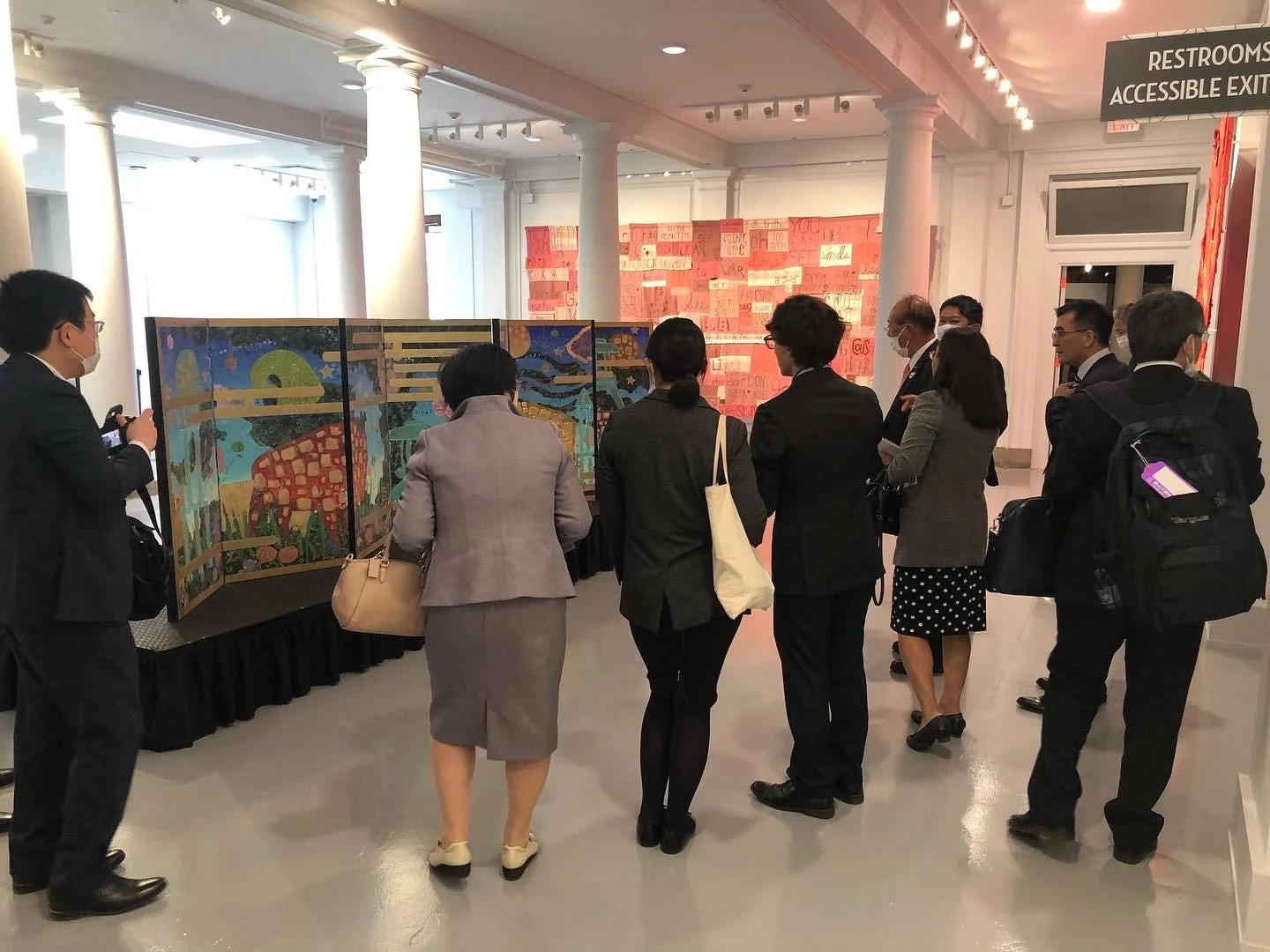
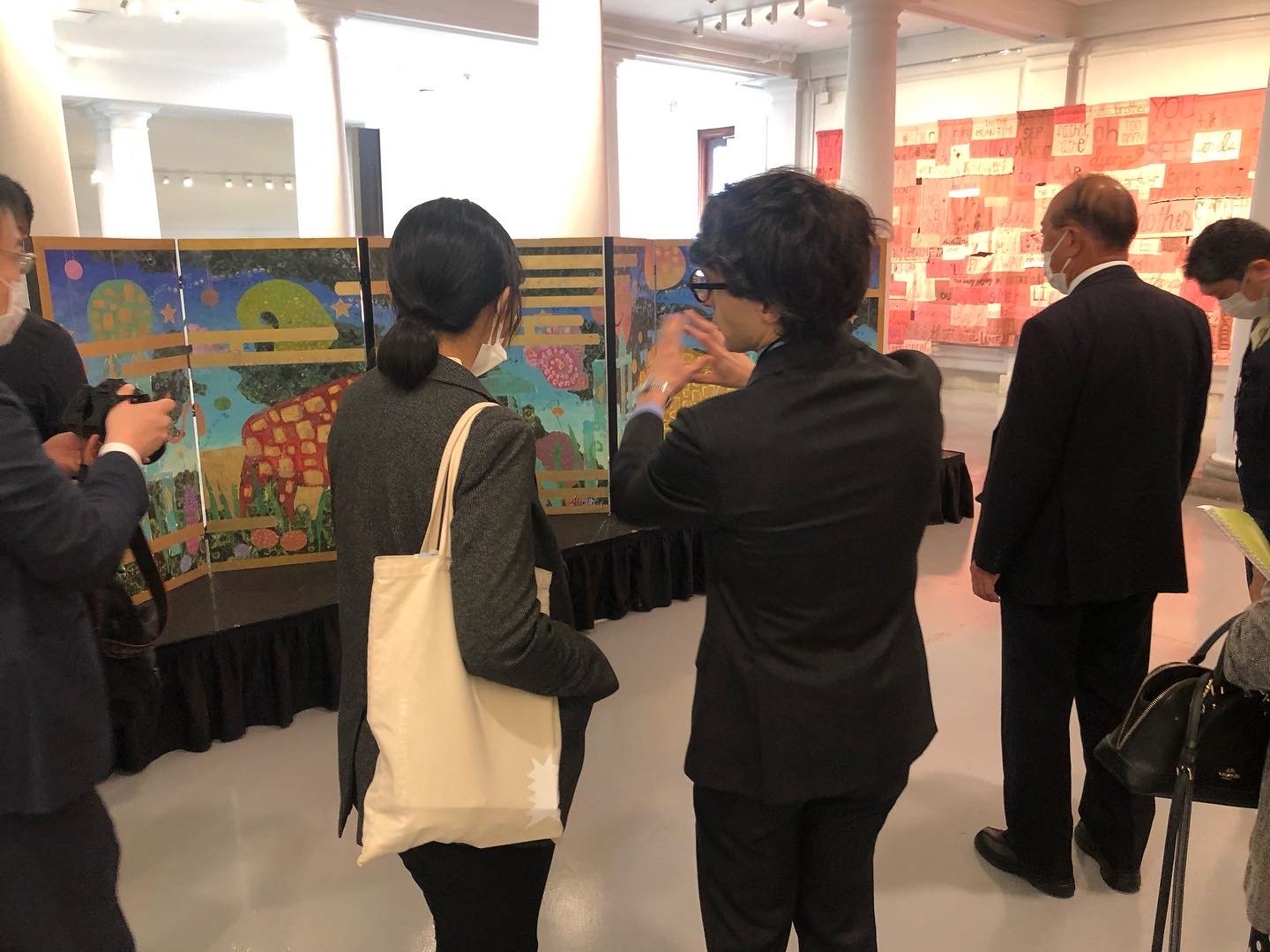
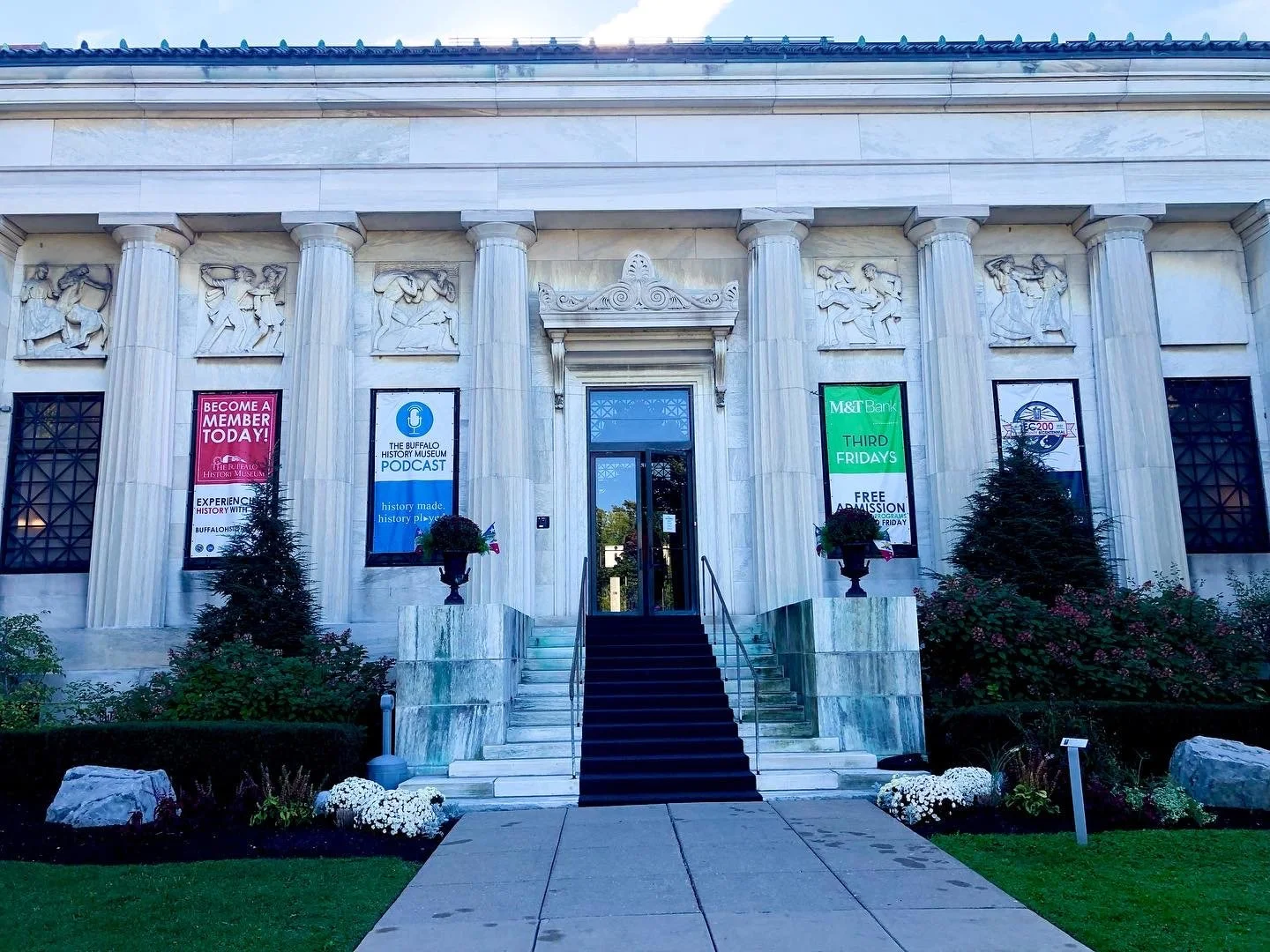
The unveiling took place on September 30 at the Portico Gallery of the Buffalo History Museum, a newly renovated space of genuine civic scale, in the presence of the mayors of both cities and their delegations. The museum holds the material record of western New York across more than a century of institutional life, its collections the accumulated evidence of a region's history. That this work should find its first room there, the byobu standing in the Portico Gallery before the two mayors and the two cities they represent, was an occasion the form itself seemed to have been waiting for: a threshold moment, in a threshold space, marked by an object built entirely around the idea of two things belonging together across distance.