Monstrous Dreams: Yōkai of Japan
Revolution Gallery
Buffalo, New York
October 2022
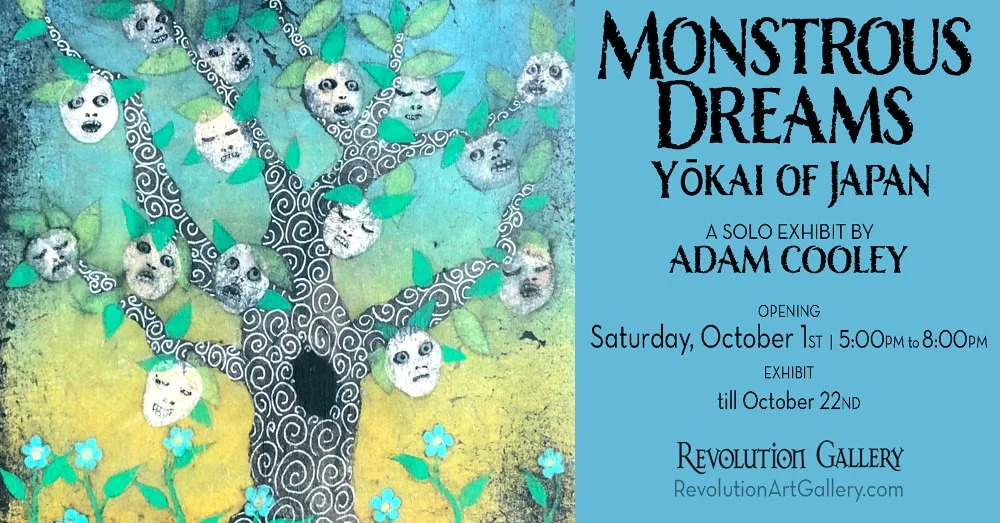
Japan has always kept its monsters close. They inhabit the margins of the visible world, appearing at dusk, at crossings, at the place where the familiar path runs out, and they are not, as Western tradition would have it, simply evil. They are ambiguous. They slip between categories. They are the form that uncertainty takes when it needs a body.
Cooley had been living among them for thirty years before this exhibition existed. The yōkai of Japanese folklore and mythology, that vast and restless population of supernatural beings, spirits, shape-shifters and gods, had entered his work gradually, the way all deep influences do, sideways and without announcement, until one day they were simply there. By the time he assembled them as a body of work, they were not subjects he had chosen so much as companions he had earned through three decades of immersion in a tradition that rewards sustained attention and punishes superficial engagement.
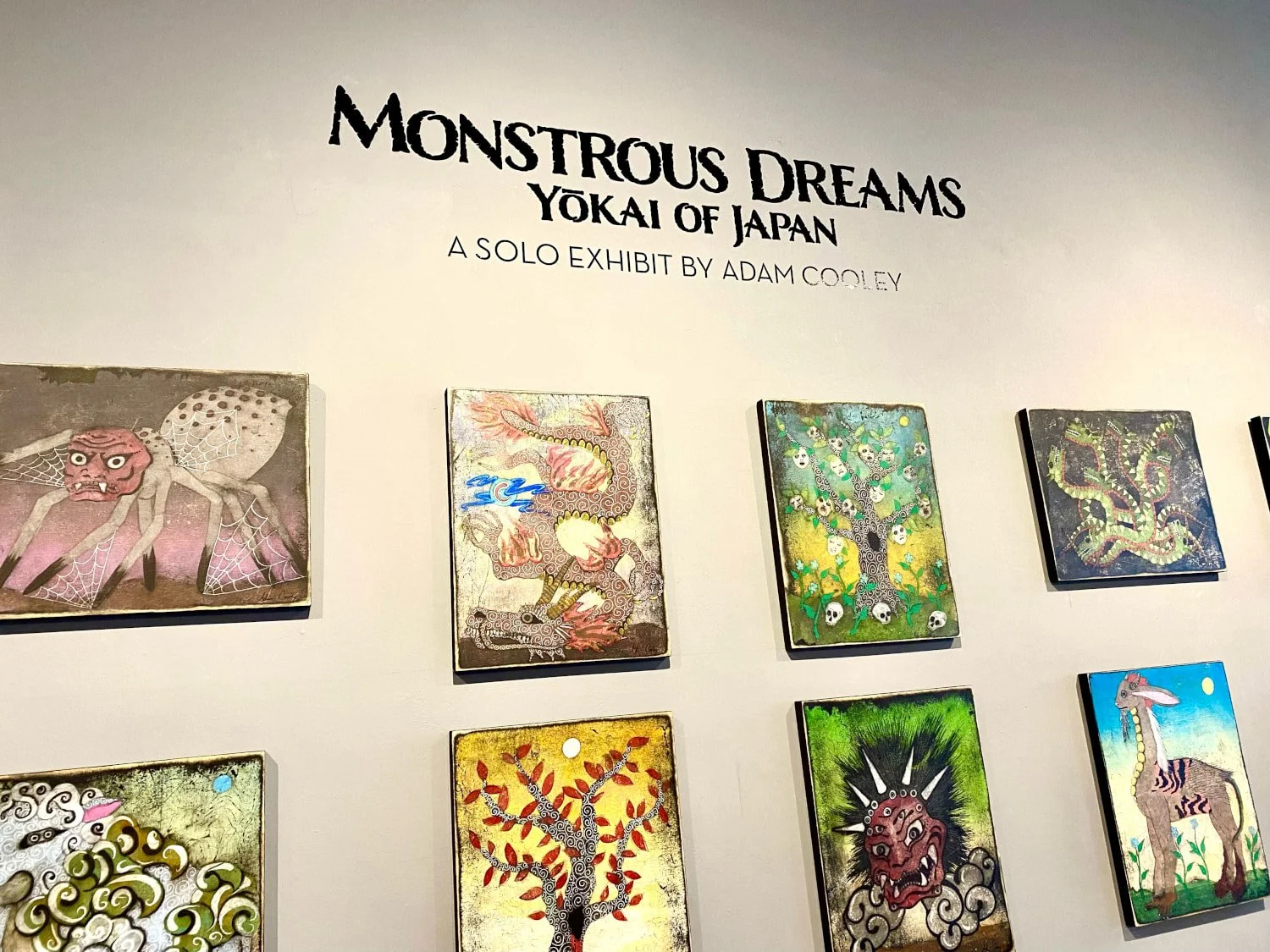
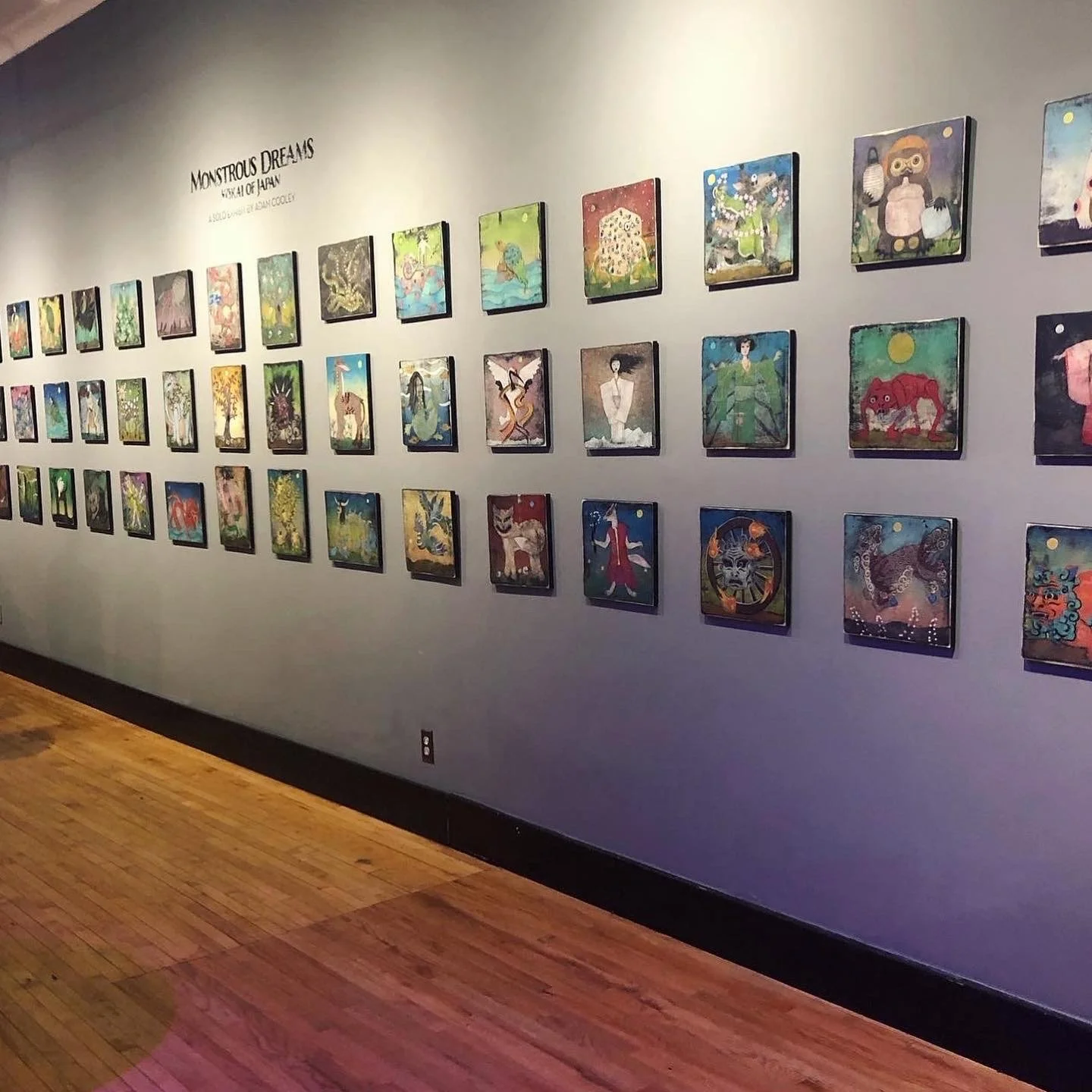
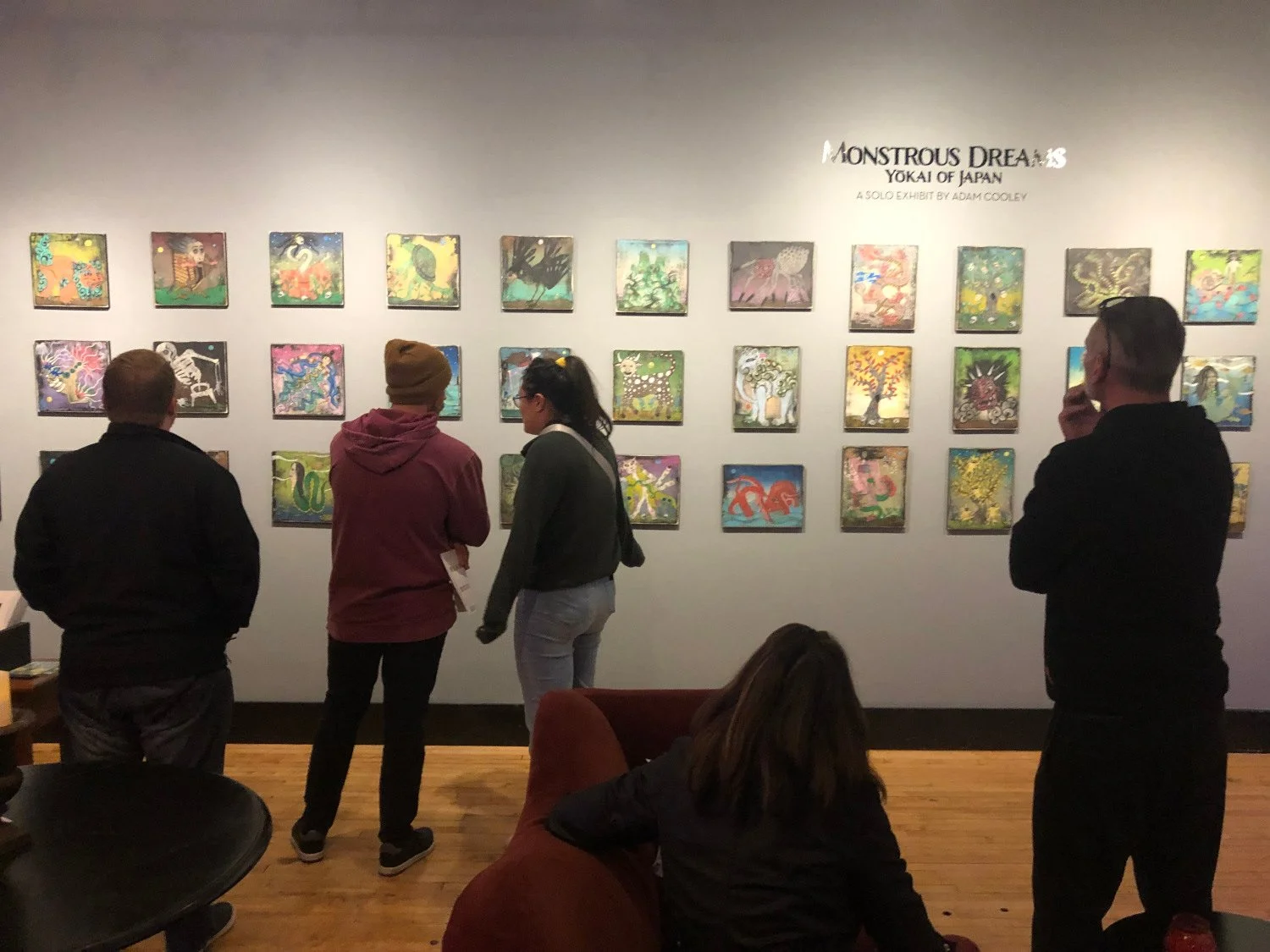
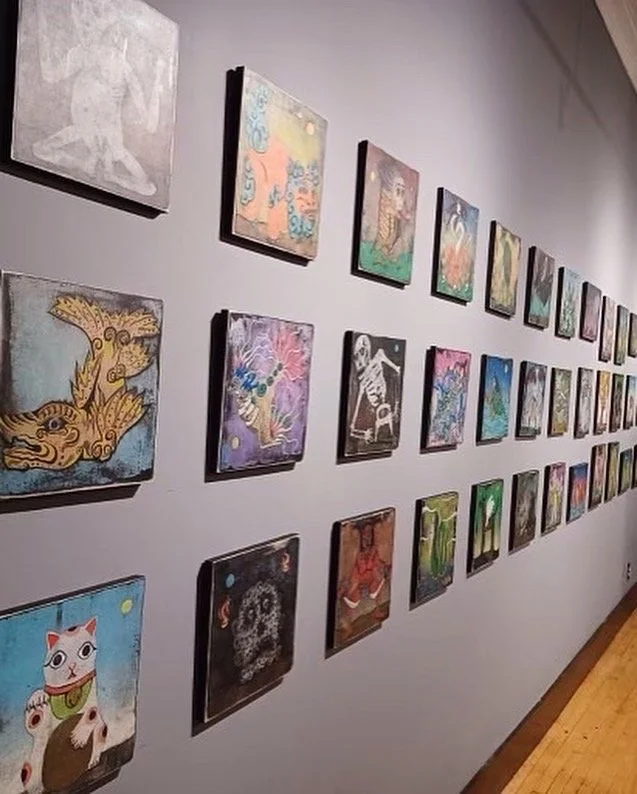
Each painting in Monstrous Dreams: Yōkai of Japan depicts a distinct figure from that tradition, built in acrylic and wax on panel through a process of sustained layering and abrasion. The surfaces are worked repeatedly, paint applied and sanded back until the image asserts itself through resistance rather than declaration. Dark borders frame every composition with the gravity of a woodblock print, and within them color shifts and deepens in ways that owe something to that lineage and more to something harder to place, the quality of images that feel genuinely retrieved rather than invented. Some figures are among the most celebrated in Japanese folklore. Others come from its more regional and obscure corners, known to few outside the tradition. The range was deliberate: not a survey of the famous but a genuine attempt to account for the full breadth of a world that has been accumulating its inhabitants across centuries.
The room that the exhibition made at Revolution Gallery had a quality that photographs only partially capture. The paintings covered the walls edge to edge, dark-bordered panels running in dense rows from one end of the gallery to the other, the accumulation of them producing an atmosphere that no single work could have generated alone. To stand in that room was to understand something about the scale of the project that the individual panels, each one complete in itself, did not announce. Together they constituted something that had not existed before: a complete accounting, in Cooley's own visual language, of a world he had been quietly absorbing for decades.
The show opened on the first of October, 2022, its timing coinciding with the unveiling of Cooley's large-scale byobu commission Buffalo Dreaming at the Buffalo History Museum the previous day, a work created to mark the sixtieth anniversary of the sister city relationship between Buffalo and Kanazawa, Japan. Those who attended both occasions understood something about the depth and consistency of what Cooley had been doing across thirty years of life between two cultures. The two events were not a retrospective or a celebration. They were simply what sustained practice produces when it reaches a certain density: multiple things happening at once, each one complete in itself, none of them requiring the others to justify their existence.
The show was extended once, then again. For the better part of a year, some portion of Monstrous Dreams remained on view at Revolution Gallery, finding its audience steadily and refusing to release its hold on the room.