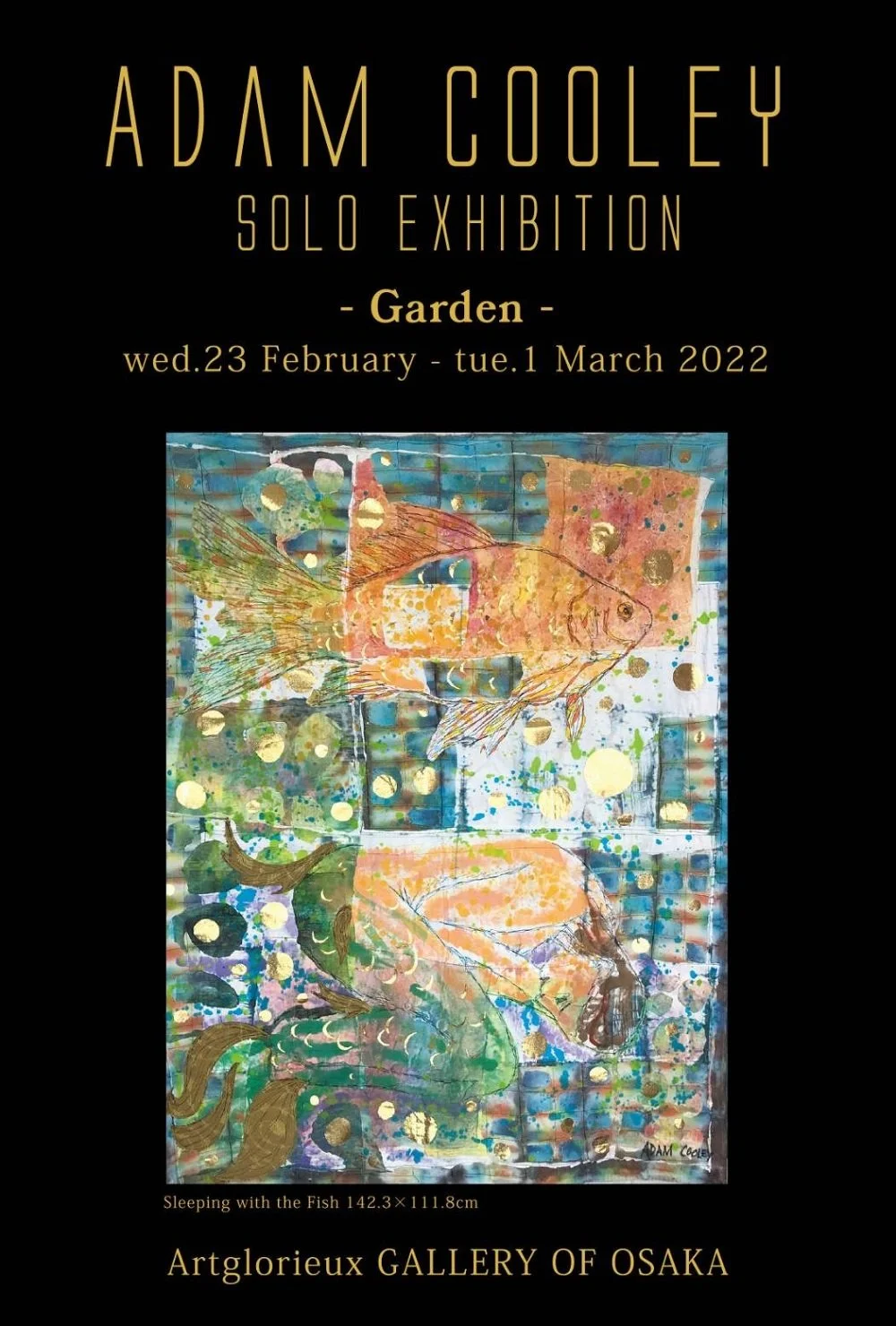
The Garden
Artglorieux Gallery of Osaka, Daimaru Shinsaibashi
Osaka, Japan
February 23 - March 1, 2022
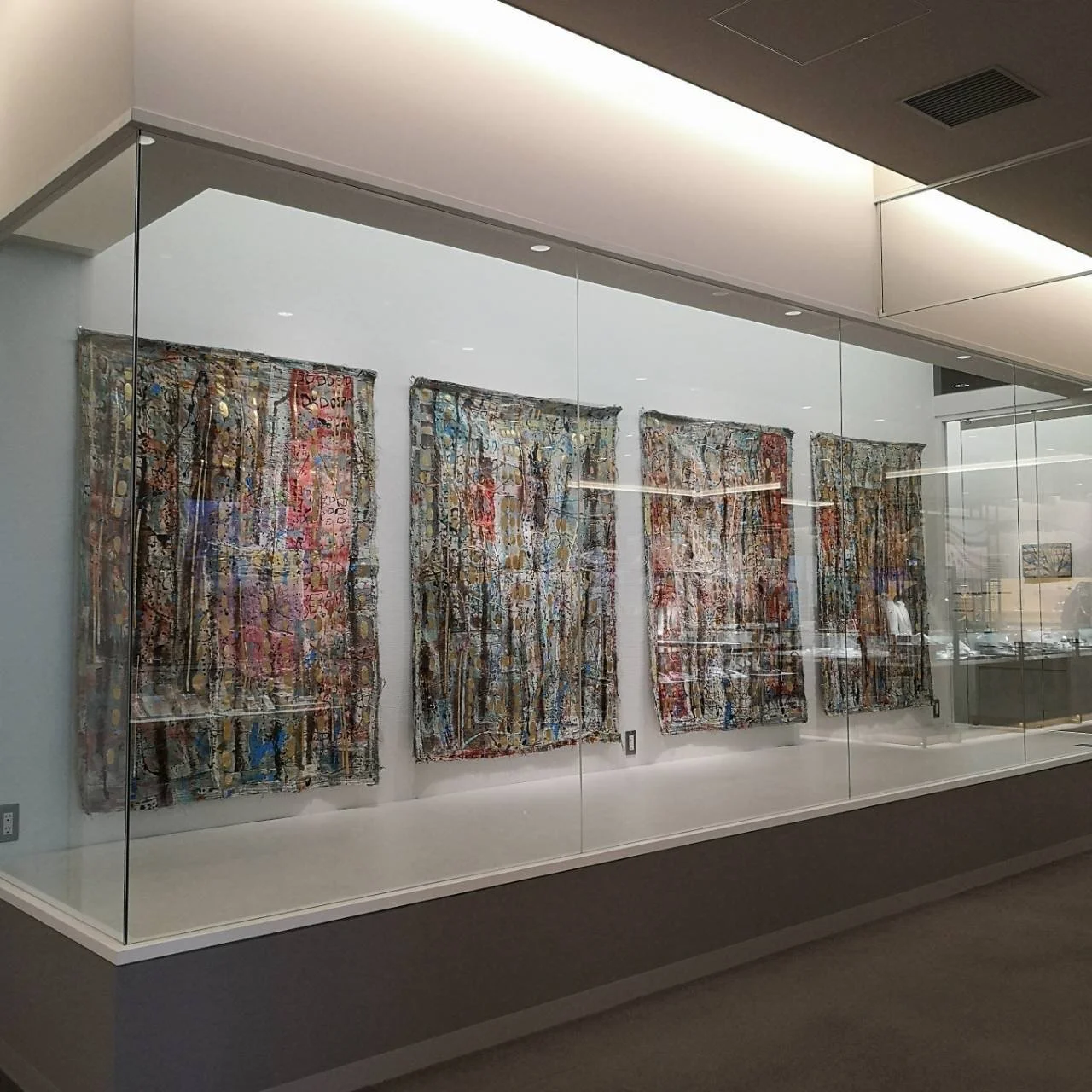
Toward the beginning of his years in Japan, Cooley was taken one night to the summit of Mount Ikoma, which rises above Osaka to the east. The city spread below in darkness, the sky above cloudless and full of stars, and the two seemed to mirror each other so completely that the boundary between them disappeared. The highway running through the city below was a long ribbon of light dividing the view. That image stayed with him for years before it became a painting, or rather, before it became Garden of Light: four large textile panels, their surfaces built from layered and repurposed cloth, holding the sensation of standing between a city and a sky when both are made of the same luminous material. Displayed in one of Daimaru Shinsaibashi's large forward-facing cases, the work was visible across the entire floor of the department store, its scale and presence pulling viewers toward the gallery before they had decided to enter it.
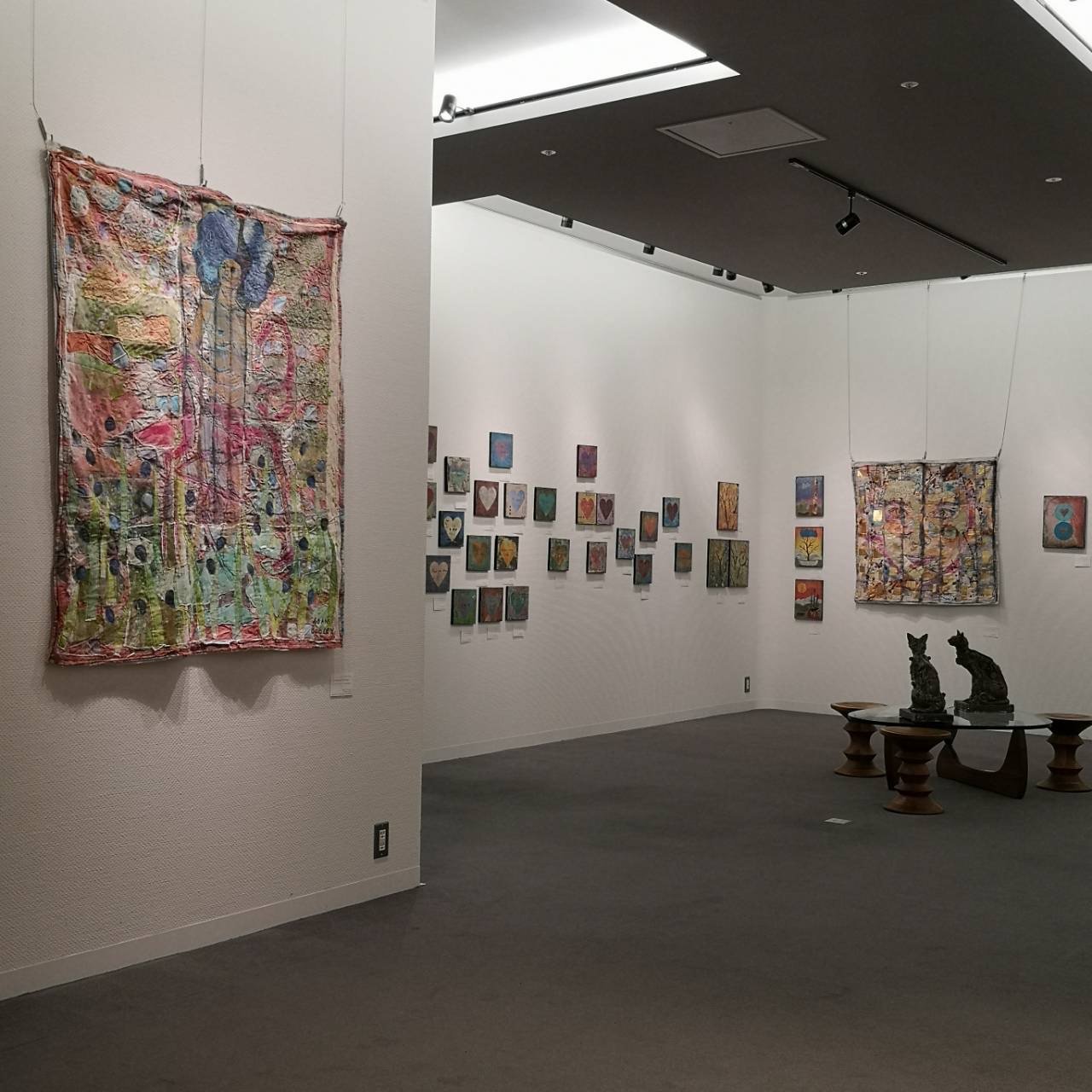
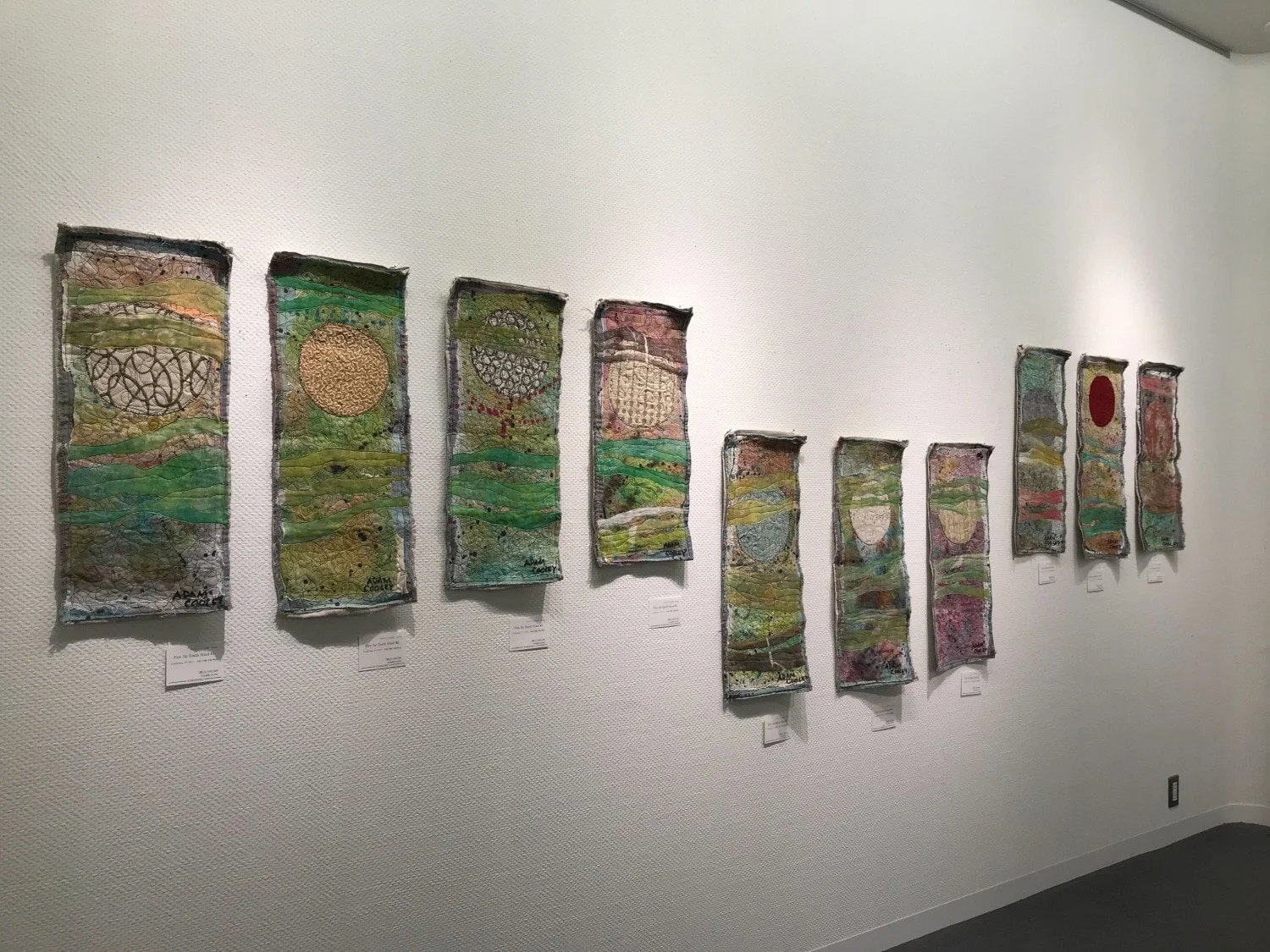
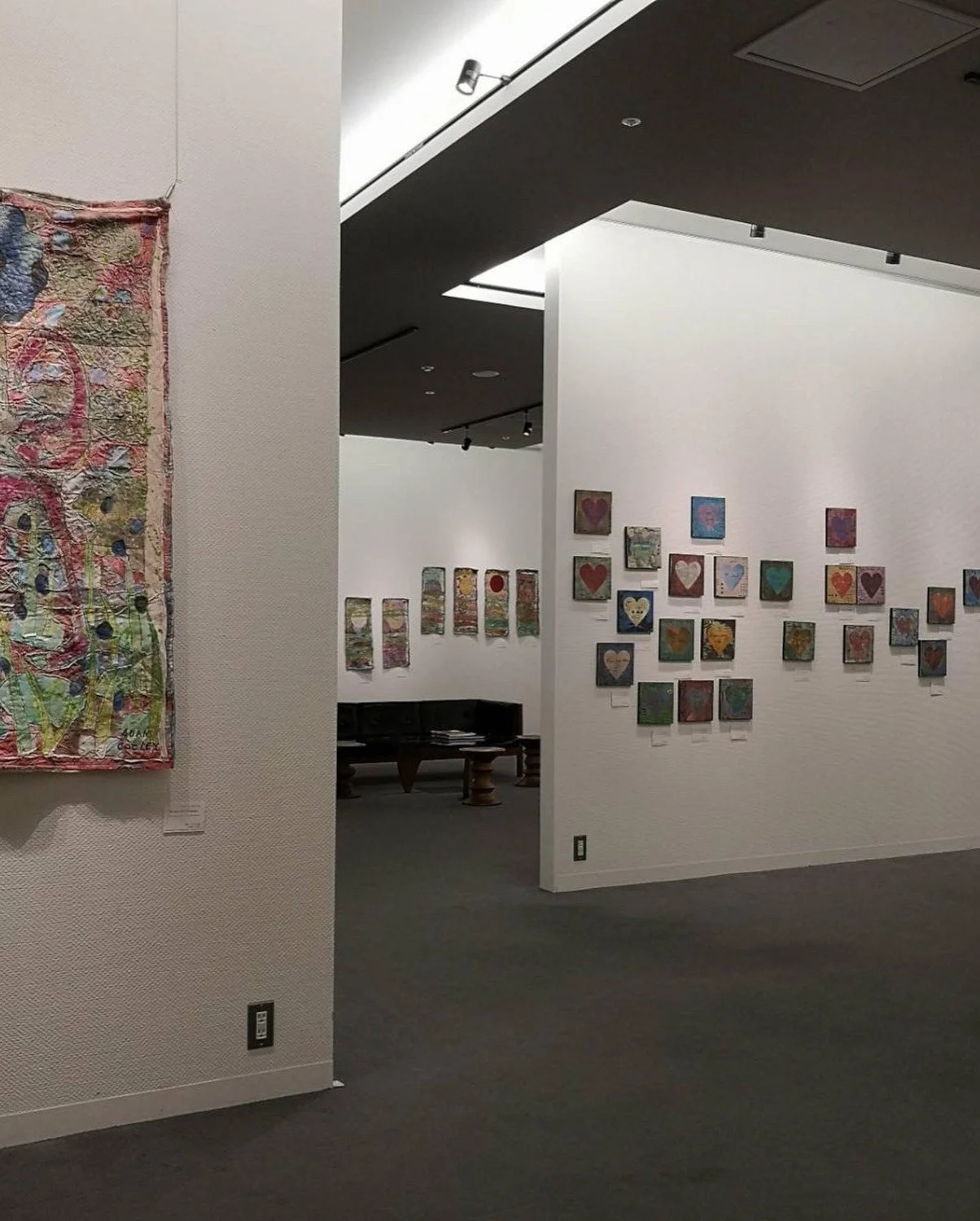
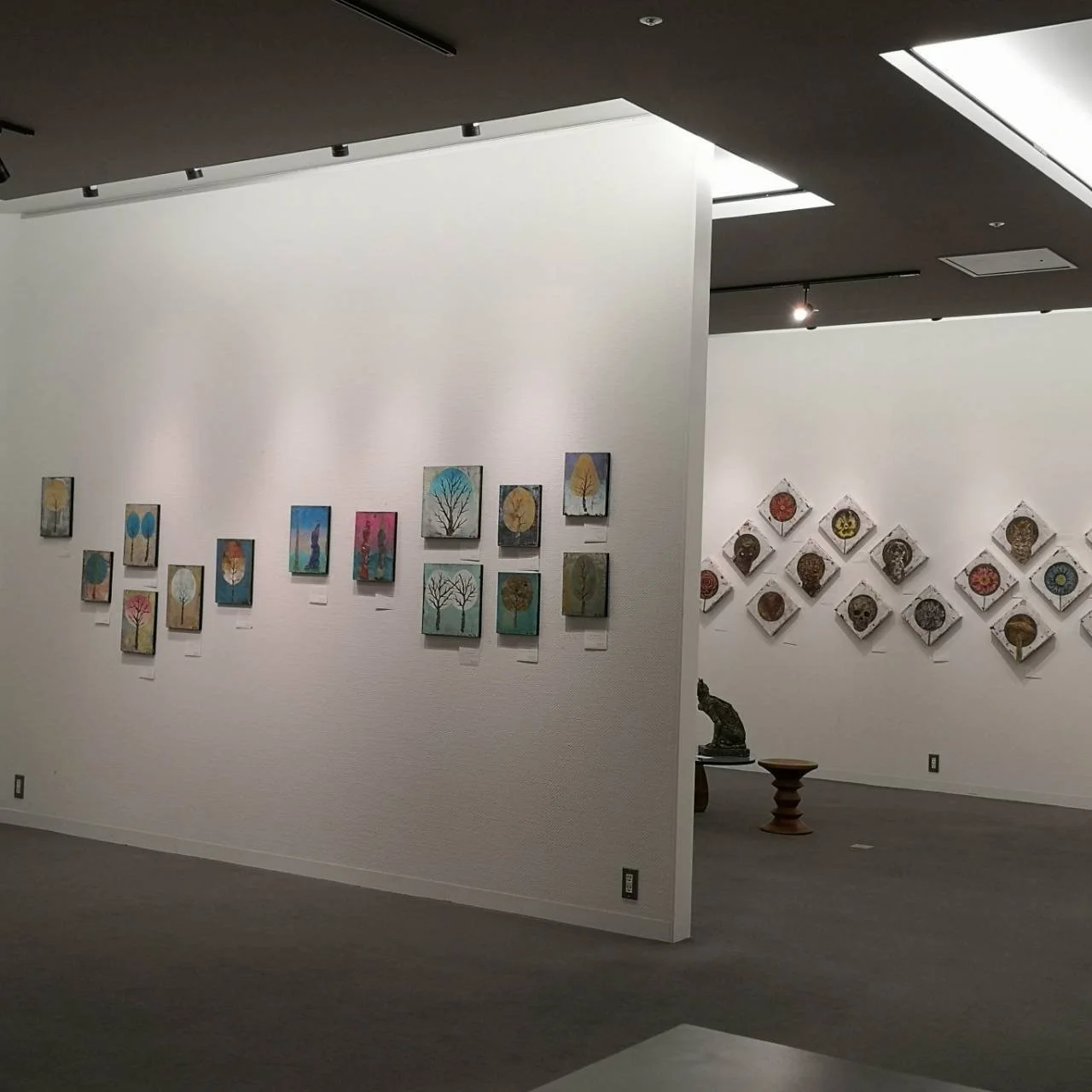
The pieces Cooley brought to Artglorieux Gallery of Osaka grew, in his own words, from root-like threads, leaves made of cloth, petals made from paint and dye. Half the exhibition comprised boro textile works: bold, bright surfaces constructed from old and recycled fabrics that carry their history in their weave, dyed and painted and stitched into forms that feel entirely present despite the age of their materials, or perhaps because of it. The tension between what the cloth has been and what it has become is visible in every work, the seams and patches and repurposed surfaces not concealed but made central, the history of the material part of what the finished piece carries. Cooley had been incorporating textile works into his practice for years, but The Garden was the first exhibition to place them at the center of the room and the center of the argument.
A garden is not a natural thing. It is nature shaped by intention, growth directed by a cultivating hand, the wild made purposeful without being tamed entirely. Artglorieux Gallery of Osaka was at the time the largest gallery in the city, and Cooley used that space with exactly that logic, distributing the works across its rooms not as a sequence to be followed but as an environment to be moved through, each piece rooted in the same materials and the same impulse, the whole accumulating into something that bore his particular understanding of what nature actually is: not a backdrop for human activity but the condition from which everything, including art, grows.