LOVE x 愛
Daimaru Kyoto, Sixth Floor Art Gallery
Kyoto, Japan
February 9-15, 2022
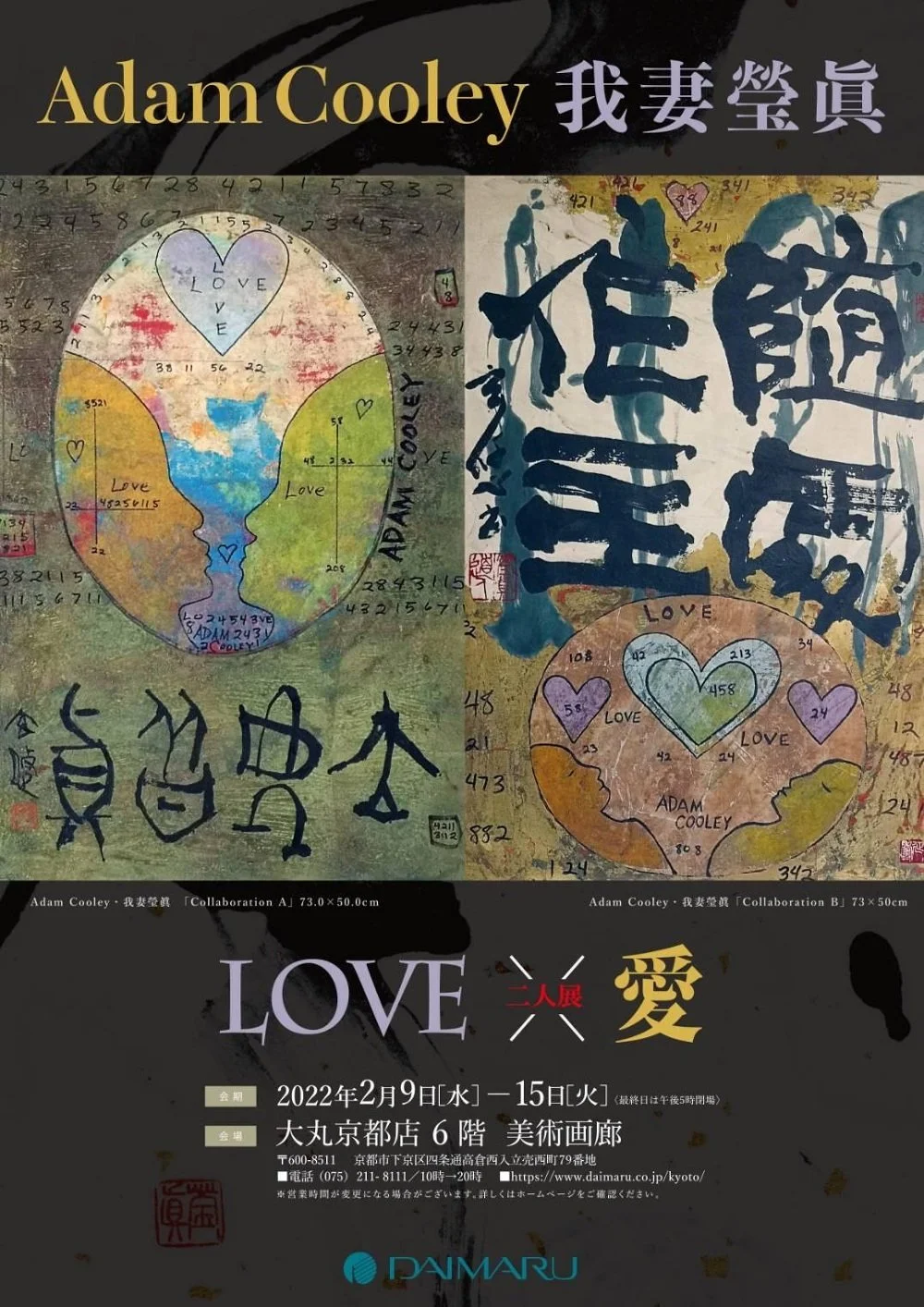
The word love is one of the most used in the English language, deployed across contexts that range from the profound to the trivial, applied equally to people, to food, to passing enthusiasms. In Japanese, 愛 carries a different gravity: reserved, considered, not given away lightly. Whether that difference reflects a genuine cultural distinction or a misreading of how English actually holds its emotions is one of the questions that animated this exhibition. The gap between the two words, real or imagined, became the space the work inhabited.
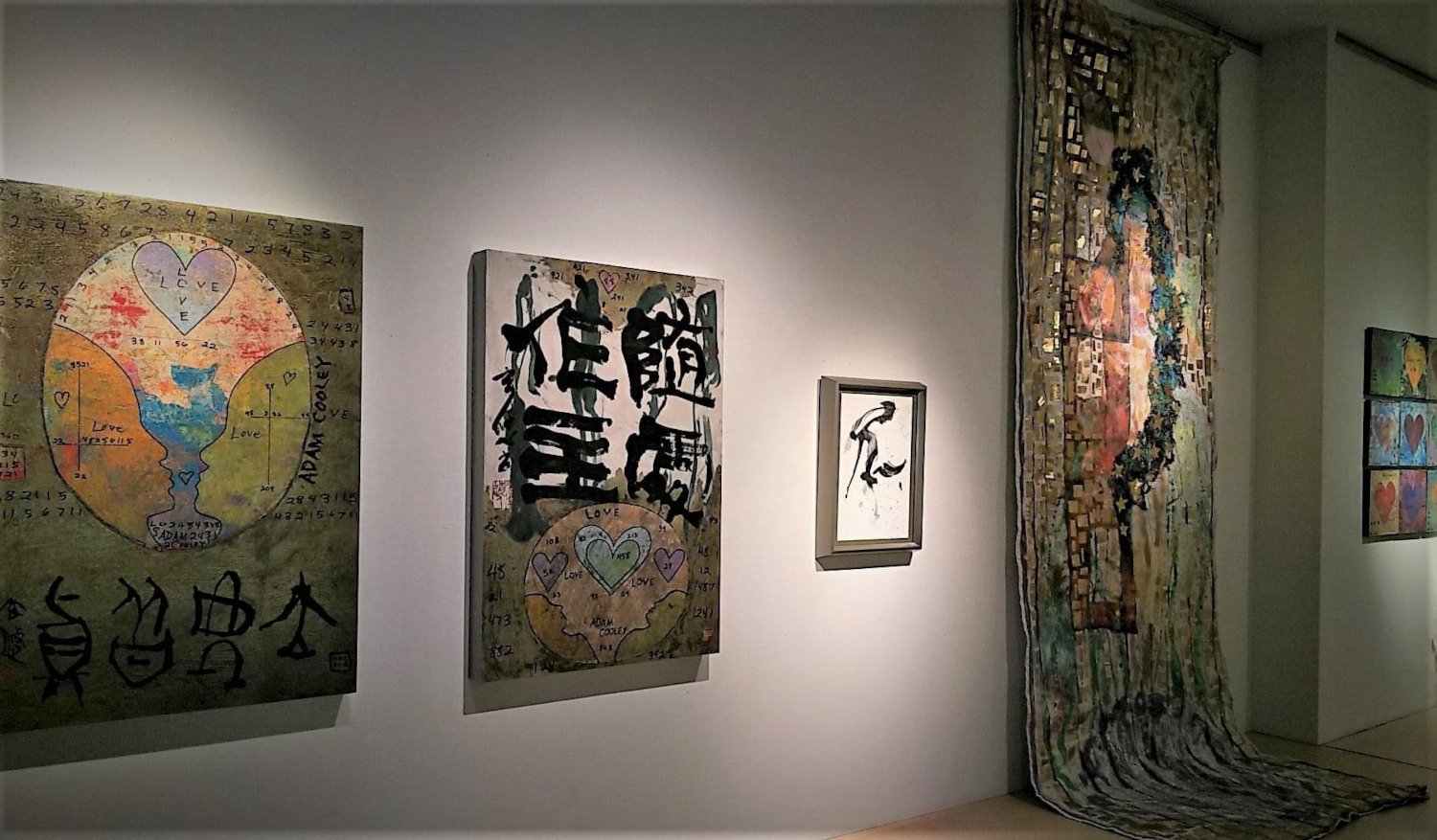
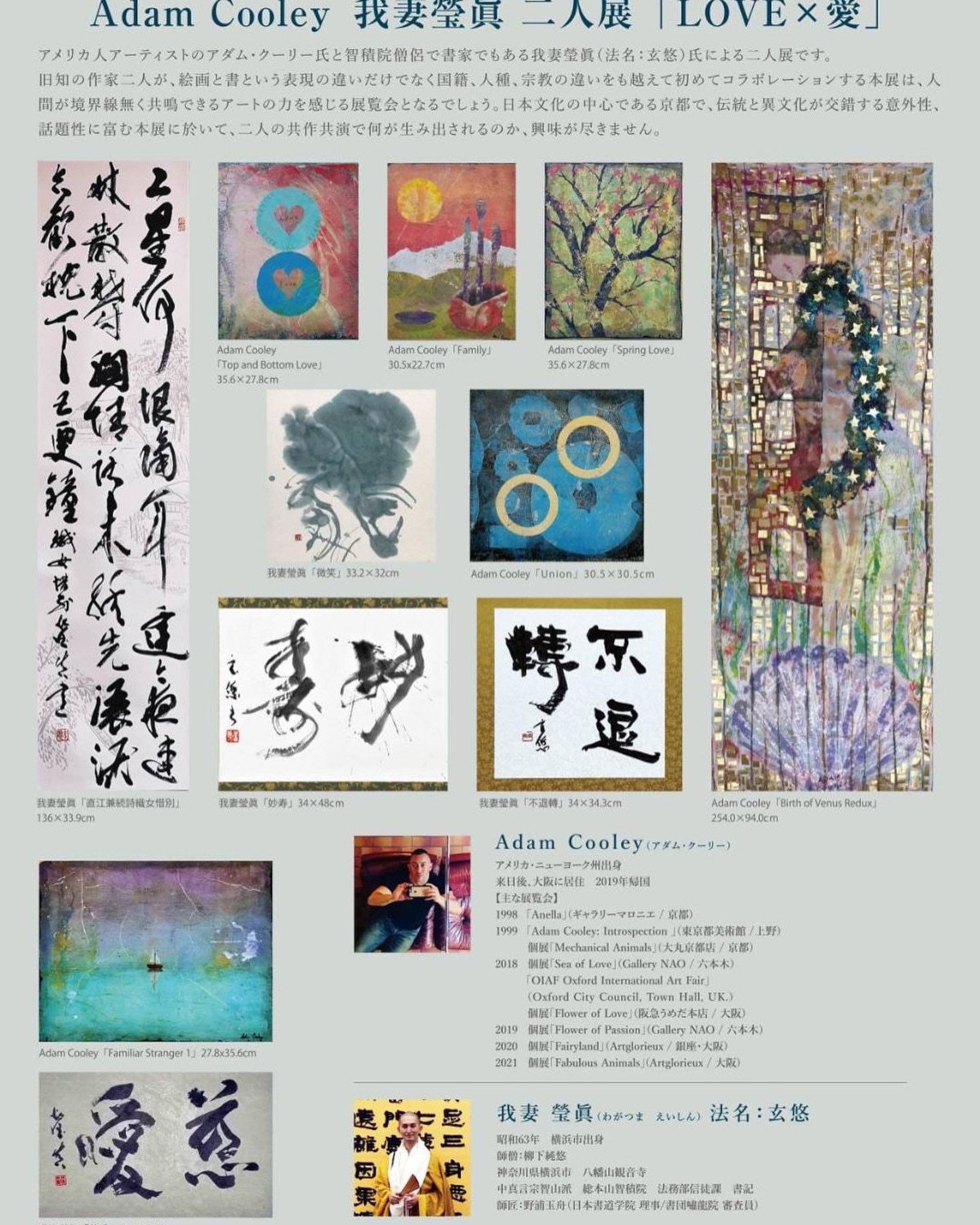
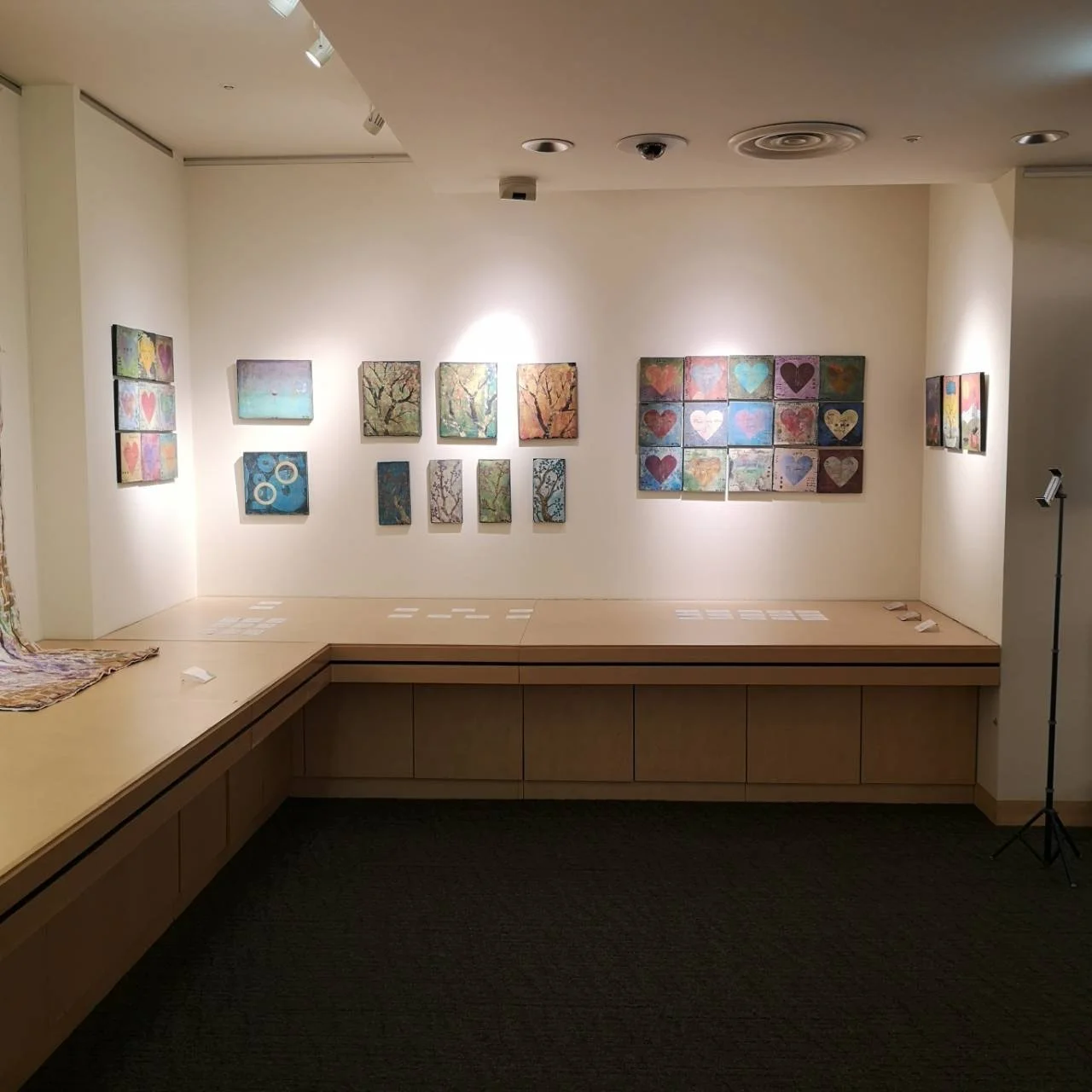
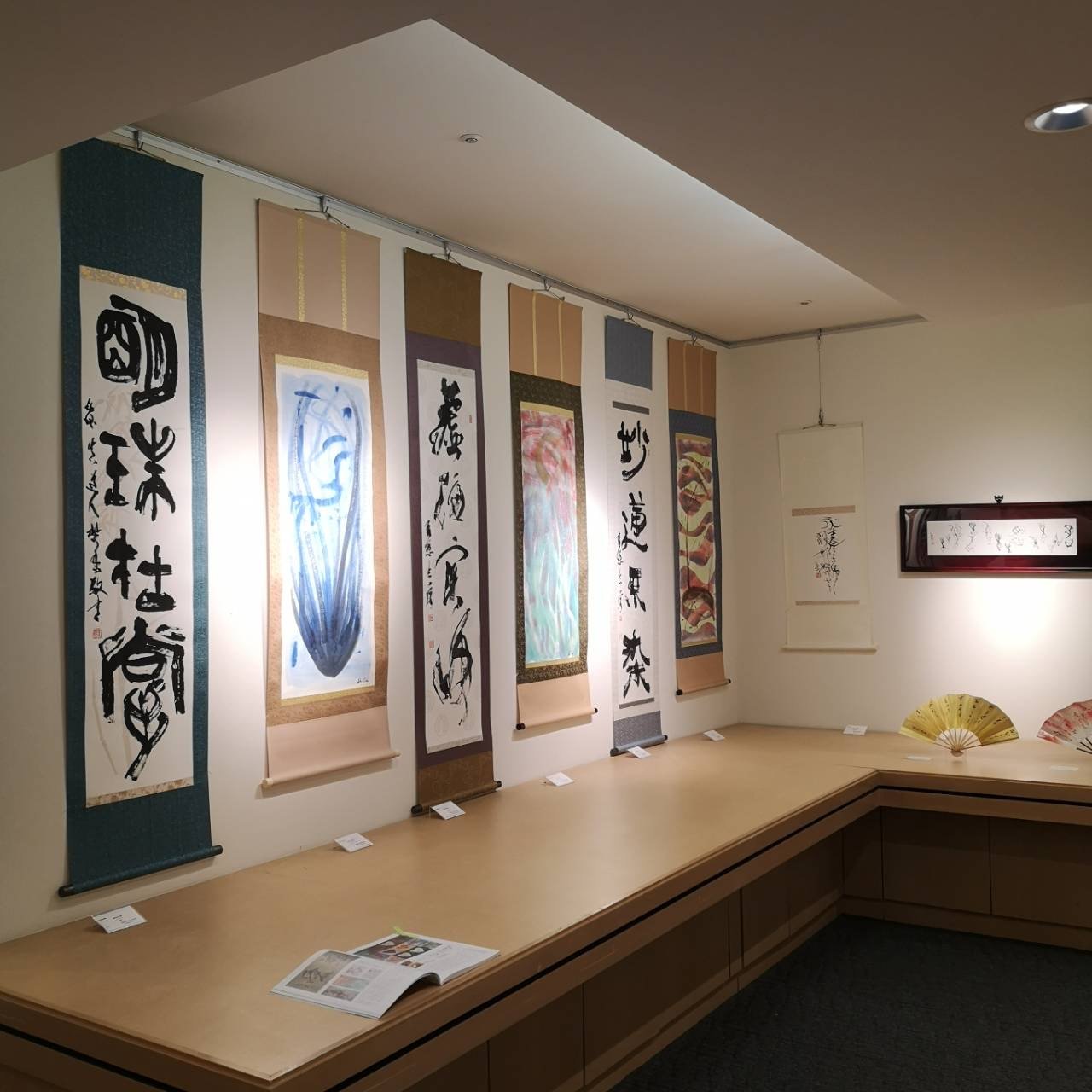
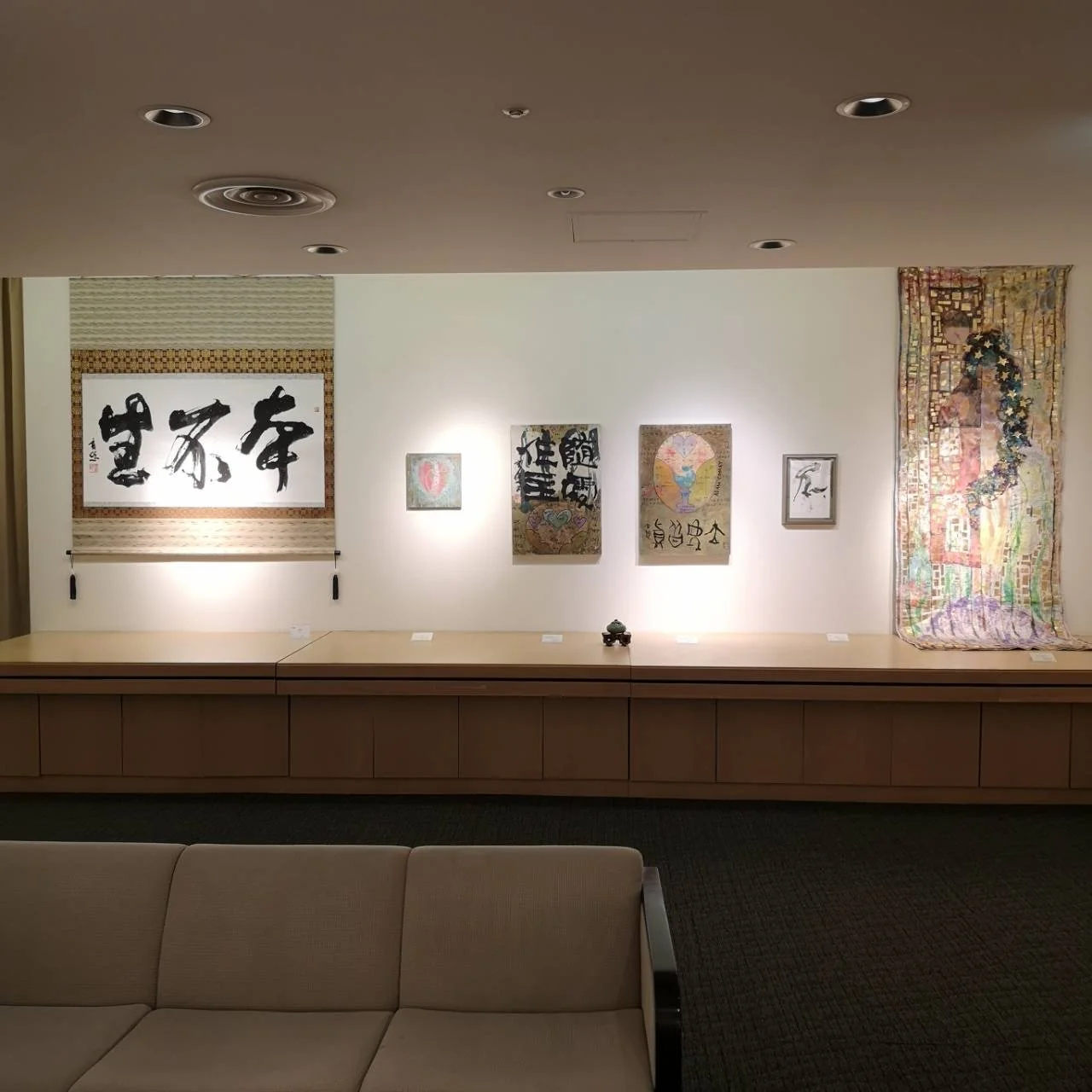
LOVE x 愛 was Cooley's first paired exhibition, conceived as a dialogue between his own paintings, textile works and kakejiku scrolls and the calligraphy of a close friend, a Buddhist monk working in Kyoto. The premise was straightforward and genuinely ambitious: two artists from different cultures, working in entirely different mediums, each interpreting love through their own visual language, their works interspersed throughout the gallery rather than separated into distinct territories. There was no moment where Cooley's work ended and his collaborator's began. The conversation moved through the room continuously, painting beside calligraphy, textile beside scroll, each medium finding its meaning partly in what stood alongside it.
Cooley's contribution spanned painting, early boro textile pieces, and a series of kakejiku, traditional hanging scrolls painted in acrylic inks. The scrolls occupied a particular position in the exhibition: a format rooted in Japanese aesthetic tradition, executed in Cooley's own materials and visual language, the two cultures folded into a single object without either one being subordinated to the other. Numbers, which have moved through Cooley's paintings for decades as a kind of private notation, present in almost every work but never decoded for the viewer, found a particular resonance here alongside calligraphy, another system of marks that carries meaning beyond what it literally represents. The two visual languages, one Eastern and one that belongs to neither East nor West exclusively, occupied the same walls and asked the same questions without arriving at the same answers.
Art Collectors magazine featured the exhibition extensively in its February 2022 issue, its coverage describing Cooley's paintings as seeming to come from another world, his use of colour and composition unlike that of ordinary painters, suggesting a cosmic or universal perspective. The recurring numbers drew particular attention, with the observation that kanji characters are themselves composed of forms that resemble animals and natural shapes, as though two entirely different systems of mark-making had arrived, by different routes, at the same underlying territory.
Daimaru Kyoto has maintained a long relationship with serious art across its history, and its sixth floor gallery brought the exhibition into a city whose own relationship to craft, tradition and transformation runs deeper than almost anywhere in Japan. The works on its walls that February asked what love means when it crosses a language, and left the question open in the way that only the best exhibitions do.