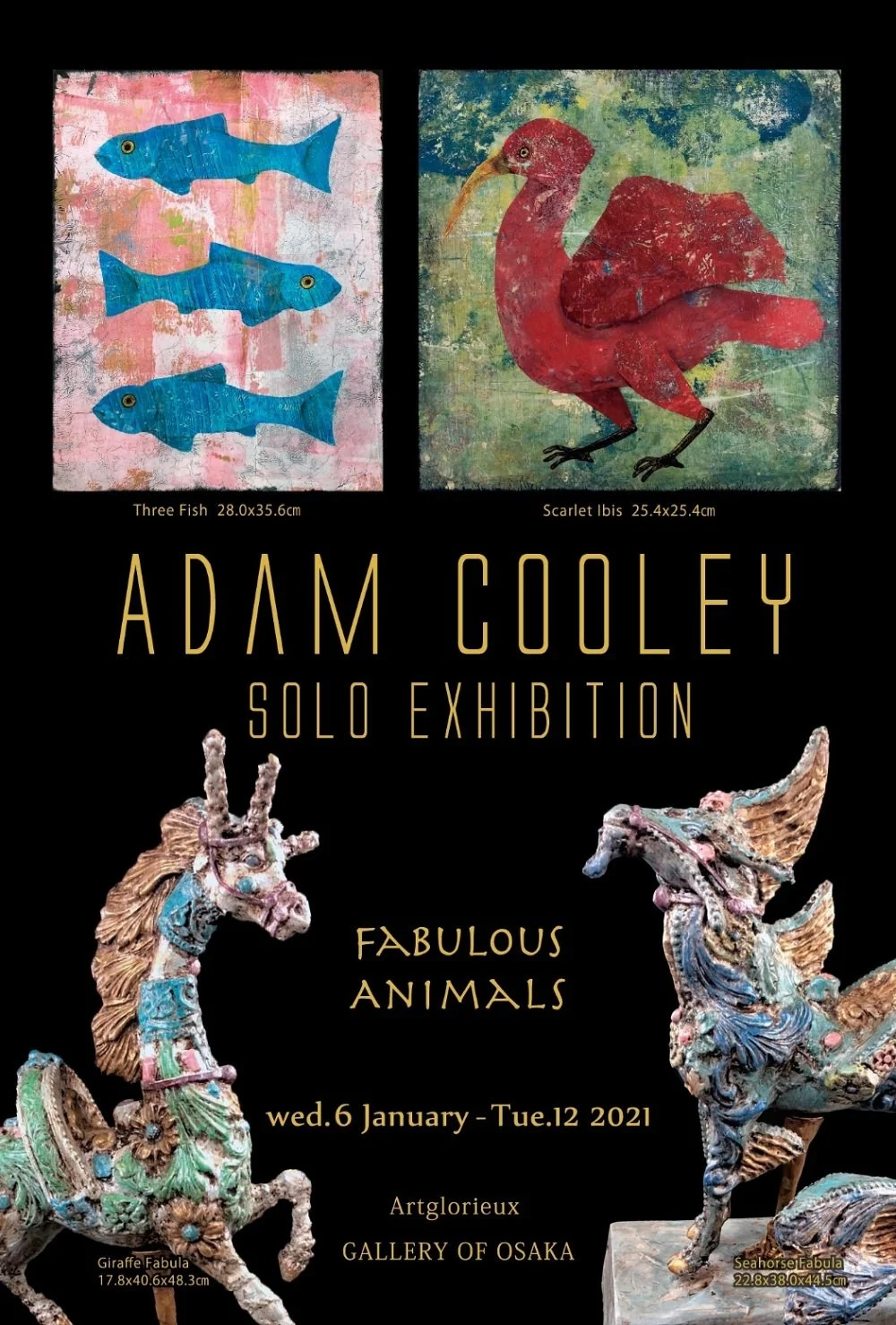
Fabulous Animals
Artglorieux Gallery of Osaka, Daimaru Shinsaibashi
Osaka, Japan
January 6-12, 2021
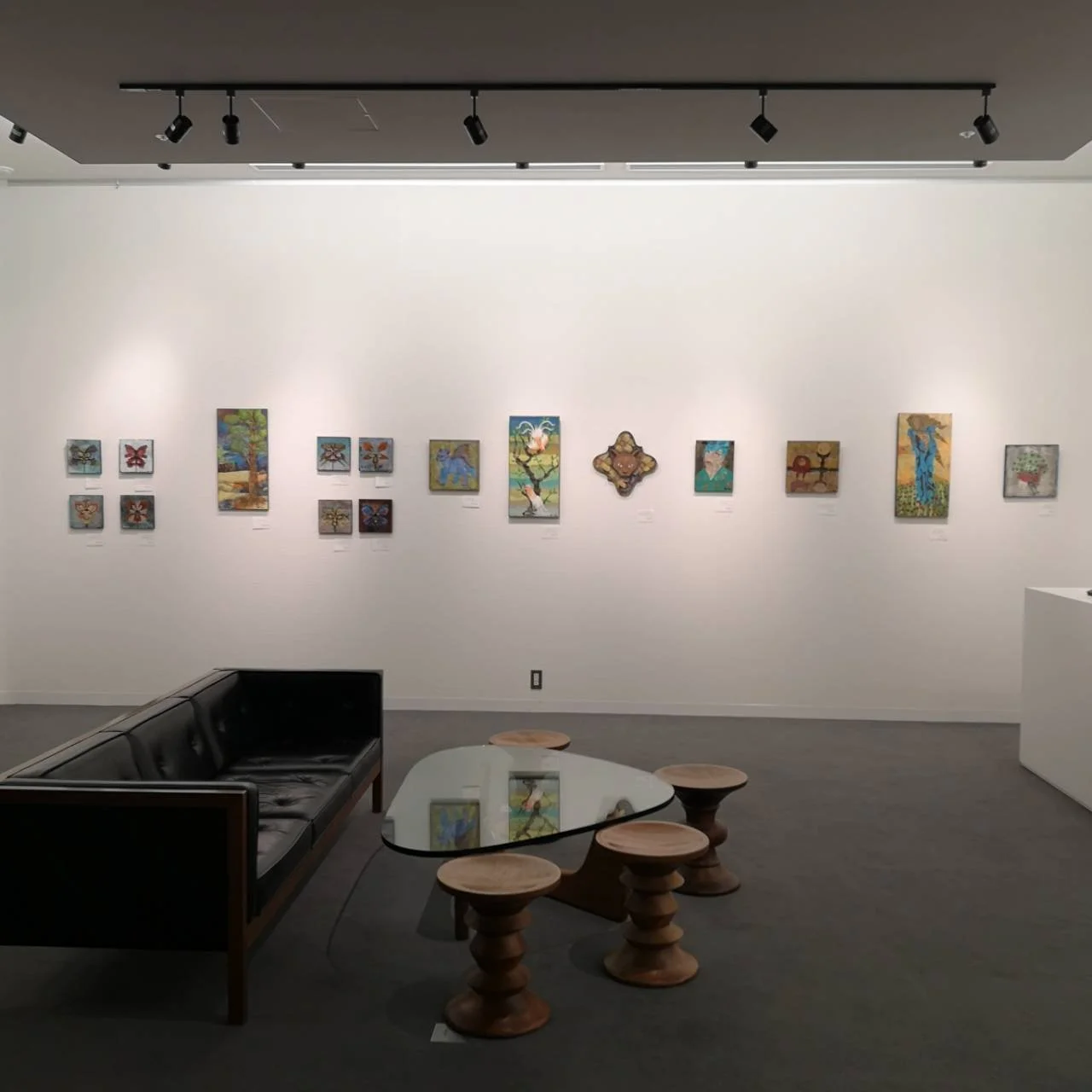
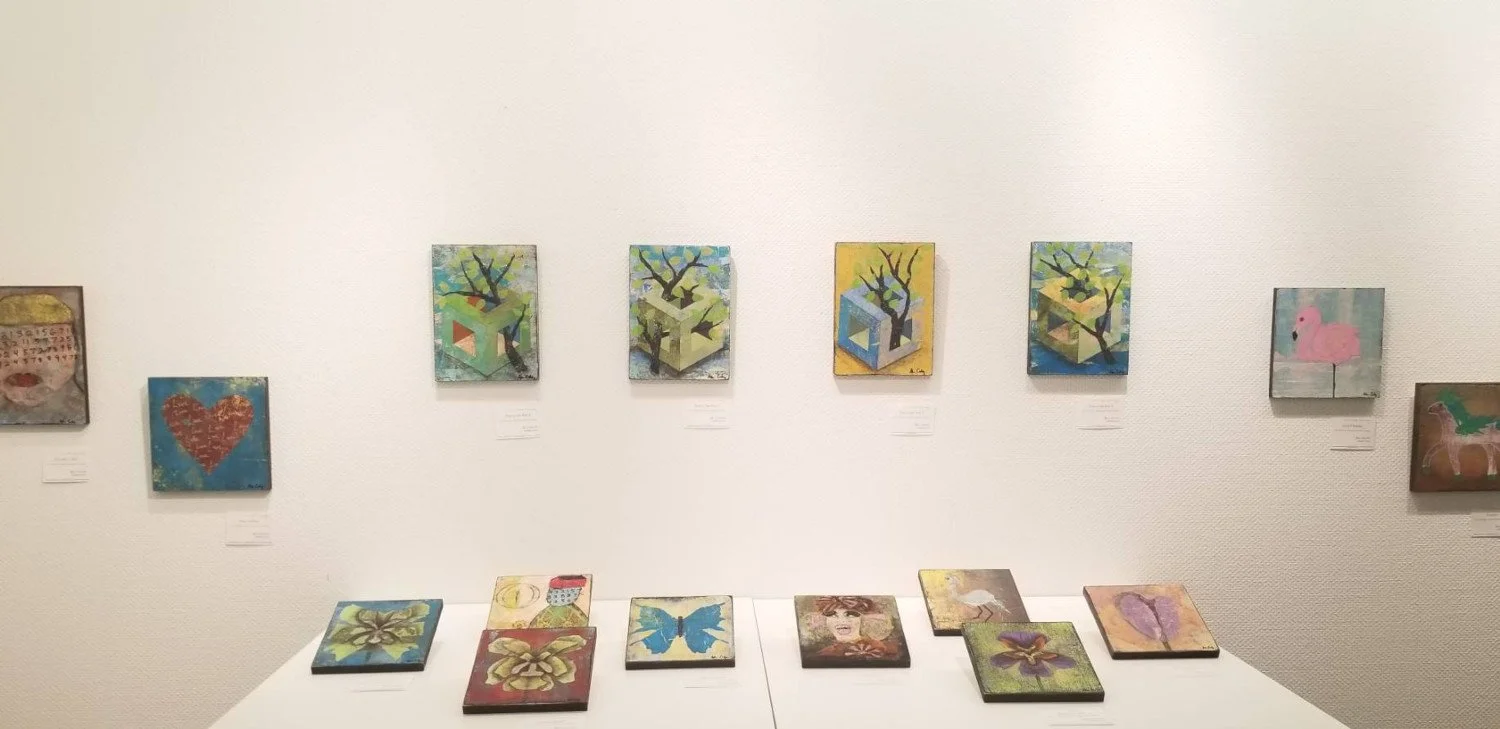
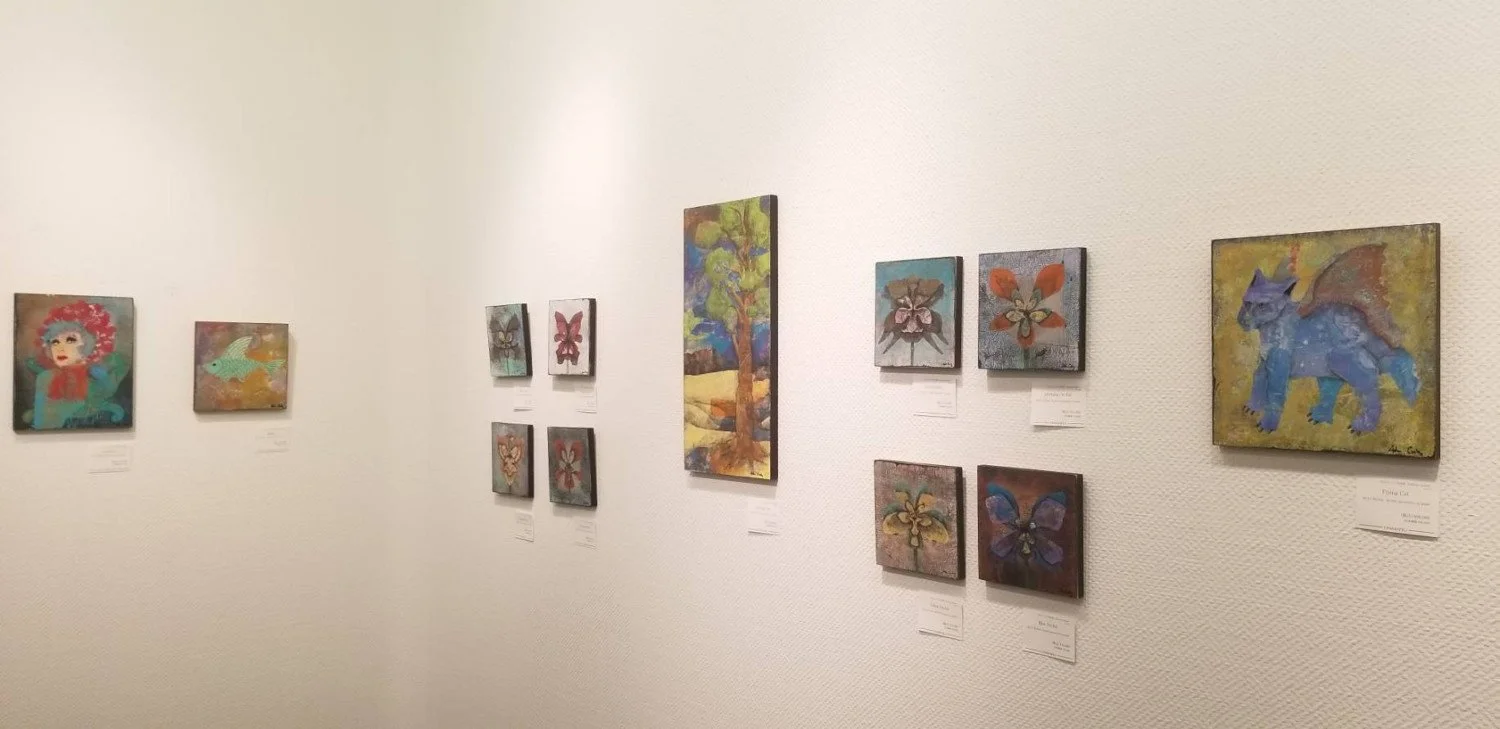
There is a particular kind of exhaustion that settles into a population when the world has been suspended for too long. By early 2021, after nearly a year of masks and empty streets and the muted daily rhythms of a city under restriction, it was visible on people's faces. Cooley's response was to make the most vivid and fantastical work of his recent practice, creatures that leapt and crawled and spread their feathers from the bright territories of his imagination directly onto the walls of Artglorieux Gallery of Osaka.
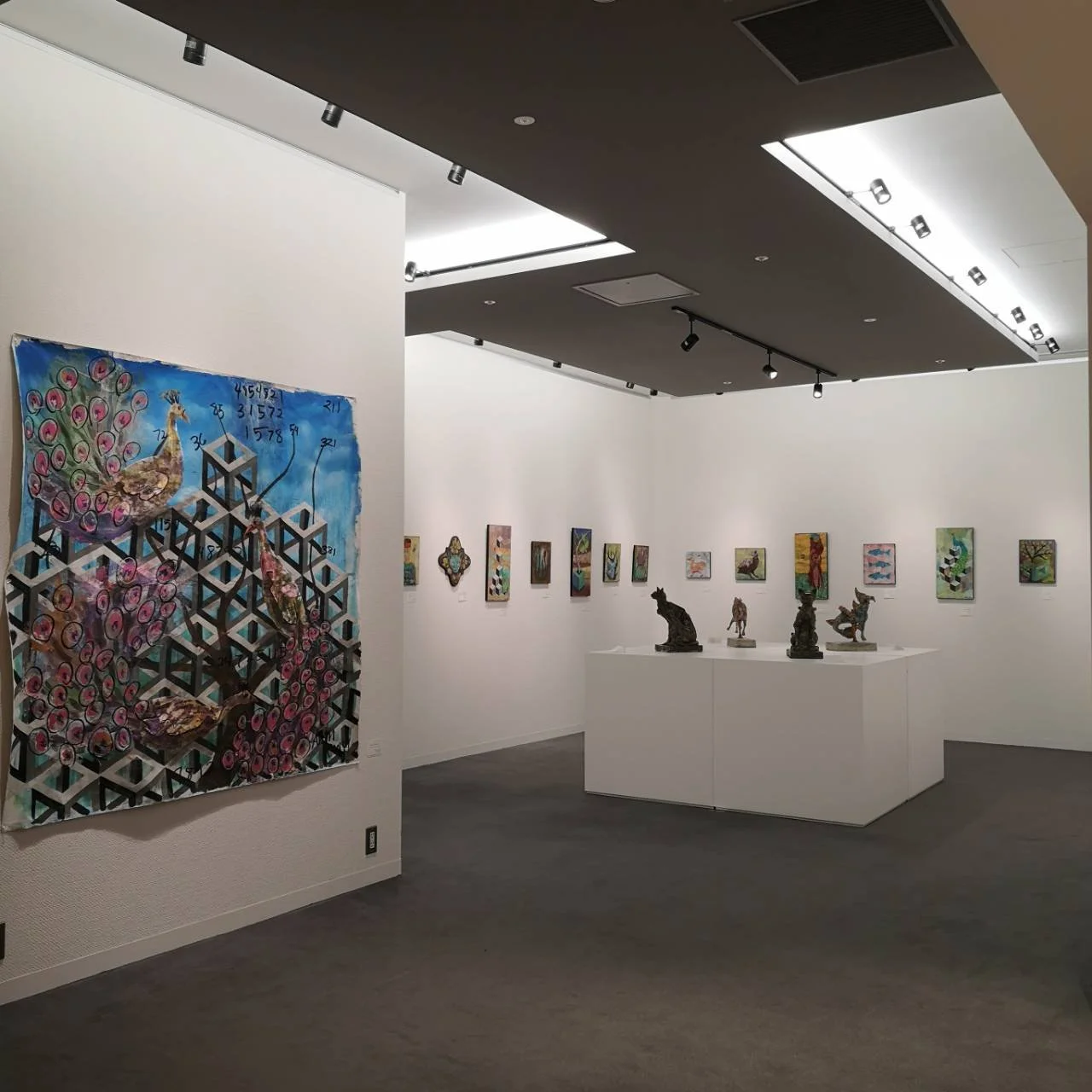
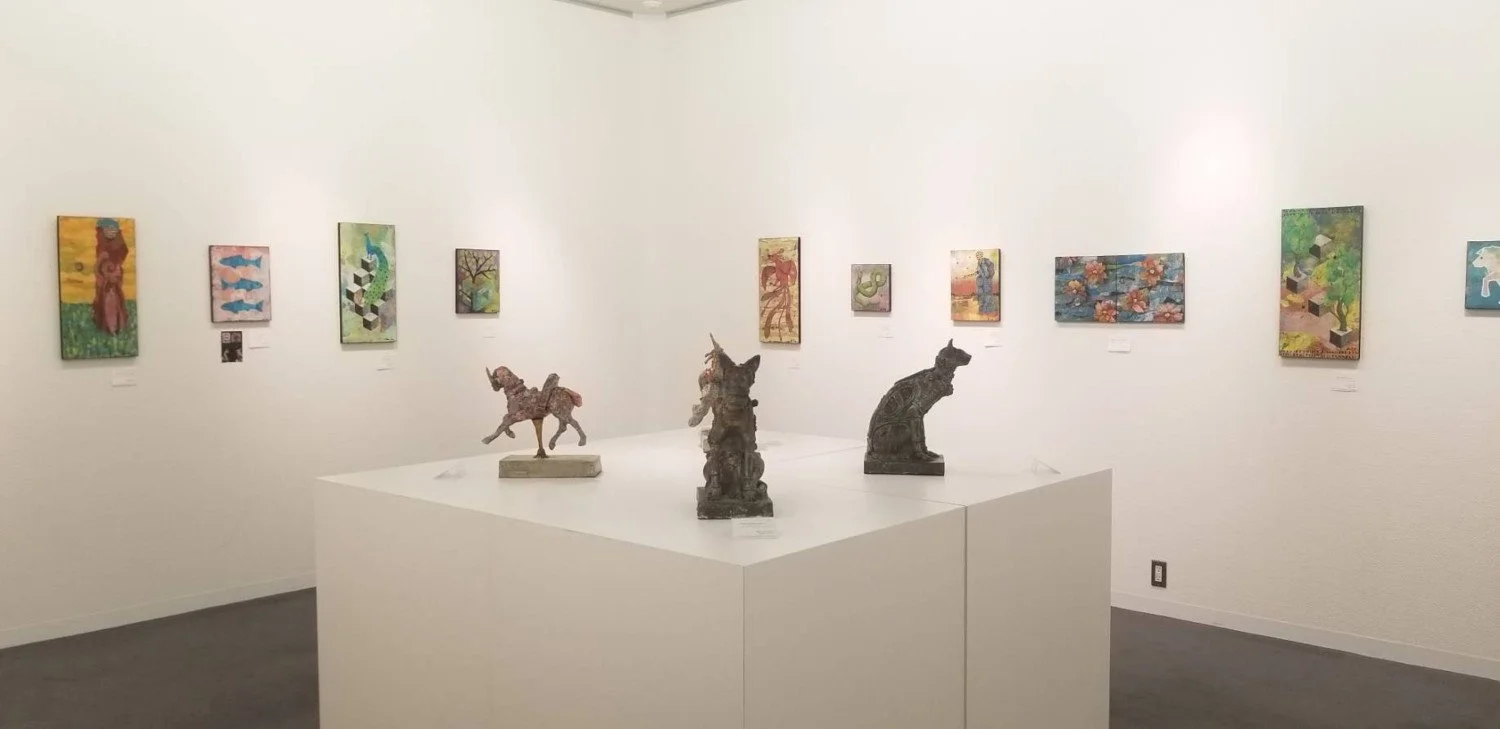
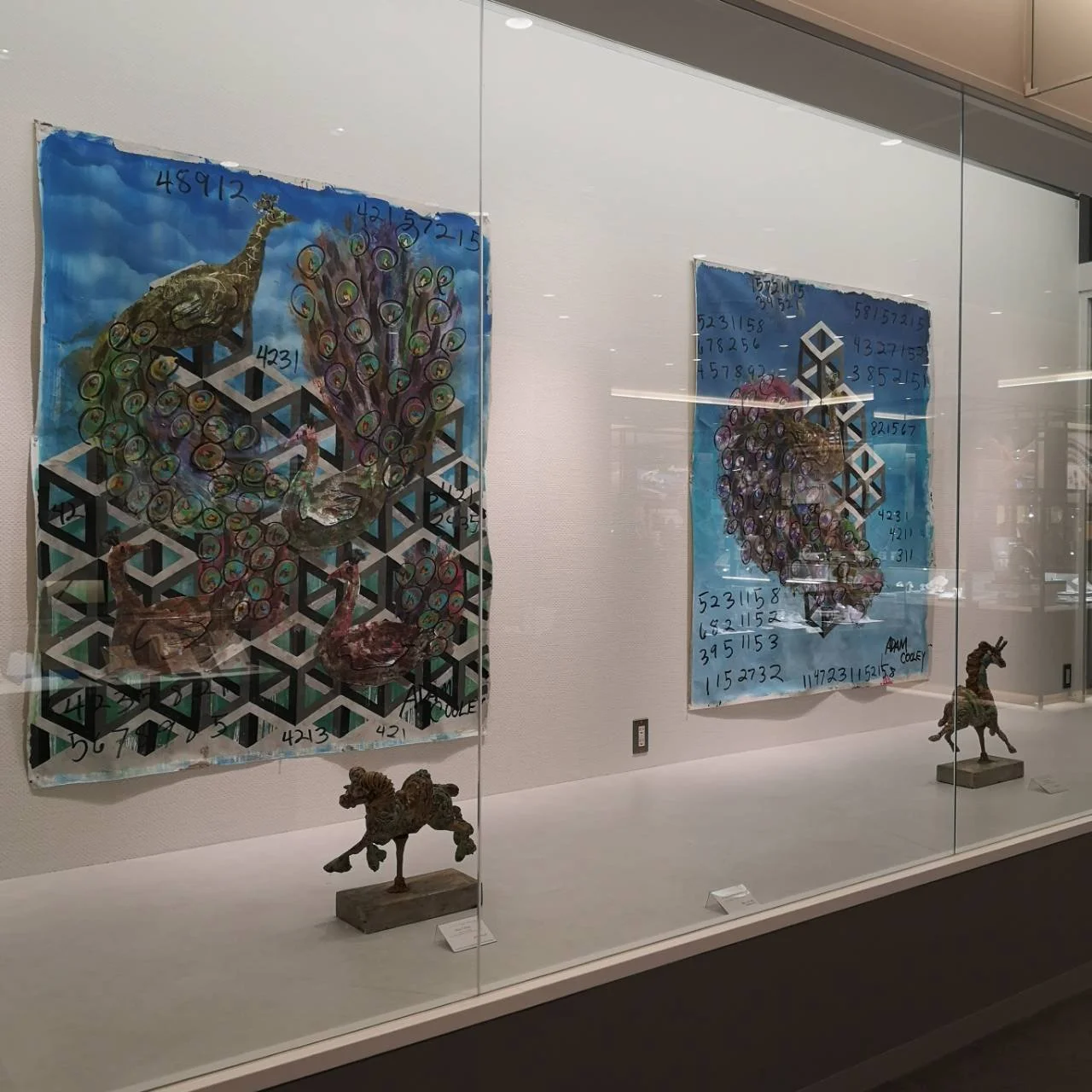
Fabulous Animals was rooted in something older than contemporary life: the primitive symbolism of animals as carriers of meaning, energy and myth, refracted through the particular pleasure of colour and form for their own sake. The Fabula sculptures that occupied the plinths were carousel animals transformed, their surfaces dense with painted ornament, flowers, scales and decorative incident, finished in the verdigris and polychrome that gives them the quality of objects retrieved from some other, more extravagant civilisation. A giraffe mid-stride. A seahorse rearing. A bull in motion. Each one balanced on a single gilded stem, the impossibility of the pose part of the point.
The large peacock textile that greeted visitors at the entrance set the register of the whole. Cooley had painted the bird's tail in saturated blues and greens, its repeated eye forms and geometric diamond structures filling the surface with an abundance that the peacock has always embodied, in every culture that knows it, as a living argument for excess as its own justification. Numbers moved through the composition in Cooley's characteristic private notation. The work established, before visitors had fully entered the room, what kind of world they were walking into: one where scale and colour and symbolic weight operated without apology or explanation.
Beyond the gallery walls, panel works and small bronzes were displayed in the department store cases visible from the floor outside, the exhibition extending into the wider building and reaching an audience that included everyone passing through, not only those who had come to see the show. The work never contained itself entirely within its designated space.