Boro Land: The Art of Adam Cooley
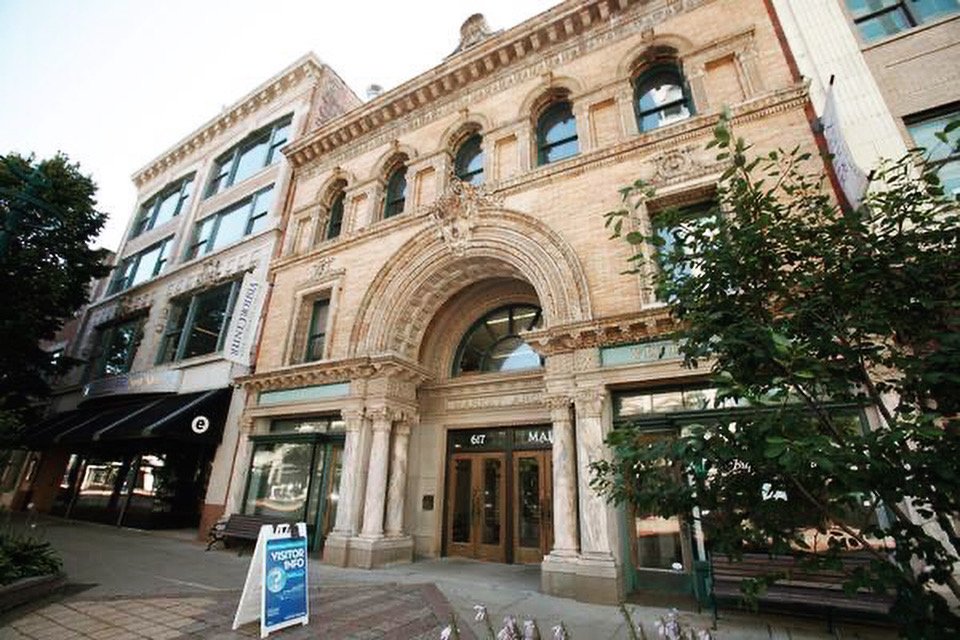
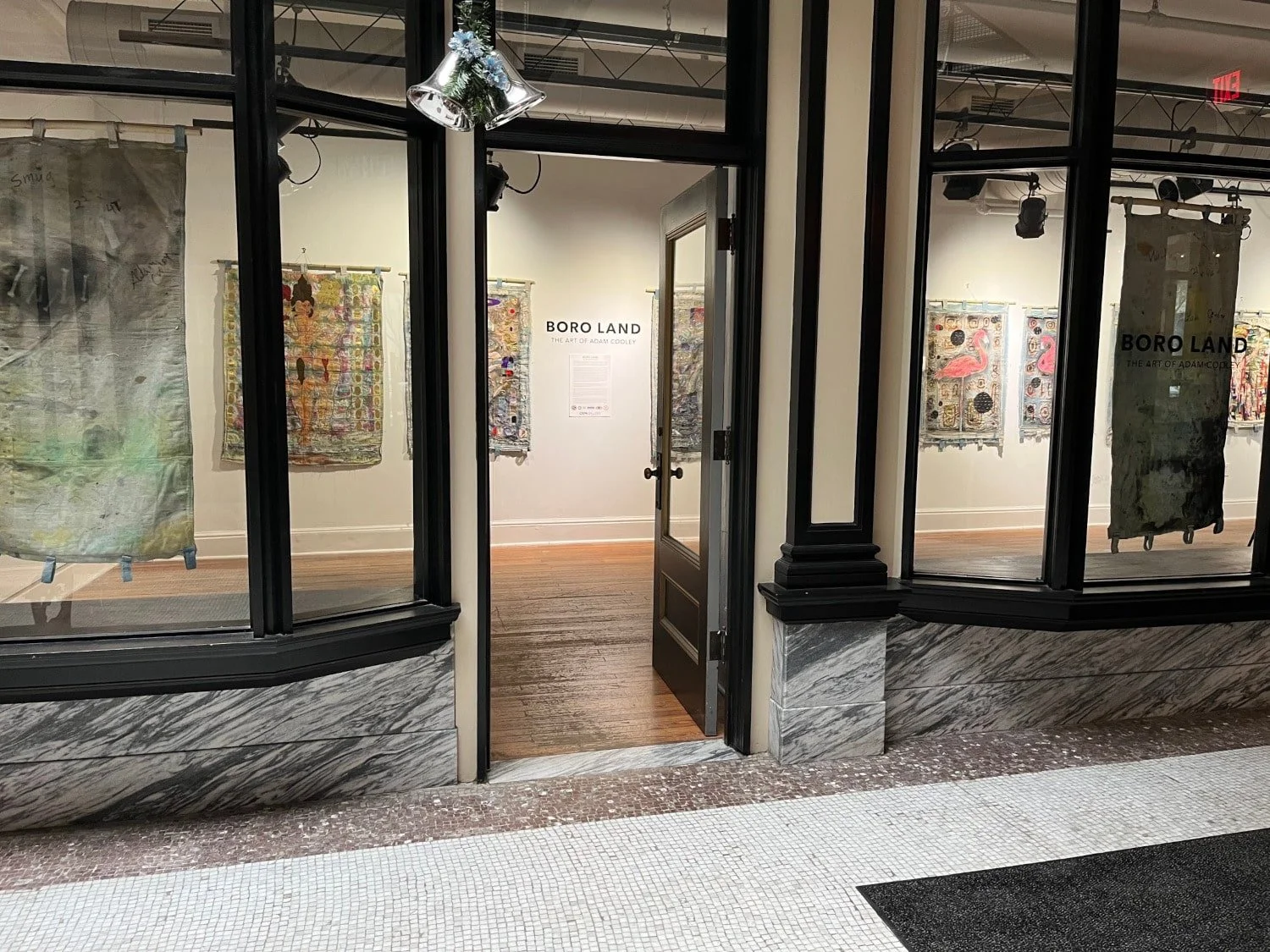
CEPA Gallery
Buffalo, New York
December 8, 2022 - January 25, 2023
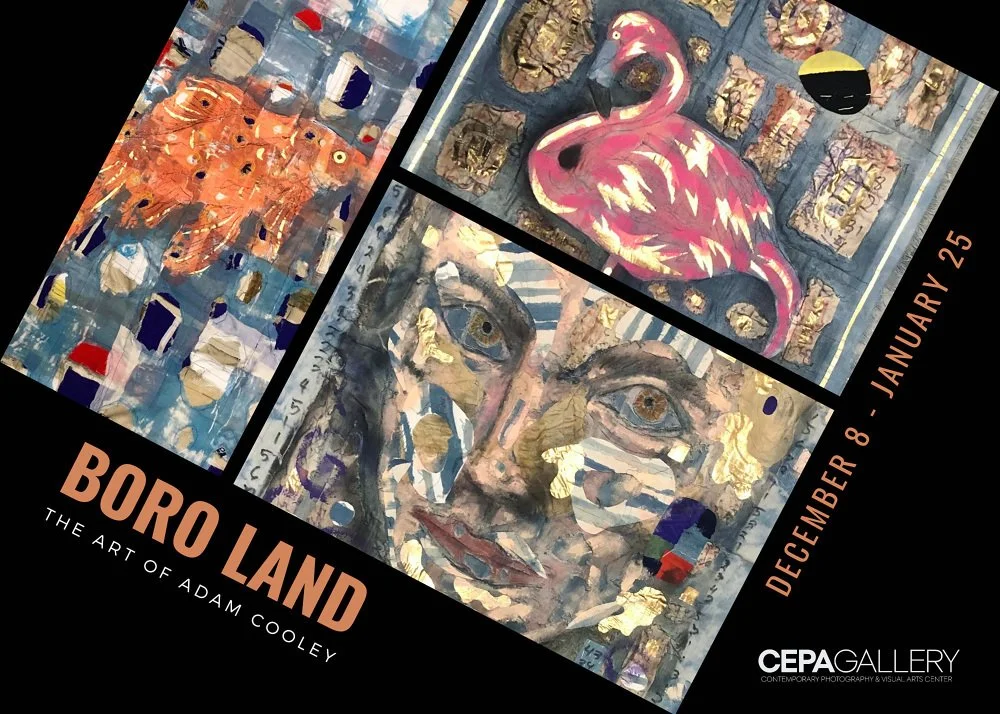
In Japanese, boro describes cloth that has been mended and patched until it is more repair than original fabric. The word carries a derogatory edge, something tattered, worn out, past its usefulness. Cooley, who had lived and worked in Japan for over thirty years, noticed early on that boro and the English word borrow share an almost identical sound. He held onto that coincidence for years, turning it over quietly while the work that would eventually give it form was still finding its materials and its logic. When the two finally converged, the result was a body of work that could only have been made by someone who had spent decades living between languages and learning what gets lost and what unexpectedly survives in the crossing.
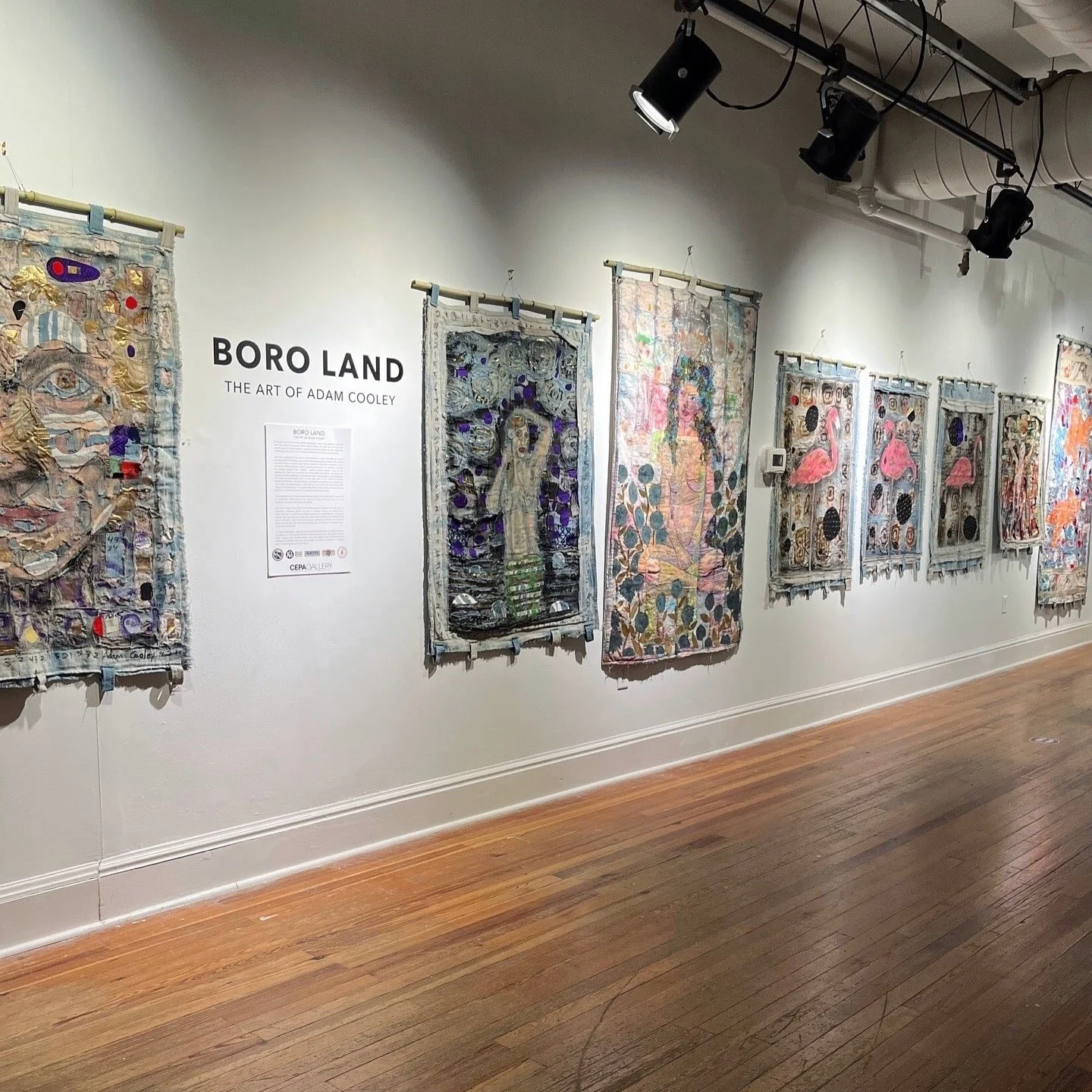
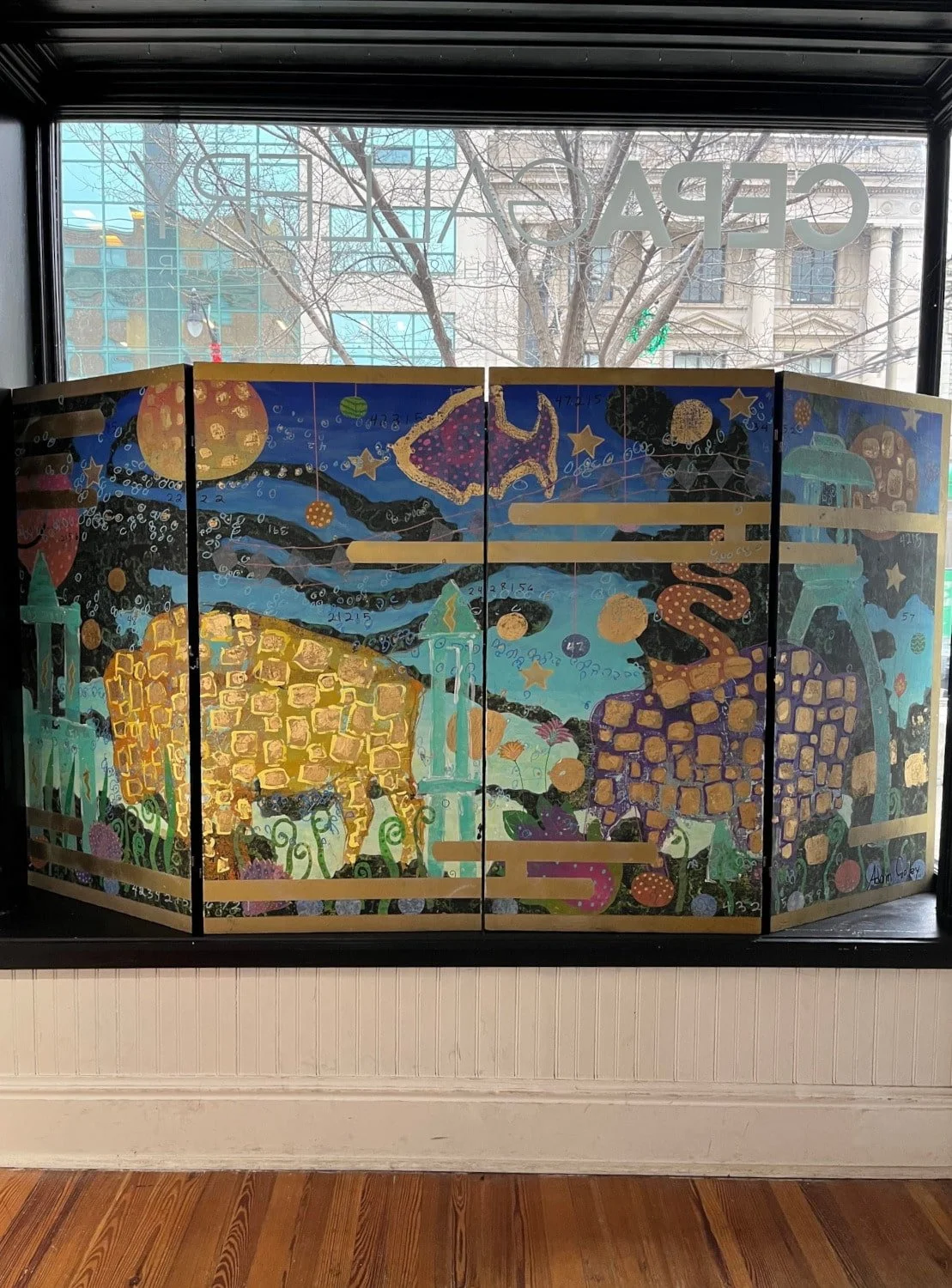
Boro Land is built from reclaimed cloth, including Japanese textiles collected by Cooley over three decades of living in Japan. Among them are genuine boro fabrics, accumulated over years of fascination with the tradition long before the exhibition existed as an idea, their surfaces already dense with the history of previous lives and previous repairs. The tapestries that make up this body of work are constructed from these historical materials alongside hand-dyed, hand-printed and painted textiles and found objects, stitched and quilted together into surfaces that are simultaneously two-dimensional and sculptural, flat in their hanging but deeply physical in their presence. Some works are intimate in scale, their patchwork grounds holding a single face or a scatter of gold leaf stars with the quiet intensity of something private. Others are monumental: Garden of Lights, at 5.4 by 16 feet, incorporates nineteen miles of thread alone, its scale demanding a different quality of attention, the kind that requires the viewer to move rather than simply stand. Faces emerge from the grounds throughout the series. Numbers run along the borders. The full visual language of Cooley's practice is present in every work, now embedded in material that has already lived a life before the artist touched it.
The concept of borrow runs through the work in every sense. Materials are borrowed from the past and reincorporated into new forms. The Japanese textile tradition of boro is borrowed and transformed. Two cultures, two languages, two histories are stitched together into surfaces that belong fully to neither and draw from both. What the work proposes, quietly and without insistence, is that the mended thing carries more information than the pristine one, that the patched surface is a record rather than a failure, that what has been worn and repaired and worn again has earned something that newness simply cannot offer. Frankenstein, Cooley has noted, is always seen as the monster. These works suggest he might be looked at differently.
The materials themselves make this argument more persuasively than any statement of intent could. To stand in front of a Boro Land tapestry is to encounter cloth that has been somewhere, that carries the evidence of previous hands and previous purposes, now transformed into something that could not have existed without that prior history. The gold leaf stars scattered through the fabric catch the light against grounds that are themselves already luminous with age and color. The stitching that holds everything together is visible rather than hidden, the repair made part of the surface rather than concealed beneath it. These are works that understand imperfection not as a problem to be solved but as the condition that makes meaning possible.
CEPA Gallery, one of Buffalo's most respected contemporary arts institutions, provided the first major American platform for a body of work that had been developing across years and continents. Textile works had surfaced in previous exhibitions in Japan before the series fully cohered, their presence growing across shows until the logic of the whole became clear enough to stand on its own. At CEPA it arrived as a complete statement, the full range of the work gathered into a single sustained presentation for the first time on American soil. It was the beginning of a traveling exhibition that would continue to grow and evolve with each new location it visited, the series itself borrowing something from every place it went.