Adam Cooley: Introspection
Tokyo Metropolitan Museum of Modern Art
Tokyo, Japan
1999
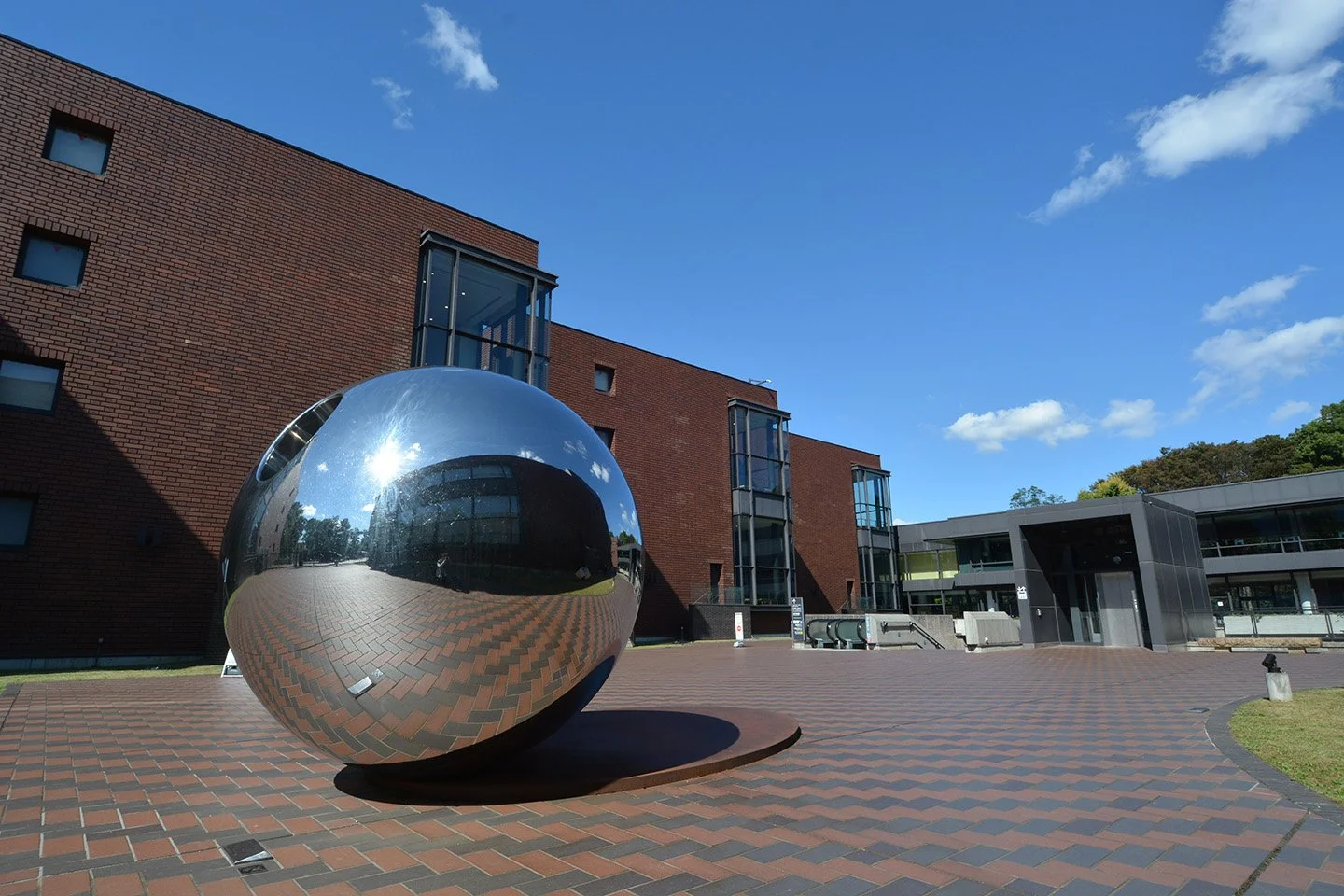
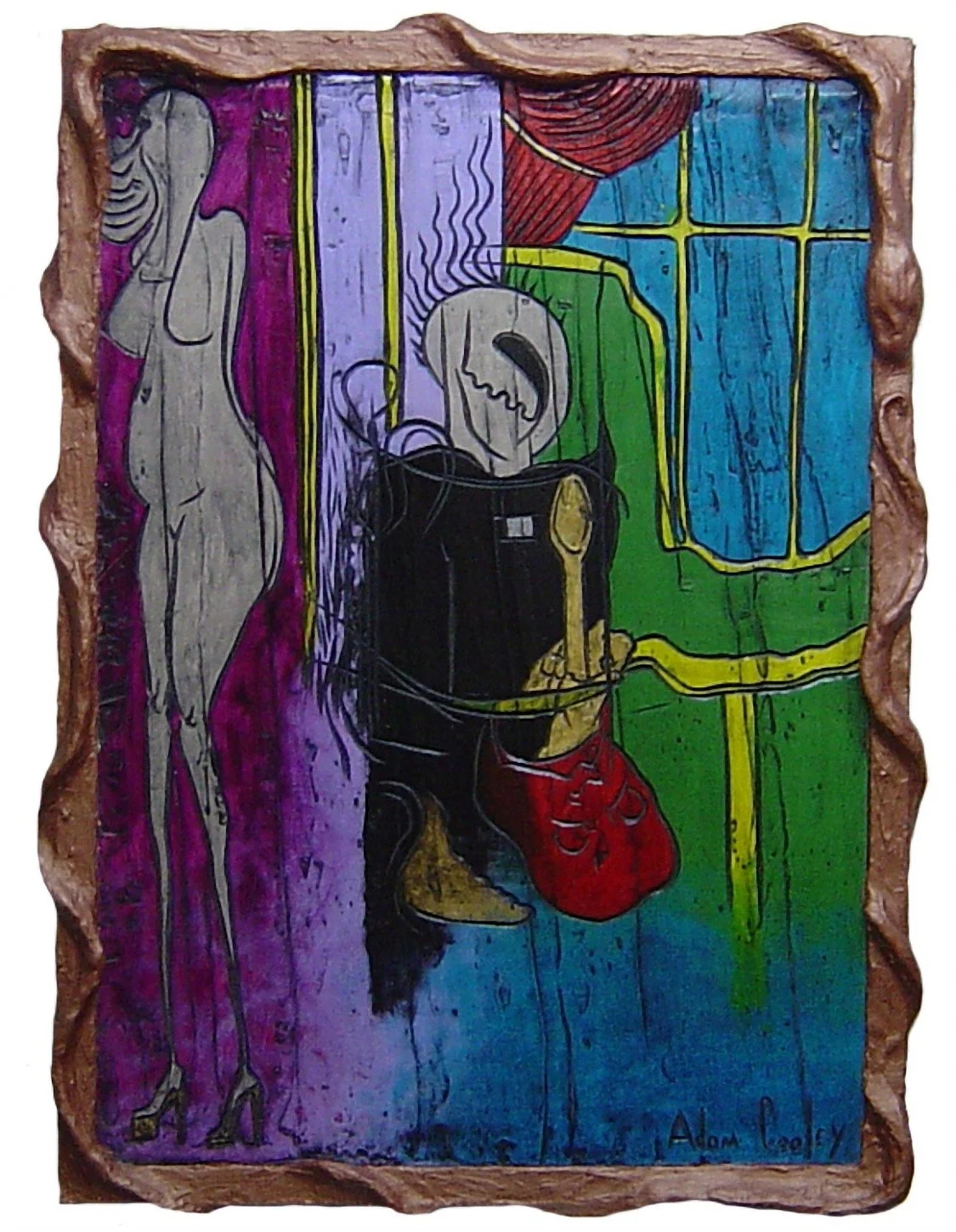
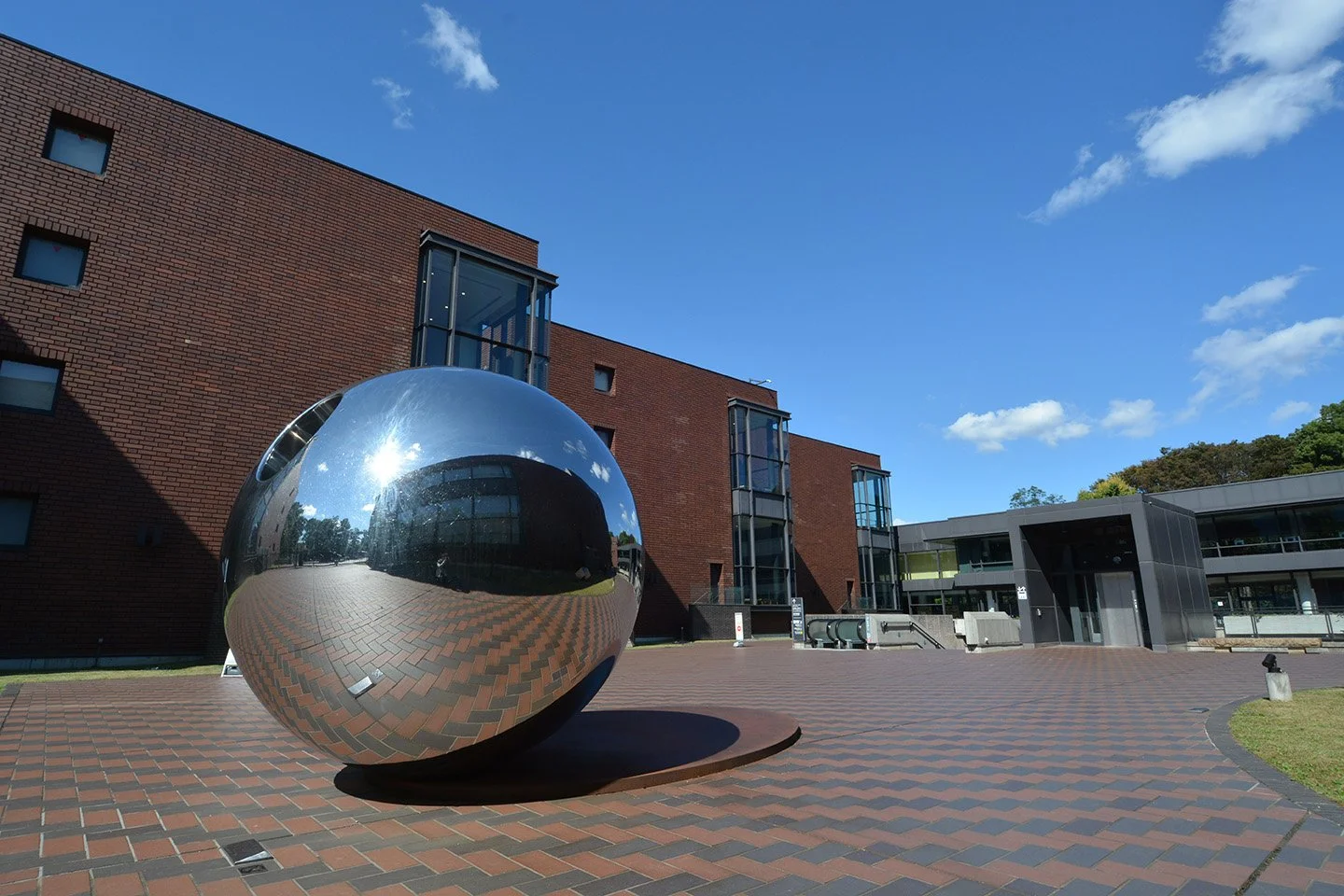
The Tokyo Metropolitan Museum of Modern Art sits in Ueno Park, one of the oldest and most quietly authoritative cultural precincts in Japan. To have work on its walls is to enter a conversation that the building has been having with serious art for nearly a century. When four large paintings from Cooley's Anella exhibition were selected by a curator and installed in the museum's lower level gallery, they became the first thing visitors encountered on entering that space: Cockadoodle Surprise, The Black Beauty, Cooking Dinner for the Little Lady, and a fourth work whose frame, constructed from long artificial fur, appeared to be simultaneously exploding outward and growing across the wall around it. Four works, a small and minimal presentation by the standards of the institution, and yet in that space they filled the walls entirely, their scale and density demanding exactly the kind of sustained attention the museum's quiet authority invites.
The paintings had been made for Anella, where everything could be touched. The heavy impasto surfaces, the carved relief, the frames built as integral parts of each work rather than containers for them, had been conceived for the full range of human perception. In the museum they could only be looked at, and looking, without the option of touching, changes what a surface does. The carved and built-up grounds of these paintings reward that kind of attention differently from how they reward the hand: the eye moves into the relief rather than across it, finding depth that touch would have resolved too quickly into simple texture.
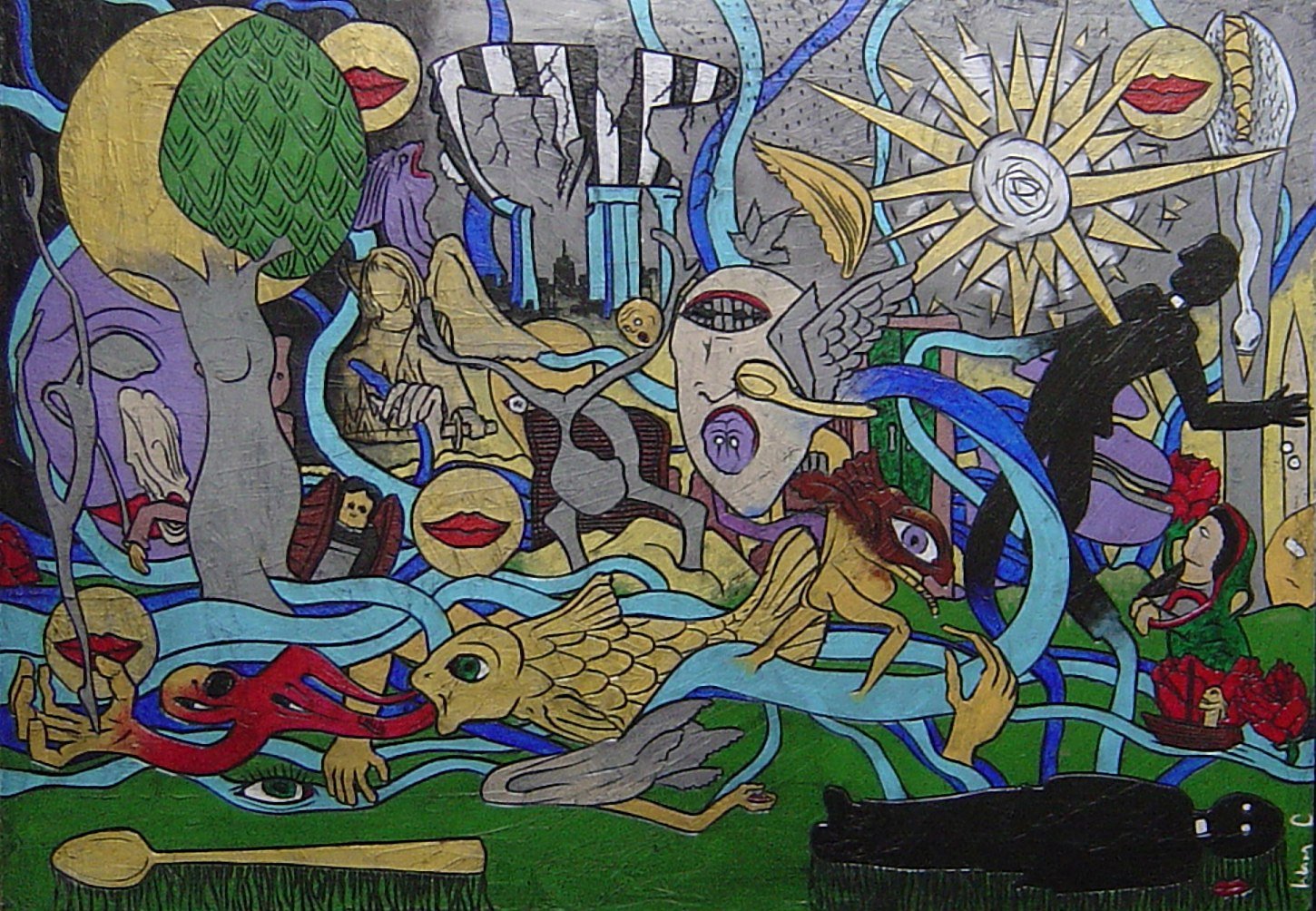
Cockadoodle Surprise was, at that point in his practice, the work Cooley considered his best. Looking at it, the claim is not difficult to understand. The canvas is dense with figures, hybrid beings, mouths, a golden fish, a black cat, a winged mask, a silhouetted dancer, all moving through a landscape held together by swooping blue lines that function simultaneously as water, as energy, as the connective logic of a world that has its own rules and applies them consistently. Gold leaf catches the light at intervals across the composition. The painting does not resolve. It accumulates, and the accumulation is the point.
Cooley travelled to Ueno and stayed near the park for the week of the exhibition. He visited once, just before closing, when the crowds had gone and the lower level gallery had settled into the particular stillness that museums hold after hours. To see work you have made hanging in a museum for the first time, in that quality of light and silence, is an experience that resists easy description. It felt good, he has said simply. It felt humbling.
The title he gave the exhibition was chosen after his thinking had already begun to shift. Introspection was not a description of the work so much as a name for the process that was already underway, a looking inward, a willingness to wander into the darker parts of the self and find out what was actually there. The museum exhibition was, in that sense, both an arrival and a threshold: the most institutional moment of his career to that point, and the last one for a decade. What the introspection revealed sent the work in an entirely different direction, away from gallery walls and museum floors and into the streets and mountains and public bathrooms of Japan, where it would operate outside every institutional frame for the next ten years. The title turned out to be more accurate than anyone attending the opening could have known.