The Golden Woman
The Red Brick Warehouse
Osaka, Japan
2002
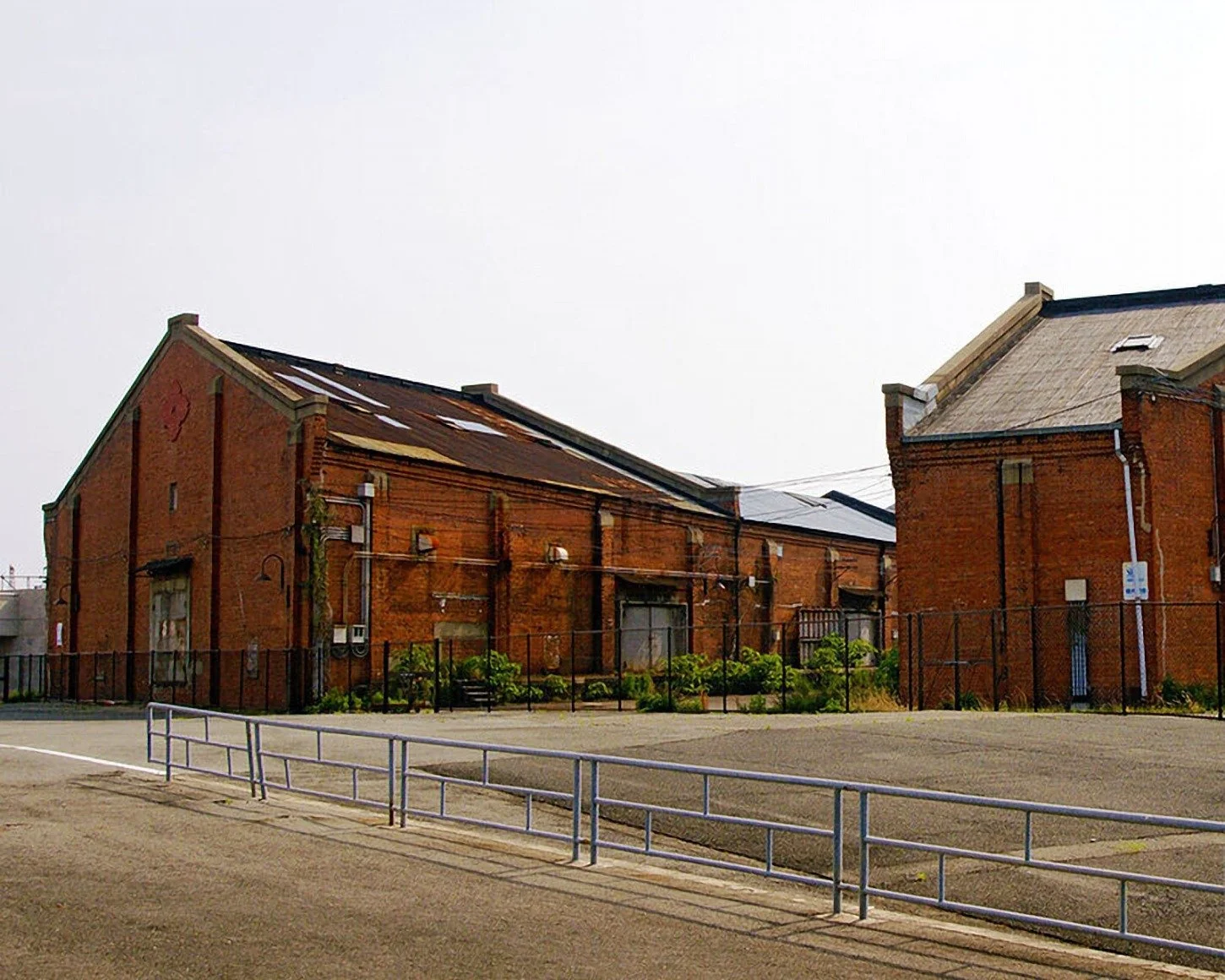
The Chikko Red Brick Warehouse sits near Osaka Bay, a cluster of buildings constructed in 1923 as port storage and built to last: thick walls, high ceilings, the particular atmosphere of a space that was made for industrial purpose and has never entirely shed it. By 2002 the warehouses had passed from port use into a period of transition, their vast interiors available for events and exhibitions, the raw brick and exposed structure unchanged. It was exactly the kind of space that the underground art world finds before anyone else does, before the renovations arrive and the atmosphere is managed away. For The Golden Woman, it was the right room entirely.
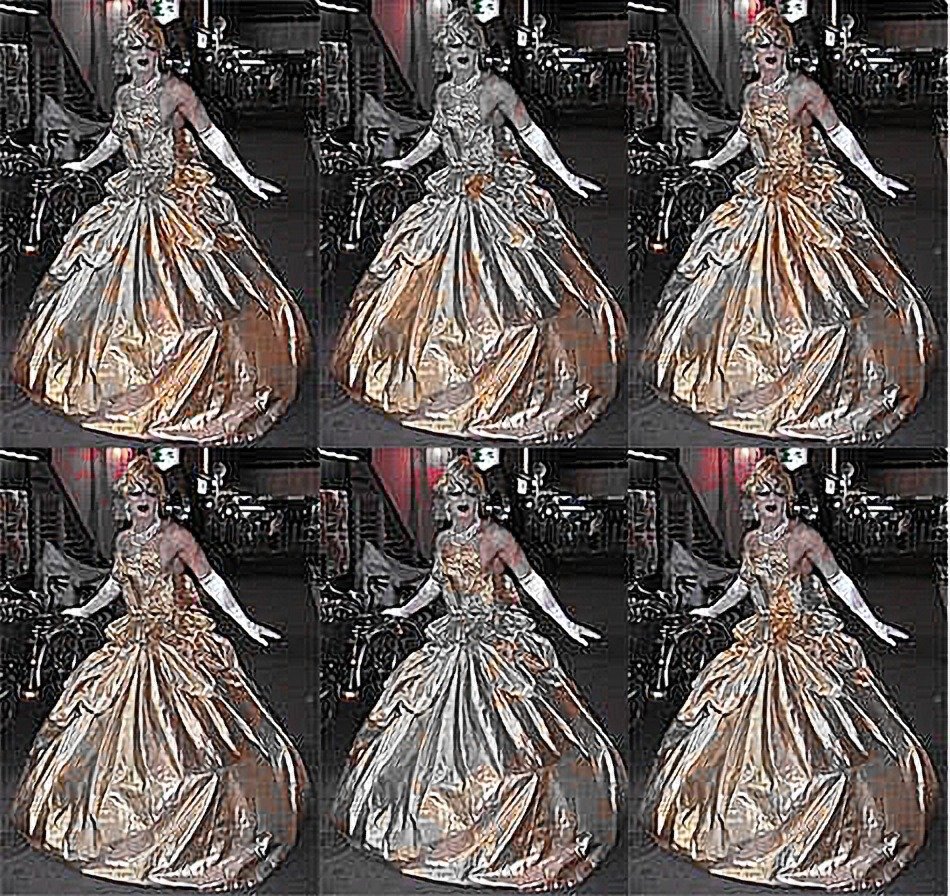
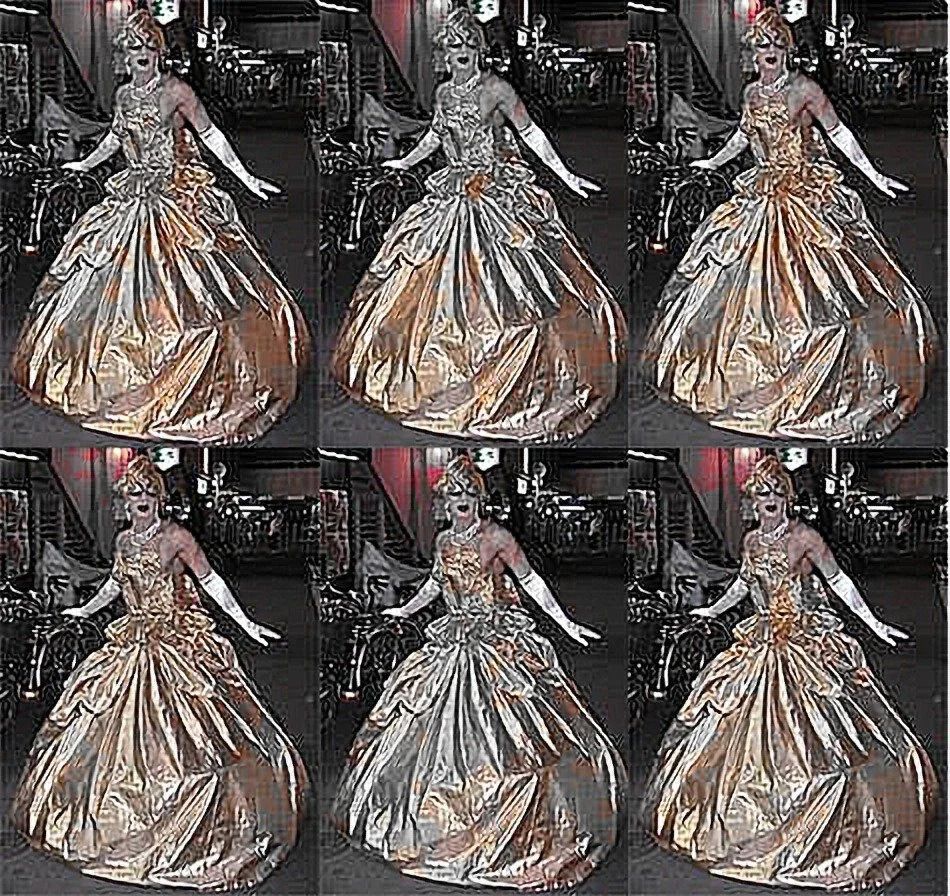
The performance that Cooley brought to this space was not an exhibition in any conventional sense. A gigantic gold dress, constructed to a scale that transformed the body wearing it into something closer to architecture than costume, was the work's central object and its primary surface simultaneously. Wind machines filled the space with moving air, the dress catching it and billowing outward, the gold fabric throwing light back across the brick walls and the people standing among them. The dress was not a costume in the theatrical sense. It was a structure, an environment, a thing that occupied the room on its own terms.
A silent film, made collaboratively with a group of filmmaker and artist friends, was projected directly onto the dress as Cooley performed within it. The film showed Cooley himself moving through a sequence of transformations: different characters, different costumes, different masks, the face and body changing from one form to another through the logic of the film's own internal world. Projected onto the gold surface of the dress, the images did not stay there. The fabric caught them and scattered them outward, across the crowd, across the brick walls of the warehouse, the moving images and the moving air and the moving figure inside the dress all operating simultaneously, the room itself becoming the screen. At one point the film showed Cooley wearing the dress itself, multiple exposures overlaid in a single frame, so that what was being projected onto the dress was an image of the dress being worn, the figure inside the real dress receiving images of itself projected from without, the boundary between the performer and the projection dissolving entirely. The gold reflected everything back into the room and the room reflected everything back onto the gold.
The Golden Woman marked the beginning of the period that would take Cooley's practice outside the gallery entirely for the next decade. What it proposed, in that unmanaged industrial space near the water, was a set of questions about the relationship between the body and the image it projects, about transformation as both subject and method, about what performance can do in a space that has never been asked to contain it before. Electra Raygun had arrived through galleries and museums, a persona formed in and through institutional spaces, and it was that same impulse toward transformation and self-recreation that The Golden Woman made visible in an entirely different register. The underground art world of Osaka had found, in this vast and resonant building, exactly the kind of encounter it existed to produce: unrepeatable, unarchived, the work existing fully only in the moment of its making and dissolving, like the projected images across those brick walls, the instant it was done.