The Silver Key
Gallery Chayamachi
Osaka, Japan
February 28 – March 5, 2013
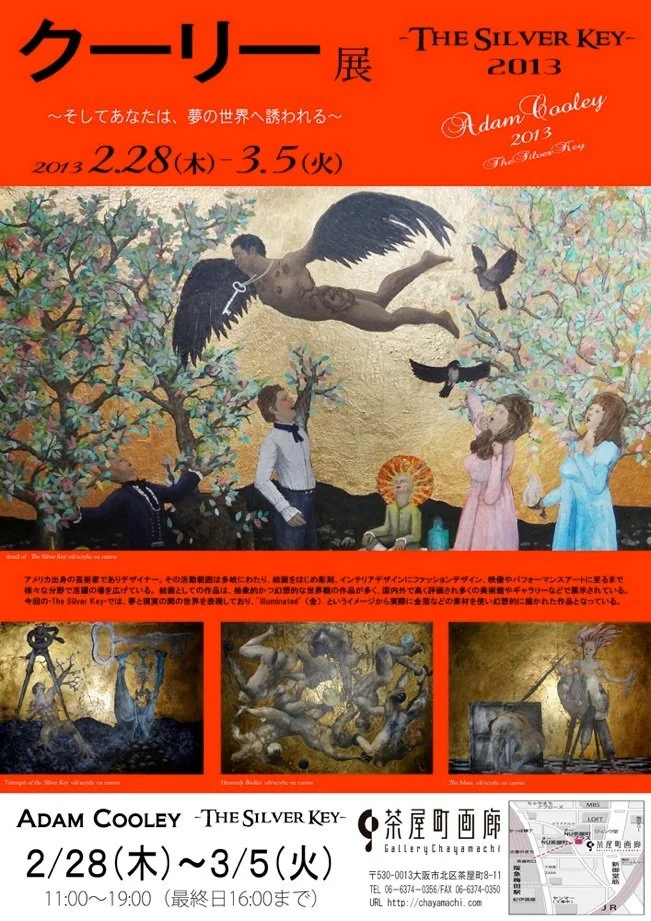
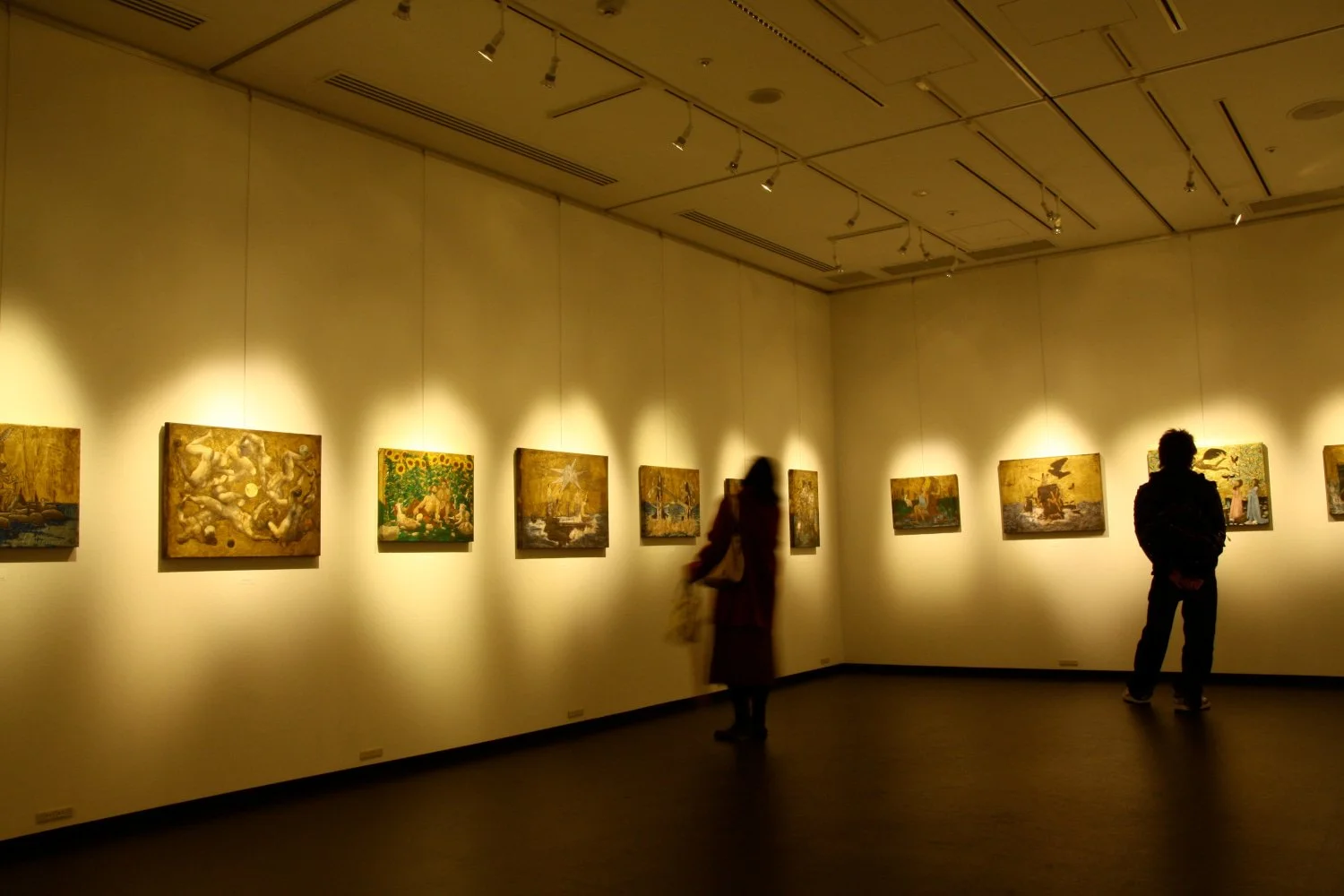
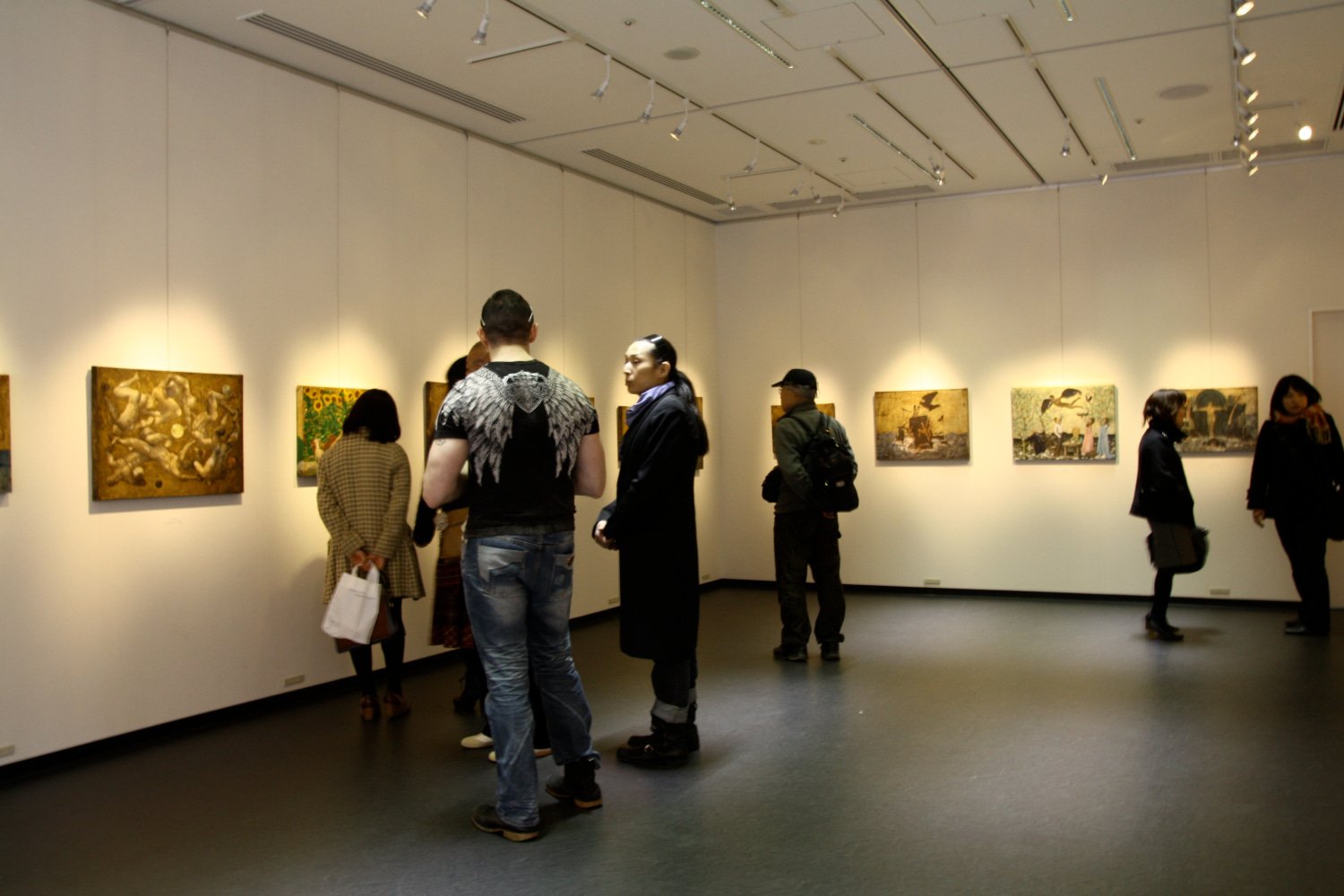
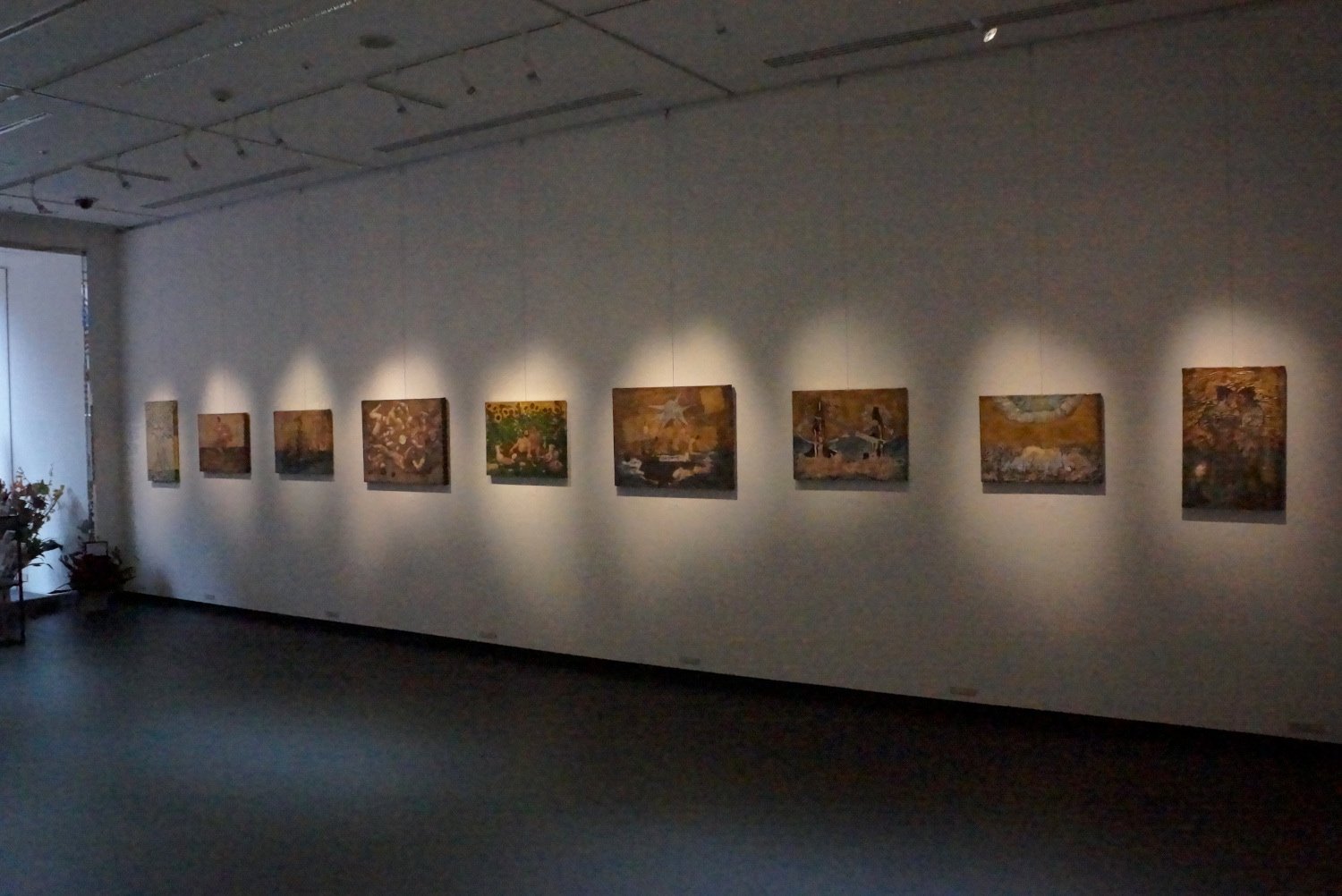
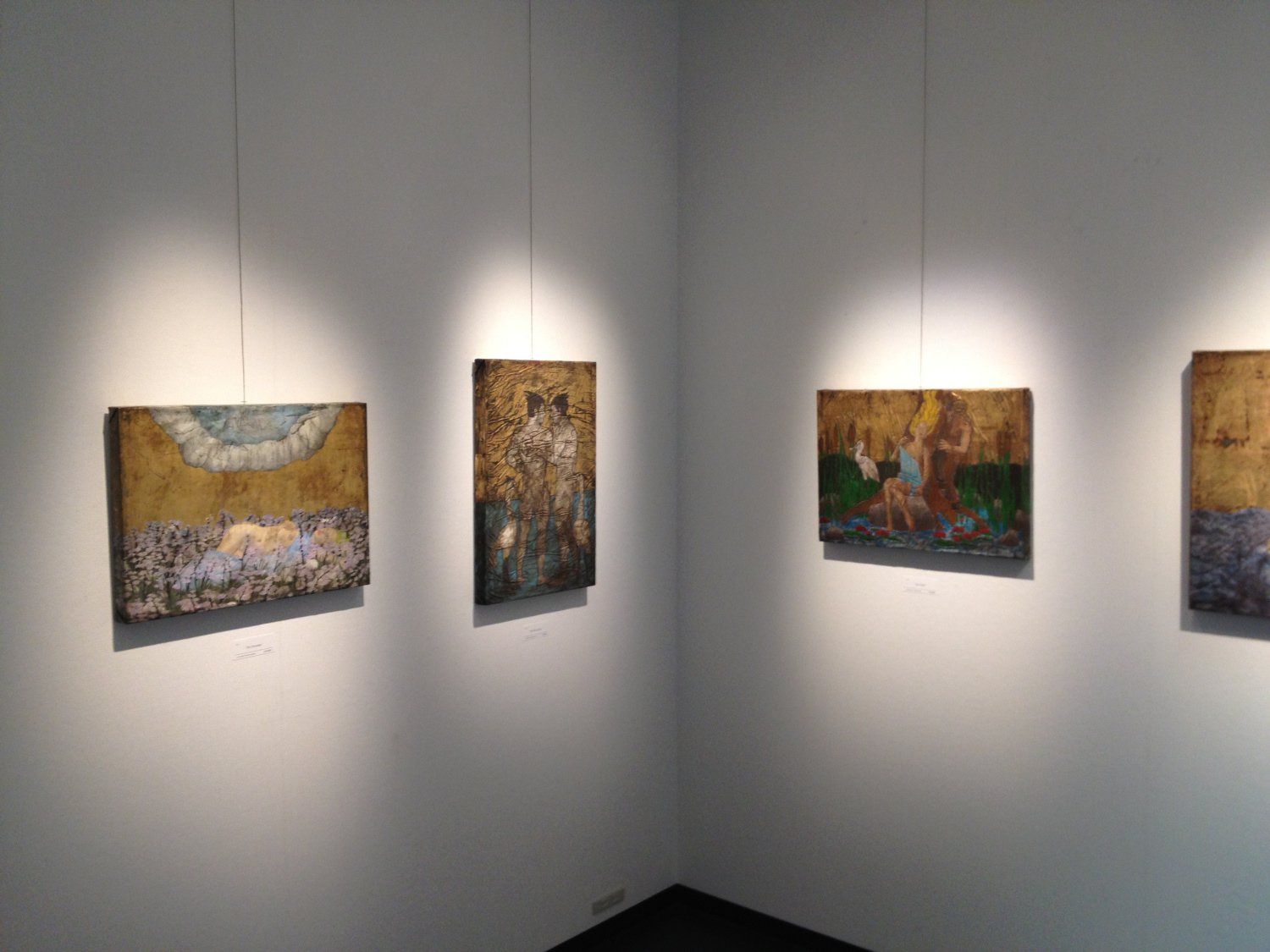
The title is borrowed from H. P. Lovecraft, a story about the equal validity of the dream world and the waking one, and it fits. The approximately 28 works in The Silver Key were painted in acrylic on linen canvas, built up through Cooley's oxidizing and patina process, their surfaces worked through successive applications of gold, copper, silver and other metallic leaves, aged and burnished and manipulated until they hold a depth that paint alone cannot produce. The majority were illuminated with gold leaf. They occupy exactly that threshold the Lovecraft title proposes: figures moving through golden skies, men and women and stranger beings crossing boundaries, inhabiting a landscape that is neither fully waking nor fully dream, neither entirely of this world nor clearly of another. Running through every painting, hidden in some and revealed in others, was a silver key, a single motif connecting the works into something closer to a continuous story than a conventional exhibition, a thread the viewer could follow or lose and find again as they moved through the room.
The titular painting made the logic of the whole explicit. Cooley himself appears in it, his arms transformed into great black wings, the silver key hanging at his neck, soaring above a golden orchard populated by figures, birds, and skulls half-buried among the stones below. It is an image that belongs to the tradition of the artist as self-mythologizing subject, the painter inside the painting, inhabiting the world the work proposes rather than simply depicting it from the outside. That Cooley chose to show himself winged and airborne, suspended between the orchard below and whatever lies above the painting's frame, says something essential about what the series was reaching toward: a position between states, between worlds, between the known and the genuinely unknown.
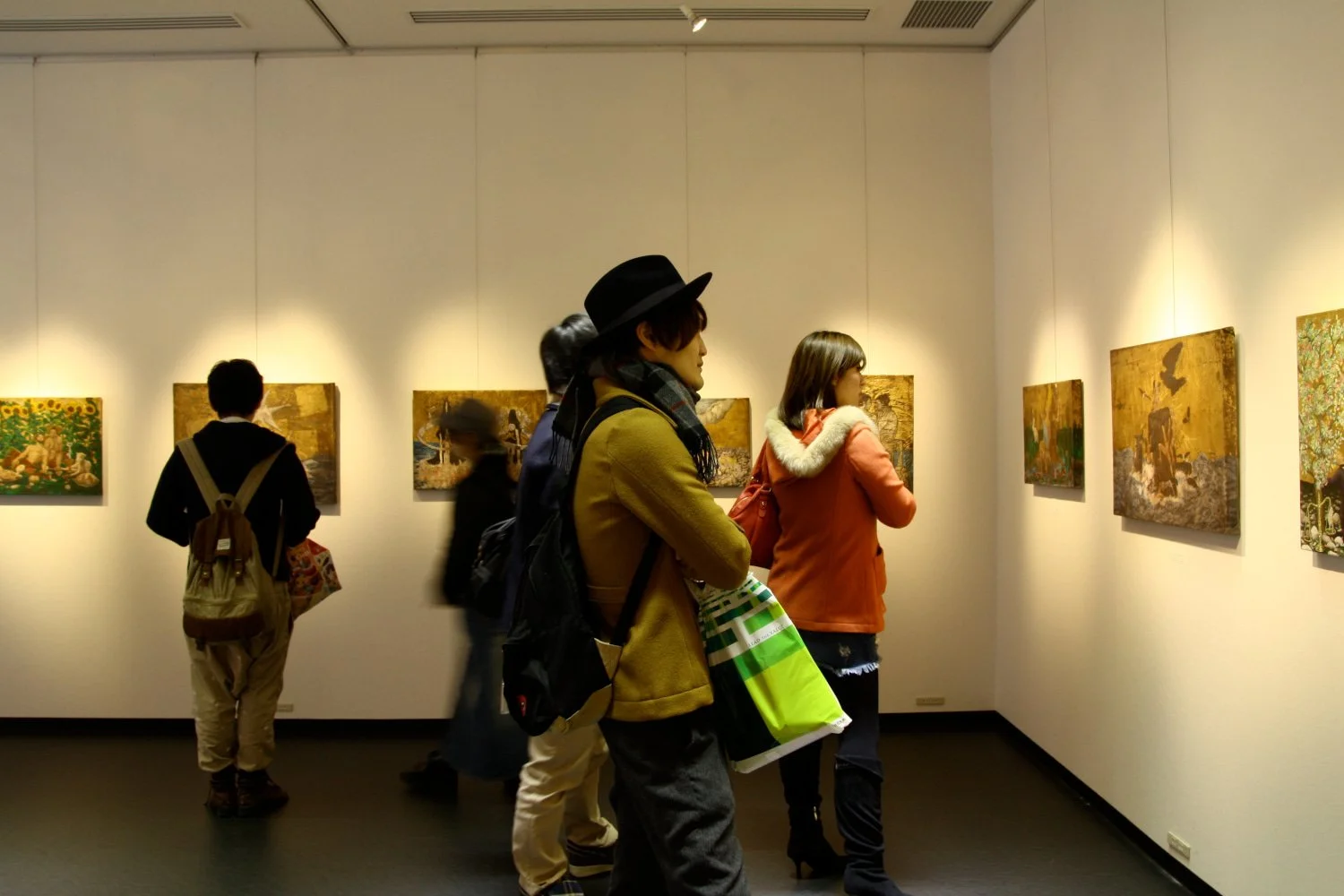
The gold leaf was not decorative. It transformed the room and it transformed the viewer's relationship to the work in ways that went beyond the purely visual. The gilded surfaces caught the gallery light and reflected it back, and in doing so caught something else entirely: the viewers themselves, their own faces and figures glimpsed within the paintings as they moved through the space. To stand in front of these works was to find yourself briefly inside them, your own reflection appearing in that golden landscape whether you had intended to enter it or not. The effect was faintly unsettling and genuinely difficult to walk away from unchanged, the work insisting on a kind of participation that most painting does not require.
The themes of life, death, and the territory between them were ones Cooley drew from direct experience rather than from the literary tradition the title invoked. Born with Long QT syndrome, a rare genetic condition affecting the heart's electrical rhythm, he had by this point survived five episodes of heart failure. The world The Silver Key proposed, where the line between living and not living becomes a threshold rather than a wall, where the territory on the other side of that line is navigable rather than final, was not arrived at through imagination alone. These were paintings made from the knowledge of what that threshold feels like from both sides, and the gold leaf that suffused them carried that knowledge in every surface.
The Silver Key was Cooley's first solo exhibition at Gallery Chayamachi, Osaka, the beginning of a relationship with the gallery that would produce some of the most significant work of his career across the years that followed. It announced, with complete confidence, an artist who had found both his subject and his material language, and who understood that the two were inseparable.