The Lost Empire
Gallery Chayamachi
Osaka, Japan
March 20-25, 2014
Archaeology begins with a conviction: that the past left something behind, and that those objects, however fragmentary, however stripped of their original context, carry enough information to reconstruct the world that made them. The discipline is built on the faith that surfaces speak, that materials hold memory, that the careful attention brought to an unearthed fragment can summon, at least partially, the civilization that produced it. The Lost Empire takes that faith seriously. It simply declines to be bound by the requirement that the civilization in question actually existed.
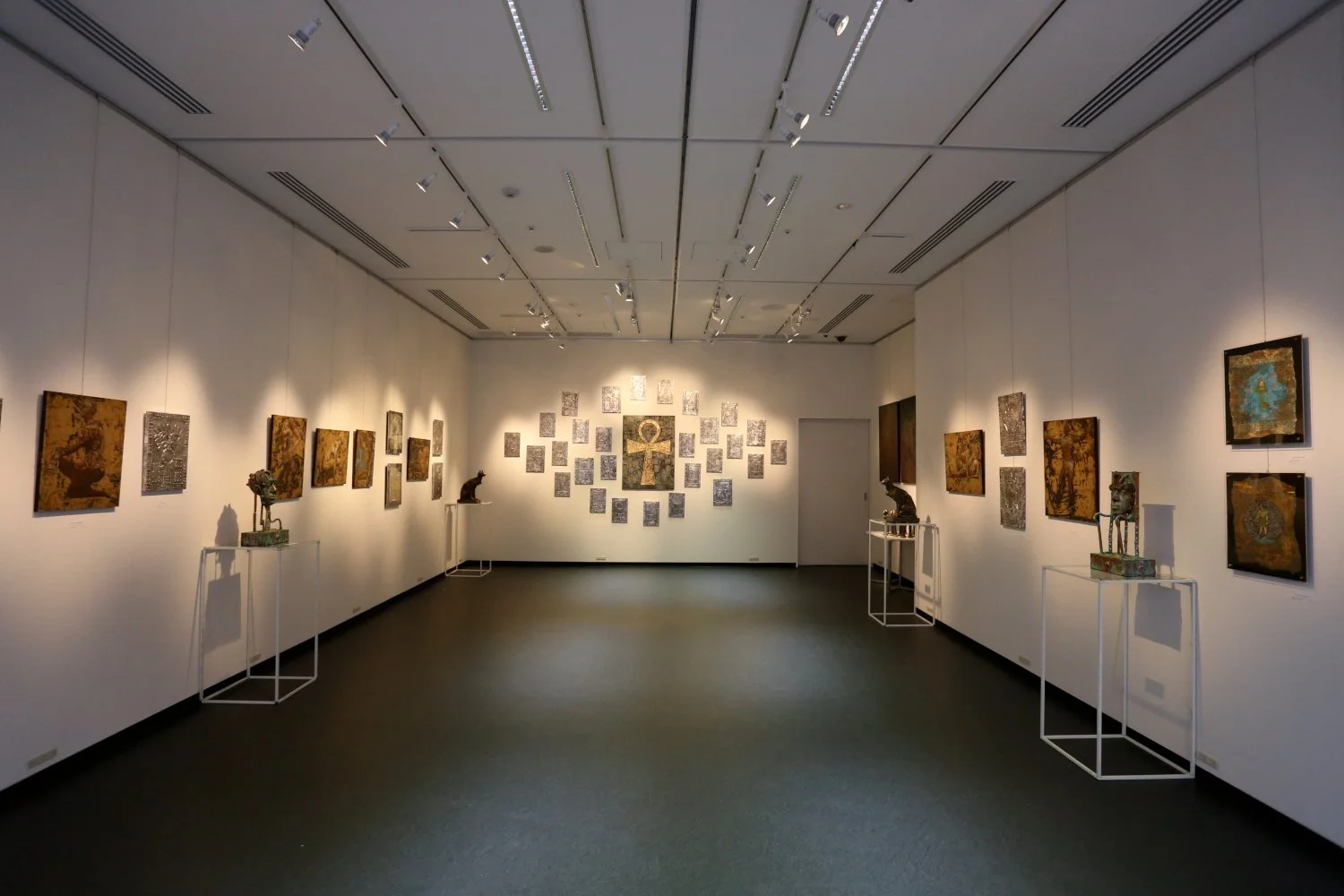
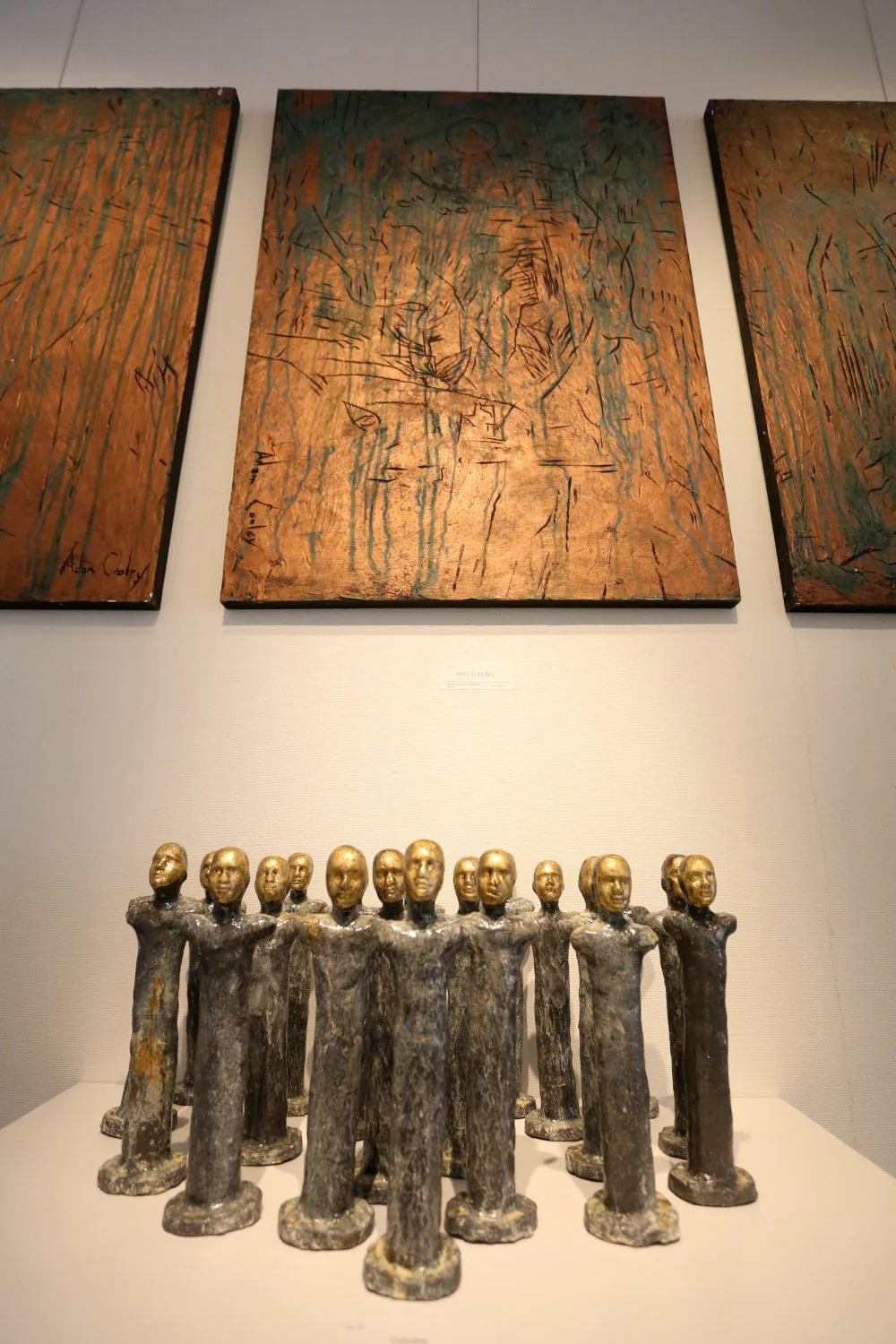
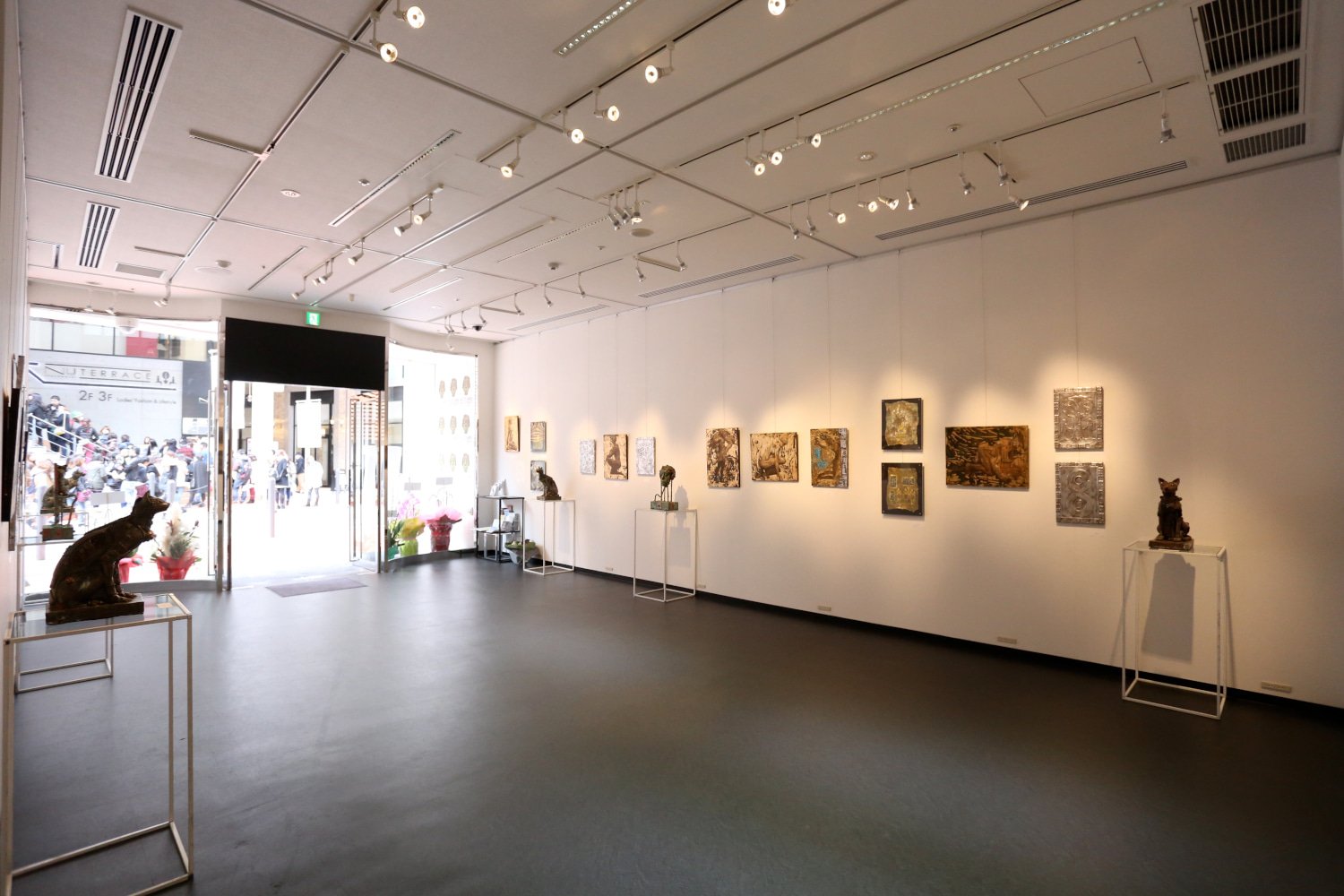
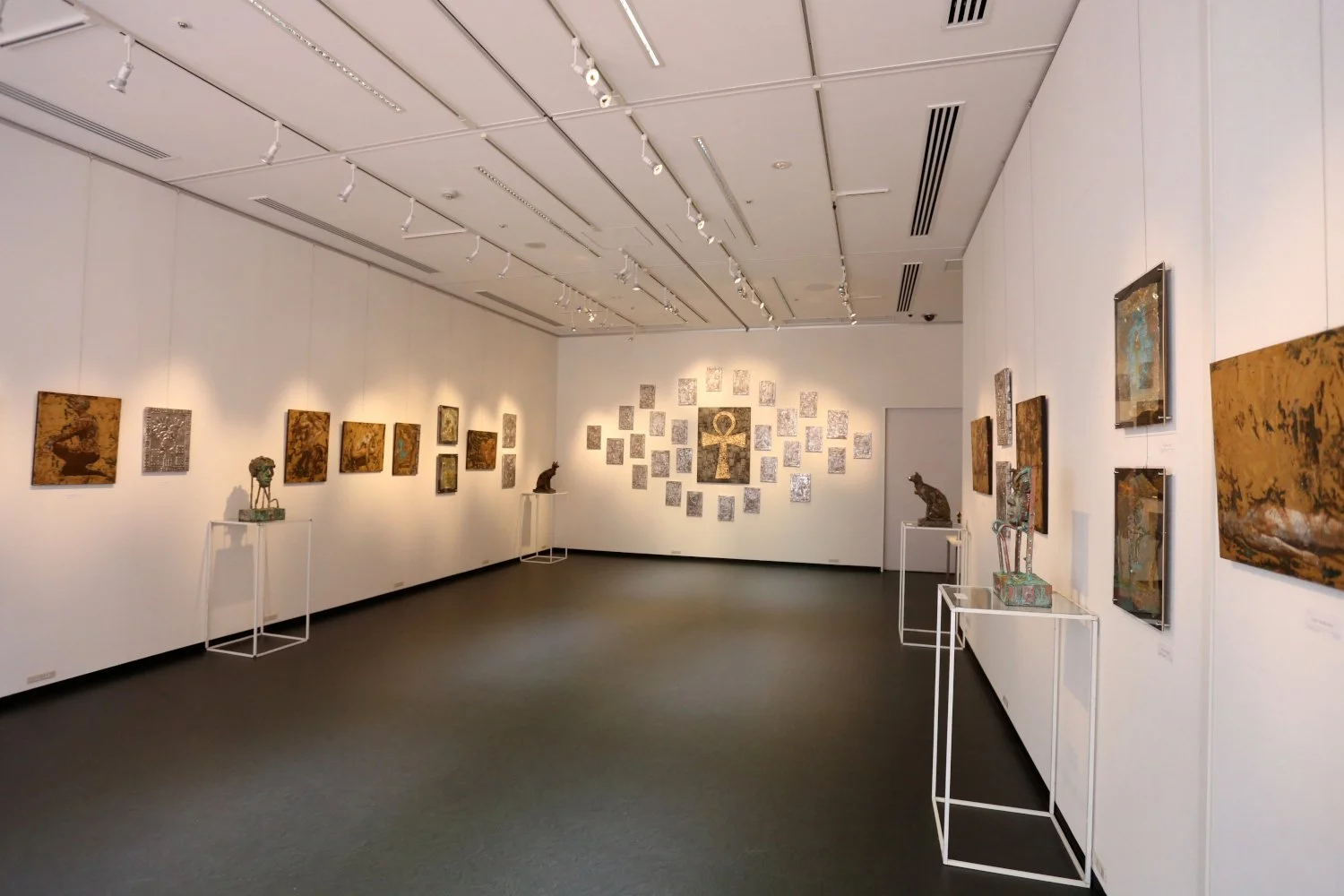
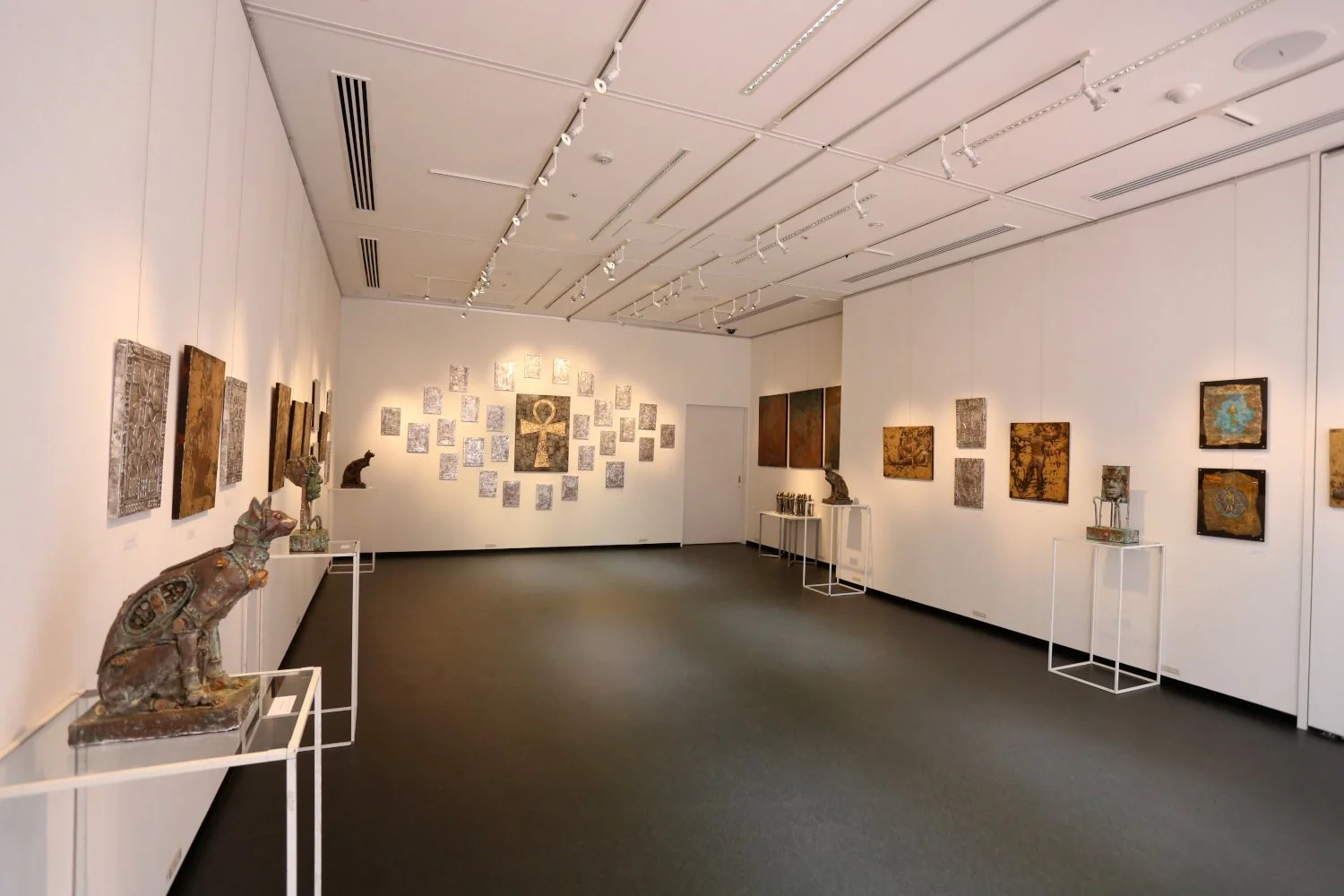
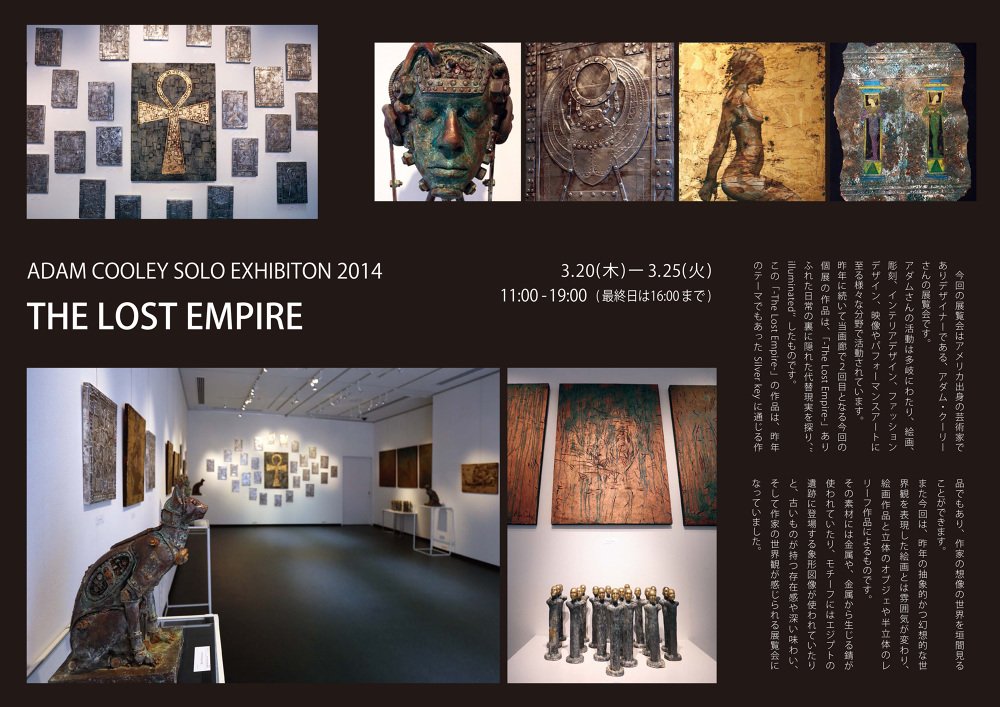
The works Cooley brought to Gallery Chayamachi in March 2014 were made to be found rather than made to be seen. The surfaces are copper and metal leaf, patinated and oxidized through a sustained process of layering, abrasion and chemical treatment until they carry a density that paint alone cannot produce. They look as though they have come through something: centuries of burial, perhaps, or the slow transformation that overtakes objects when the culture that valued them has disappeared and they have been left to develop their own relationship with time. The paintings are dense and incised, their grounds worked and reworked until every inch holds the quality of evidence. Not evidence of anything specific, not a code to be solved or a narrative to be deciphered, but evidence in the broader sense: the sense that something was here, that someone made this, that the making was deliberate and the intention was permanence.
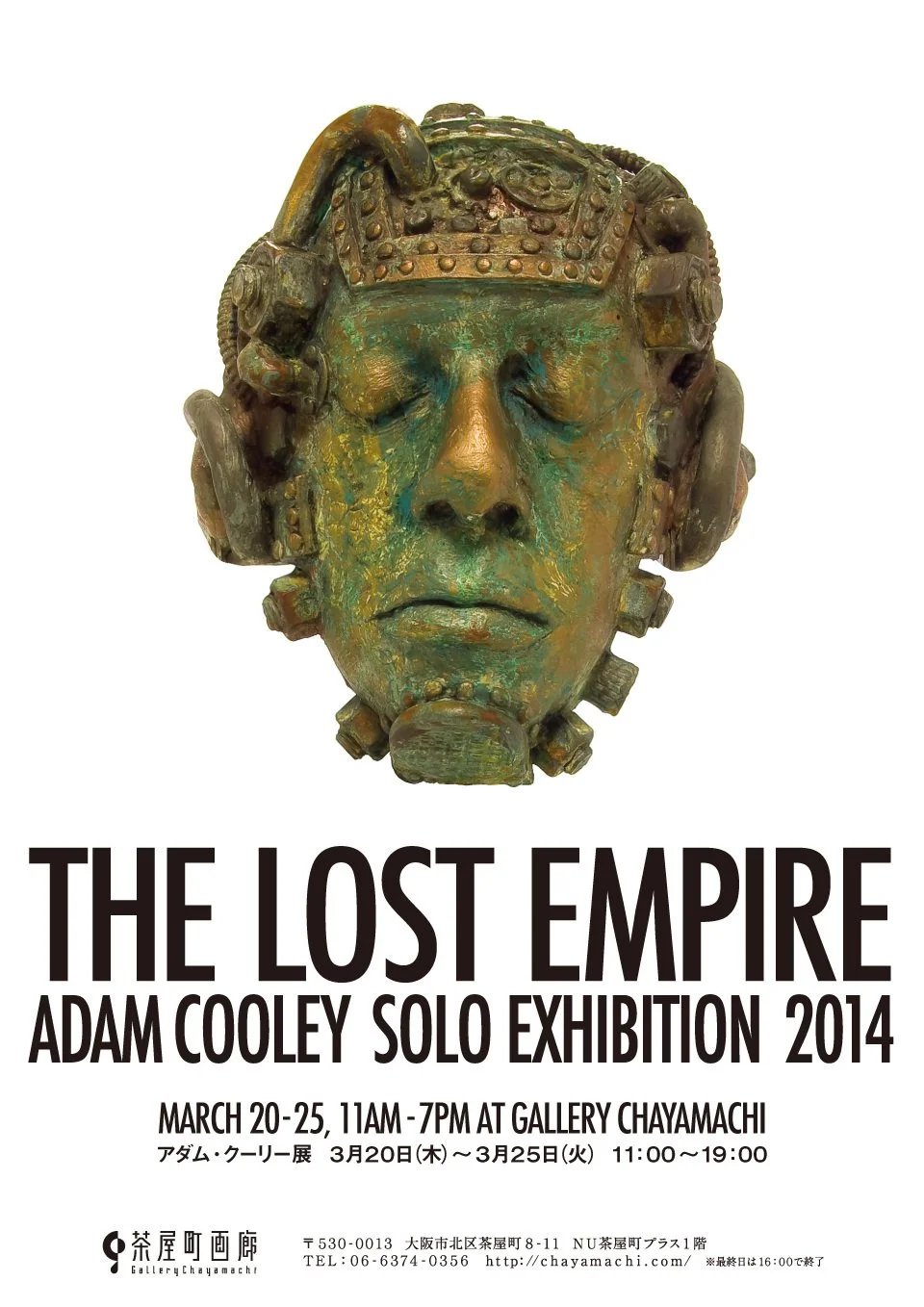
The sculptures that occupied the floor and plinths of the gallery shared that quality. Bronze cats sat with the self-possessed stillness of guardians. A crowned mask commanded its own silence. Gilded standing figures gathered with the patient gravity of objects that have been waiting. None of them announced themselves. They simply occupied the room as though they had always been there and found the contemporary gallery setting mildly beside the point.
On the back wall, anchoring the entire exhibition, Cooley had built his complete reimagining of the tarot's major arcana. Not painted but constructed, each of the twenty-two cards of the major arcana reinterpreted as a wood and aluminum relief, its imagery drawn from the visual language of this invented world, its figures populated by the same beings that moved through the paintings on the surrounding walls. A large gilded ankh held the center of the arrangement, the relief panels distributed around it with the formal logic of something ceremonial, something that once meant exactly what it looked like it meant. The tarot is already one of Western culture's most layered symbolic systems, its imagery assembled and reassembled across centuries of use, appropriation and transformation. To make it the founding iconography of a lost civilization was to acknowledge that all iconography begins somewhere, that every symbol was once invented by someone who needed it to carry weight, and that the weight it carries has less to do with its age than with the conviction behind it.
What the room produced, for those who spent time in it, was the particular pleasure of a fiction so internally coherent that the question of its literal truth becomes genuinely irrelevant. The lost empire had its own objects, its own ceremonial forms, its own hierarchy of symbols and materials. The civilization that made these things understood permanence, understood ritual, understood the relationship between surfaces and time. That Cooley had invented all of it, working through his layering and oxidizing process in an Osaka studio, made it no less real as a presence in the room. If anything, the knowledge that a single living artist had produced this entire world, artifact by artifact, gave the exhibition an additional layer of strangeness: the uncanny sensation of standing inside someone else's complete and private cosmology, rendered in materials that had been deliberately aged into authority.
The Lost Empire was Cooley's second solo exhibition at Gallery Chayamachi, Osaka, and one of the most formally unified bodies of work of his career to that point: an exhibition that did not represent a lost civilization so much as produce one, with the patience and seriousness of someone who understood that the most convincing worlds are the ones built from the inside out.