Mechanical Animals
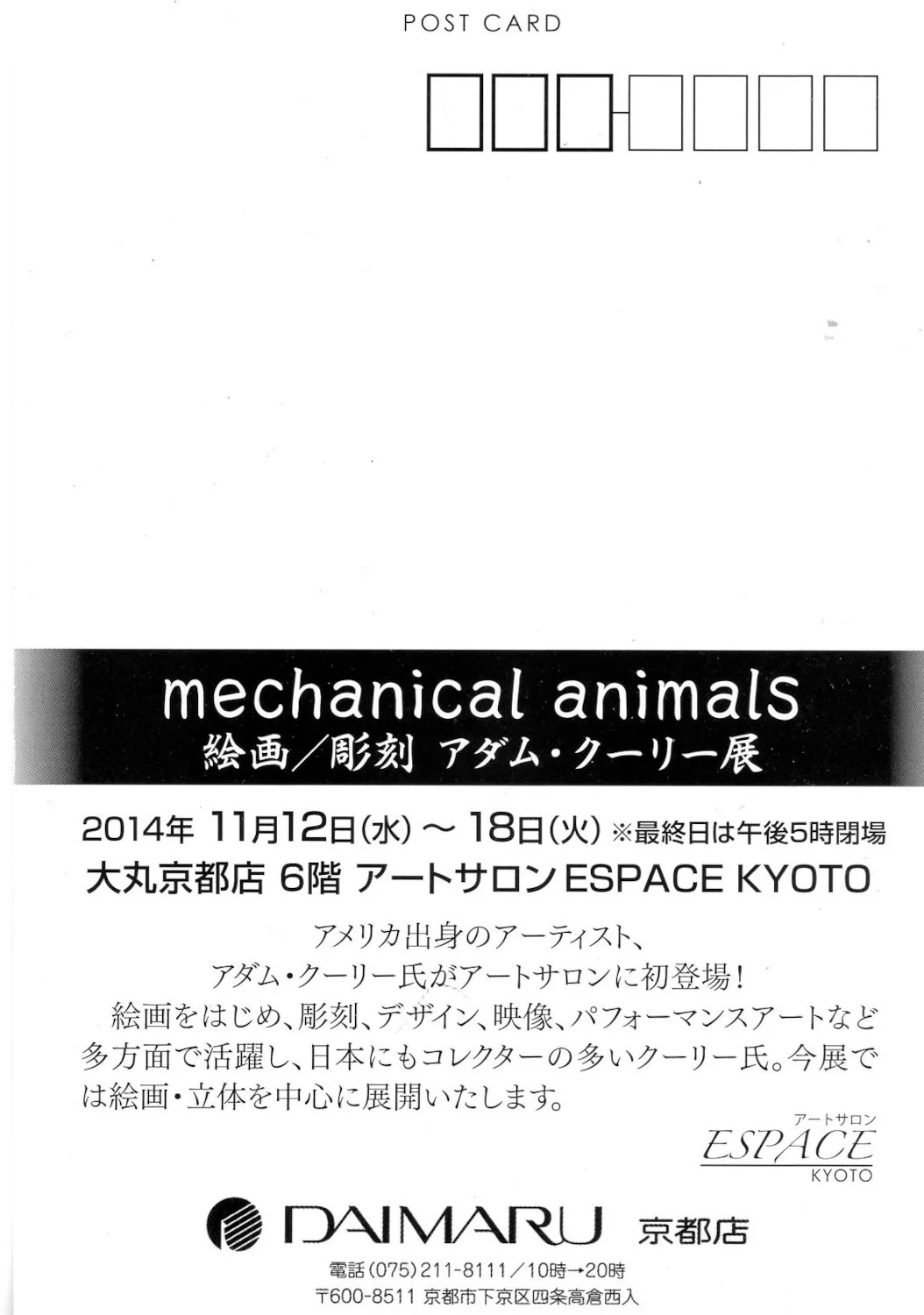
Espace Kyoto, Daimaru Department Store
Kyoto, Japan
2014
We have always been mechanical animals. The title of this exhibition is not a provocation so much as an observation: that beneath the complexity of human experience, beneath culture and language and feeling and everything we have built to distinguish ourselves from the purely biological, there is something fundamentally systematic at work. A rhythm. A pulse. A set of processes running beneath consciousness that we did not choose and cannot override. Cooley had been circling this idea for years, and Mechanical Animals was the moment it came into full focus as a body of work.
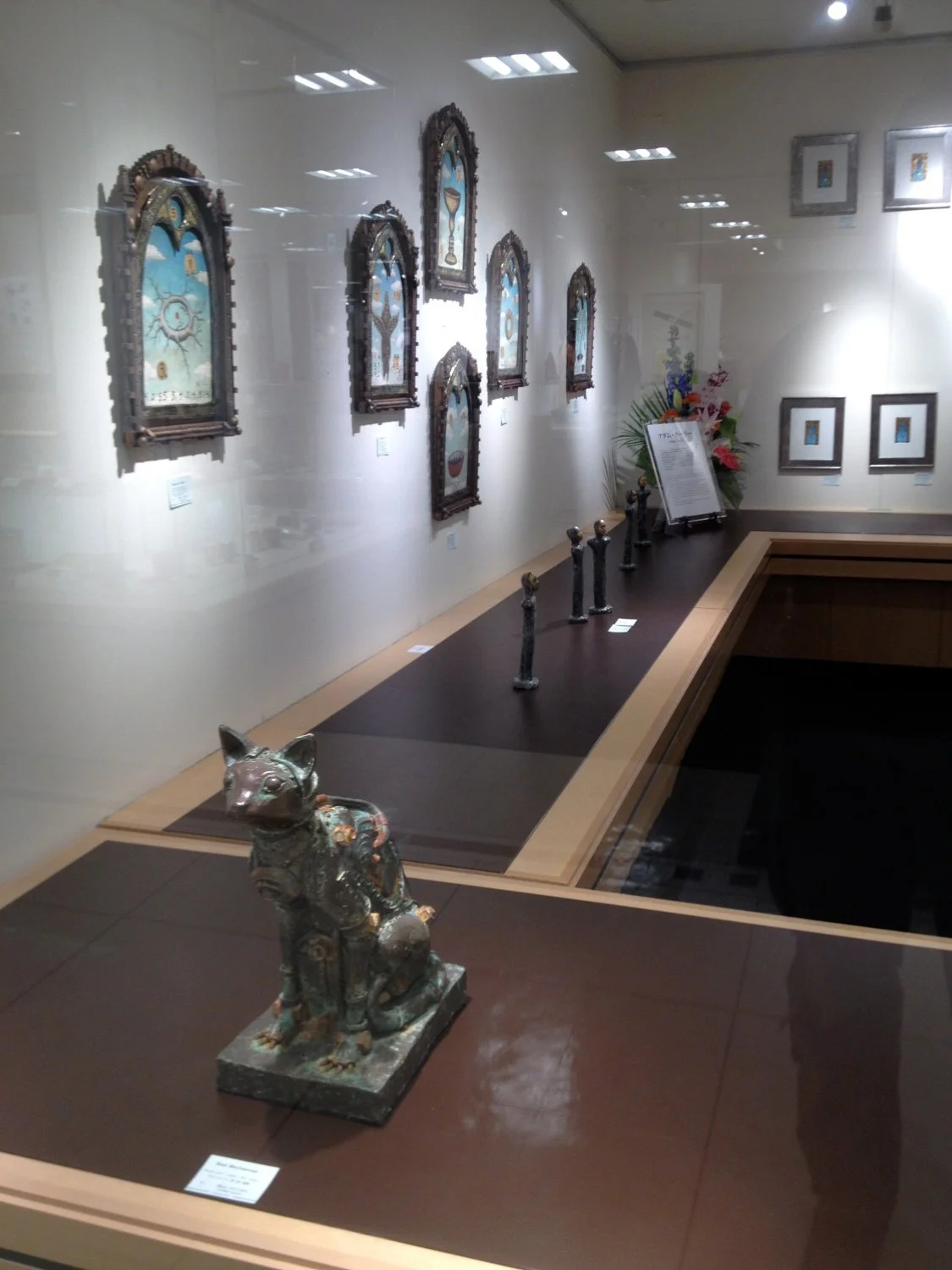
The Art Salon ESPACE KYOTO on the sixth floor of Daimaru Kyoto sat within an institution with a long and distinguished history of bringing serious contemporary art to a broad public. Daimaru's commitment to art across its stores had made it one of the most significant platforms for contemporary work in Japan, and Mechanical Animals was Cooley's first major solo exhibition within that context, and the first by a living foreign artist in that particular space. The setting and the work pressed against each other productively. These were not comfortable paintings. They asked, with complete seriousness, what we are made of and what runs us, and they asked it within a venue whose relationship to art carried genuine weight.
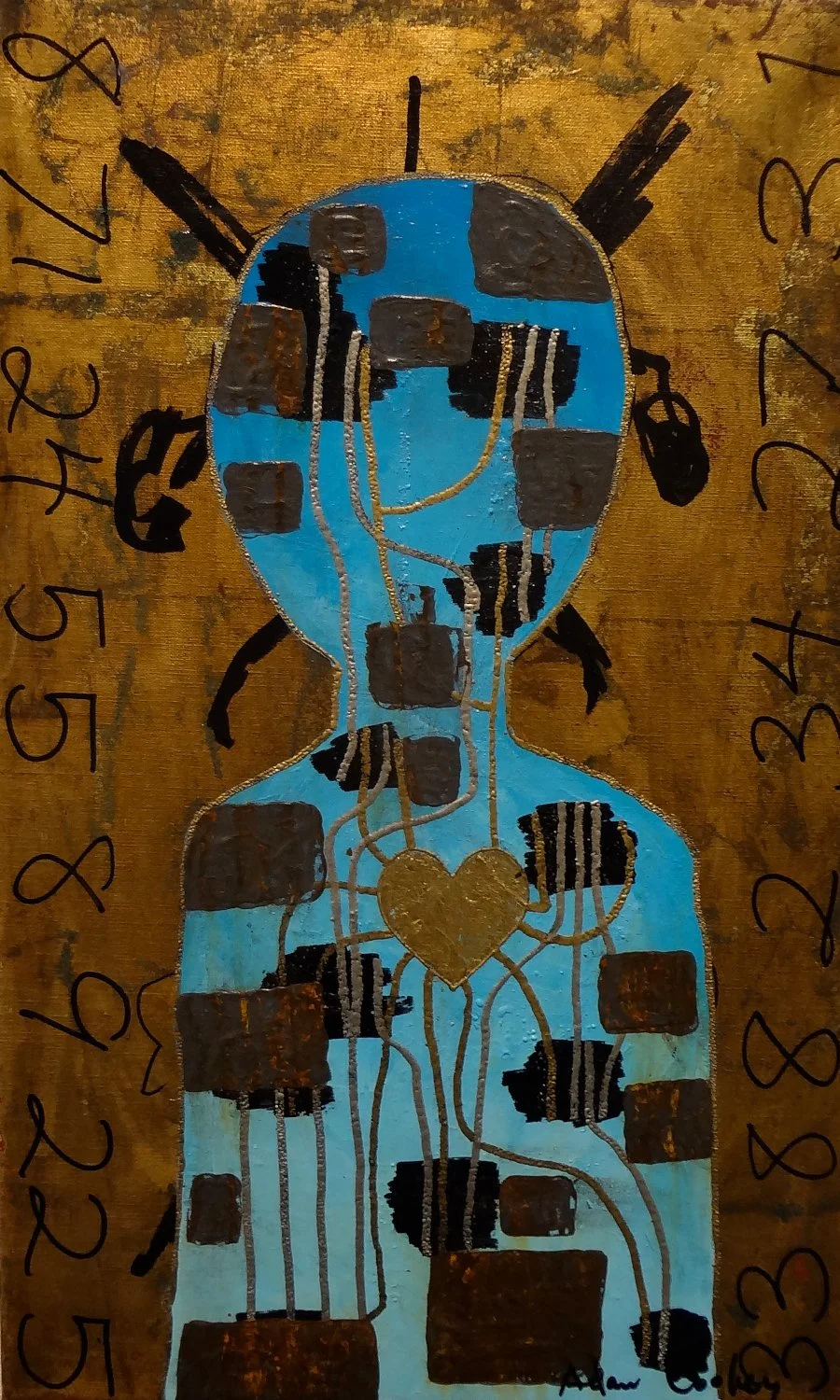
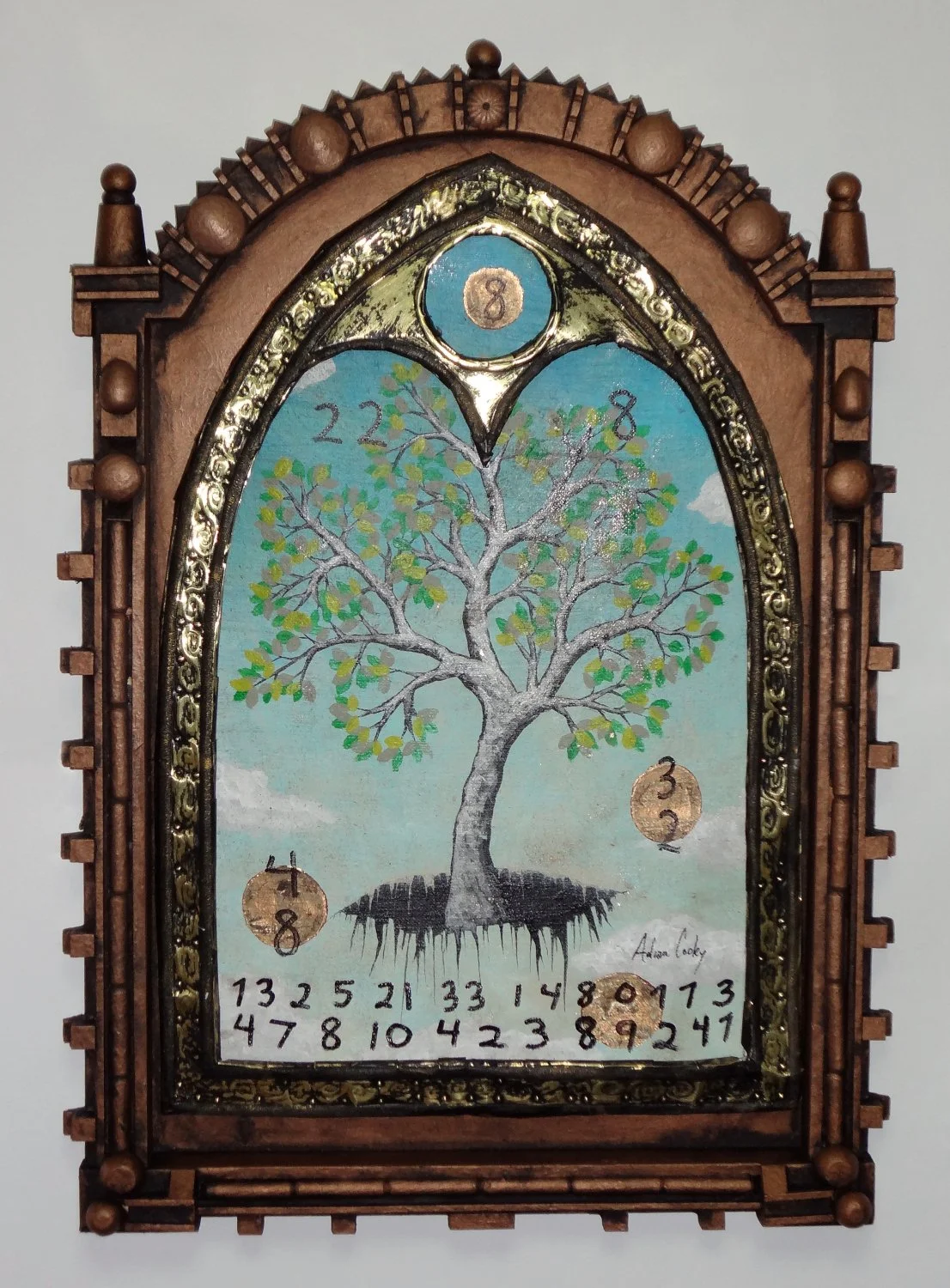
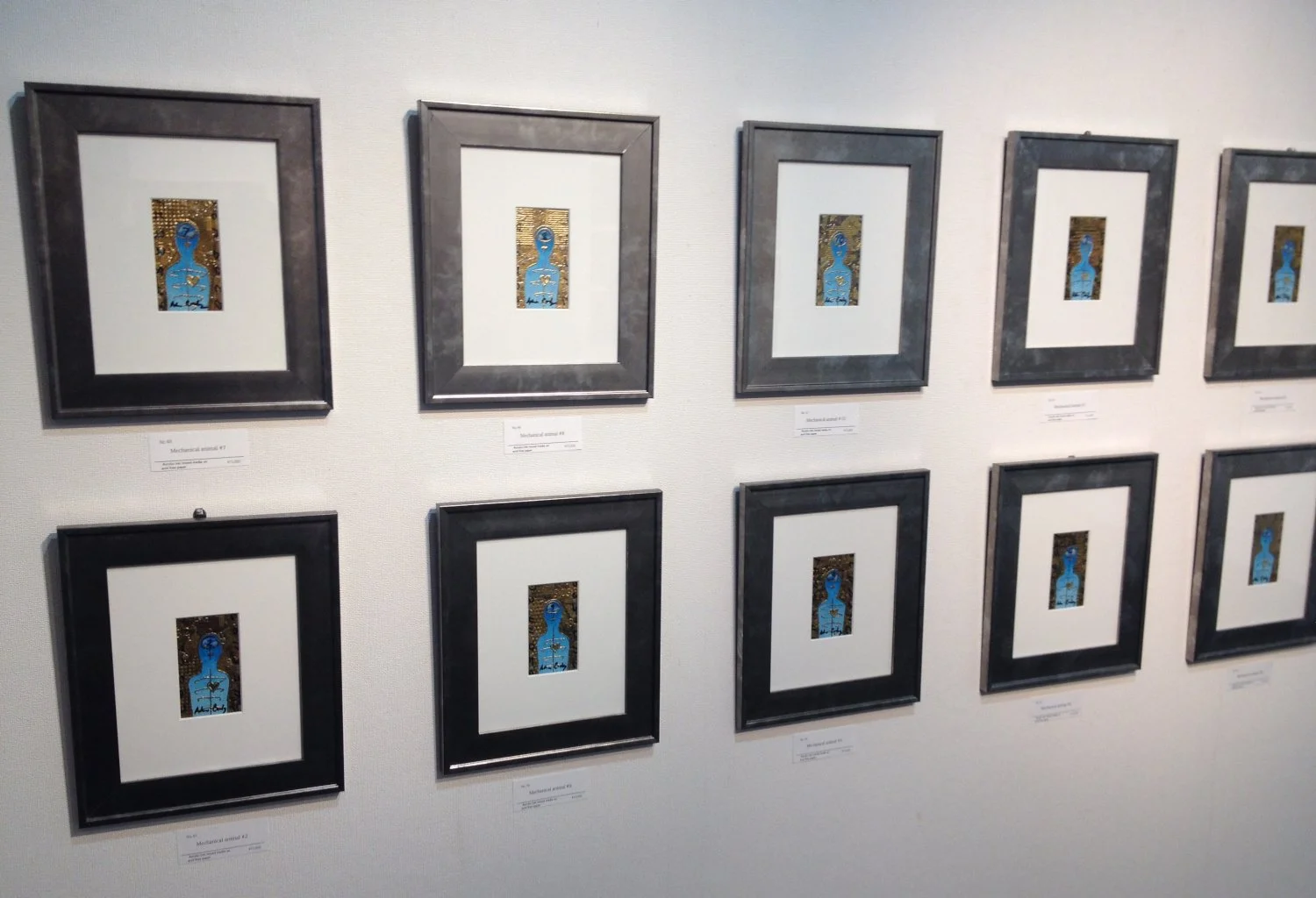
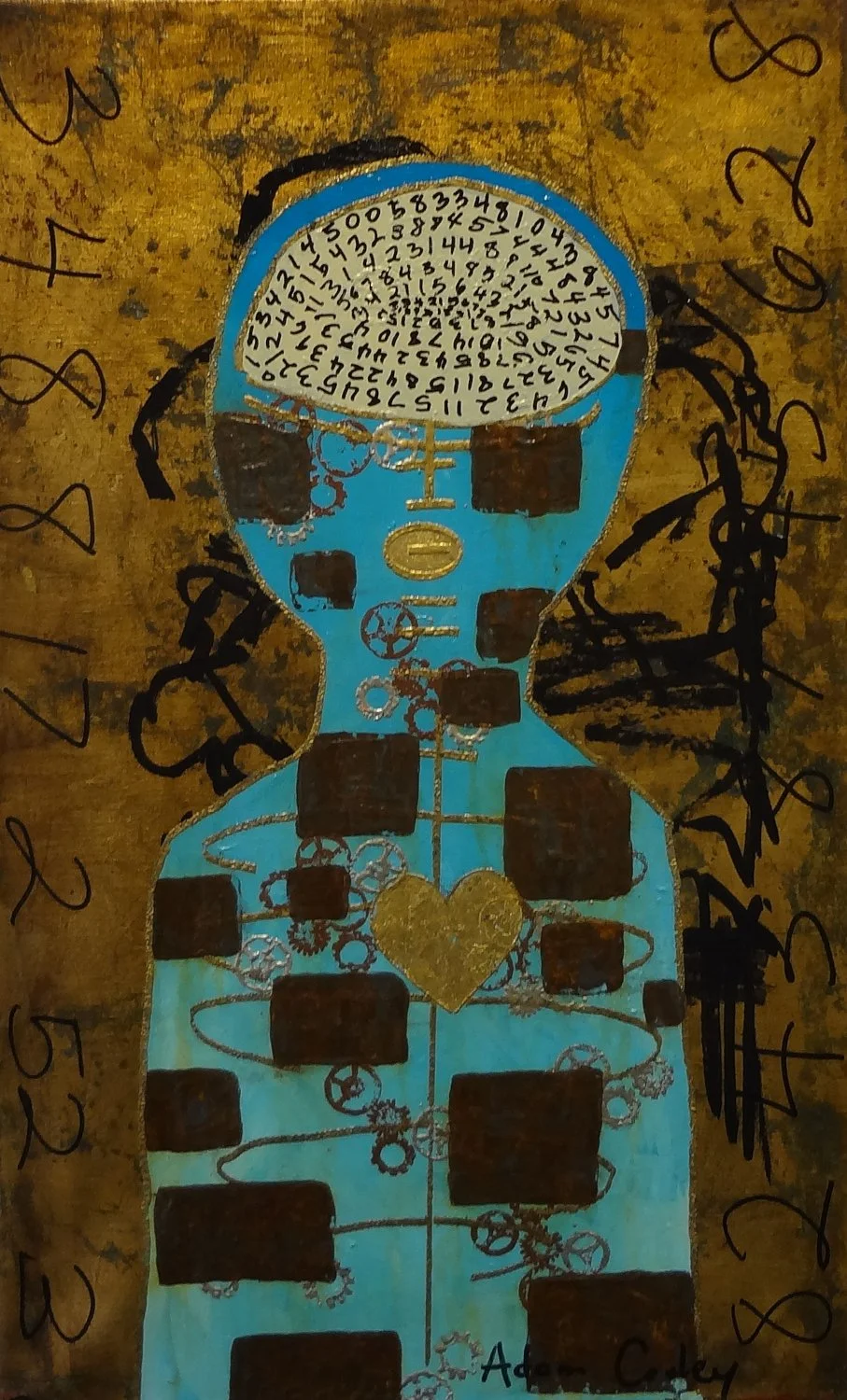
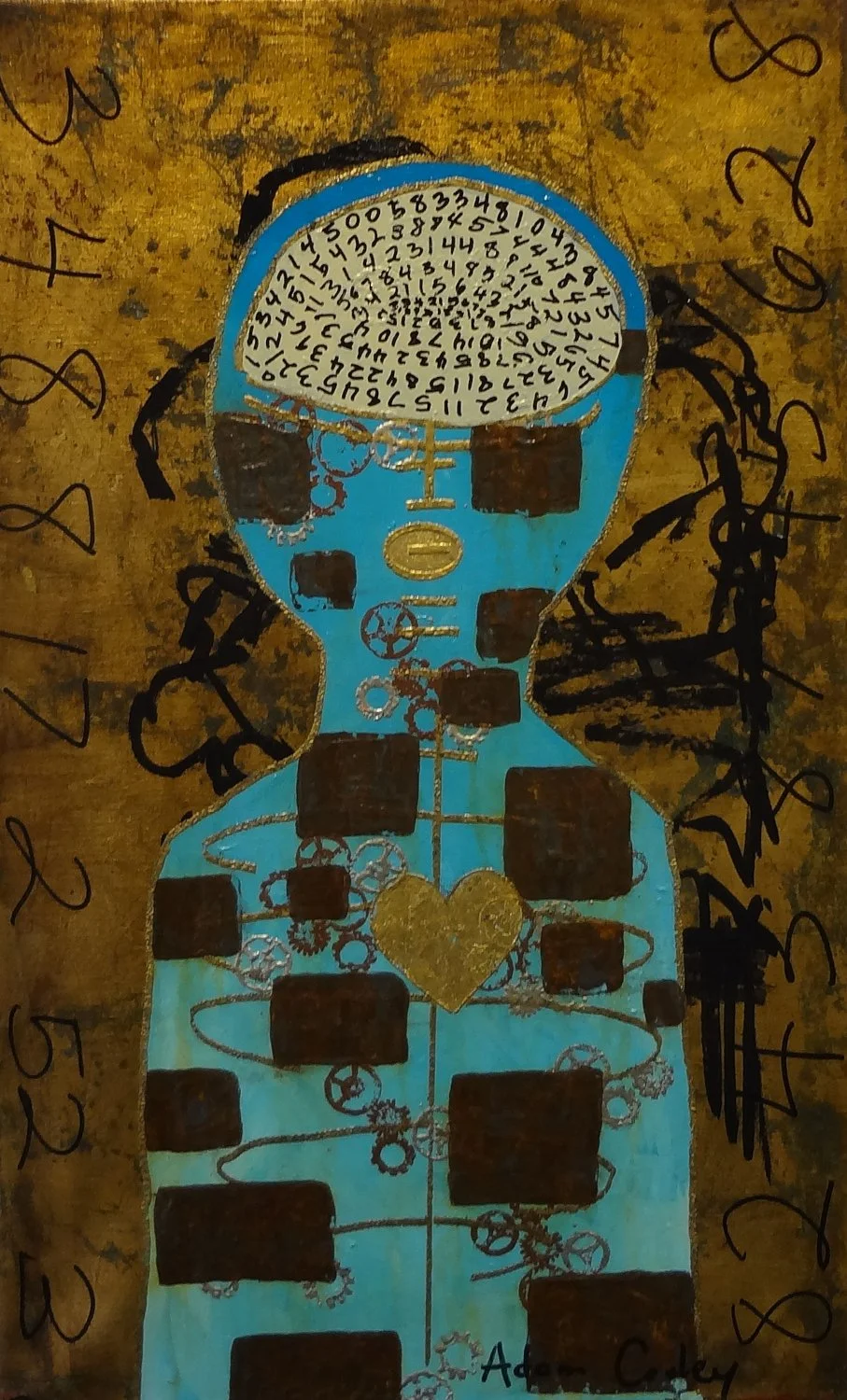
Handbuilt Gothic-style frames, each one constructed by Cooley himself, lined the walls, the canvases conceived to sit within them as single integrated objects. Alongside them hung grids of small gilded paintings, blue circuit-mapped figures with numbers cascading down their grounds, the human form rendered as diagram and schematic. Several works dispensed with figuration altogether, their compositions built entirely from numbers, column after column of them, present without explanation or apology. Sculpture occupied the floor. Moving through the room was to move through something ordered and purposeful and deeply strange, a cabinet of curiosities assembled by someone who had looked at the world carefully and arrived at conclusions that the work laid out for examination without stating directly.
The numbers that cascaded through the paintings had inhabited the edges and hidden recesses of Cooley's work for years. In Mechanical Animals they moved to the surface, becoming structural rather than peripheral, the composition itself in certain works rather than a private notation running beneath it. In an exhibition about the systems underlying biological life, their presence felt less like a stylistic choice than a natural consequence of the work's logic: if the human body runs on processes we cannot see or name, then perhaps what runs through these paintings is simply an honest account of the same fact.
Mechanical Animals was presented the same year as ICoN at Gallery Chayamachi in Osaka, two exhibitions across two cities from the same sustained period of work, each approaching the foundations of Cooley's practice from a different angle. That both were held in the same year, in two of the most significant exhibition spaces in the Kansai region, said something about the confidence and ambition that characterized this period of his career.