Icon
Gallery Chayamachi
Osaka, Japan
March 19-24, 2015
There is a particular moment in any sustained practice when the work stops reaching toward something and begins simply to be itself. The images that had been accumulating across years of painting and sculpture, the gilded grounds, the symbolic figures, the animals and humans occupying the same plane without hierarchy, the numbers moving through every composition, had by 2015 settled into a visual language so internally consistent and immediately recognizable that the exhibition built around them could announce itself with a single deliberately styled word and trust that the work would do the rest.
Among the shifts that marked this body of work, one was immediately visible to anyone who had followed Cooley's practice across the preceding years. The numbers that had long inhabited the edges and hidden recesses of his paintings, present but peripheral, a private notation running beneath the surface of the image, moved closer to the center of the compositions, becoming a more immediate and assertive presence. They did not become more legible. They became more visible, which is a different thing entirely, and the distinction mattered. The numbers in these works are not a code to be solved. They are a signature written in a language the work carries but does not translate, and their movement toward the surface in ICoN was the movement of something that had always been there finally deciding to be seen.
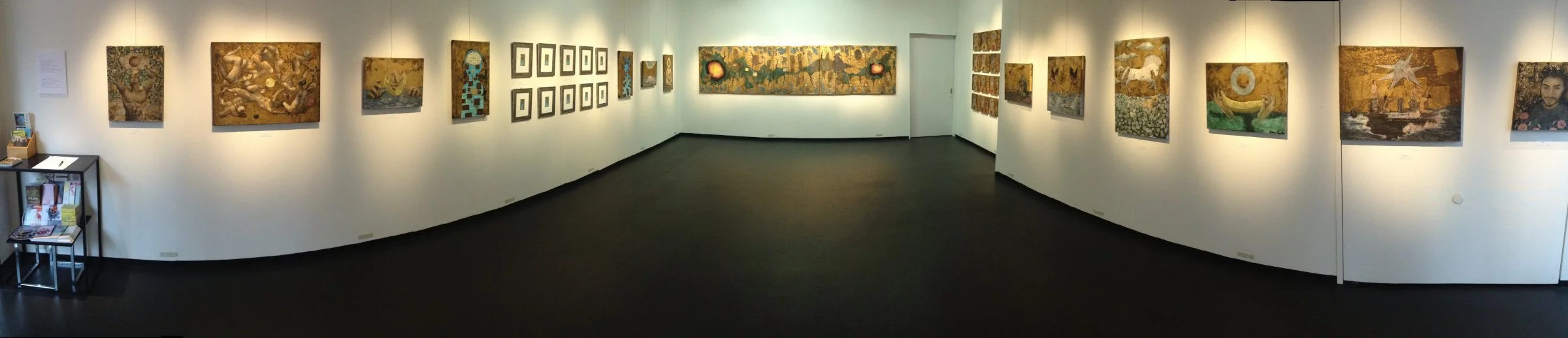
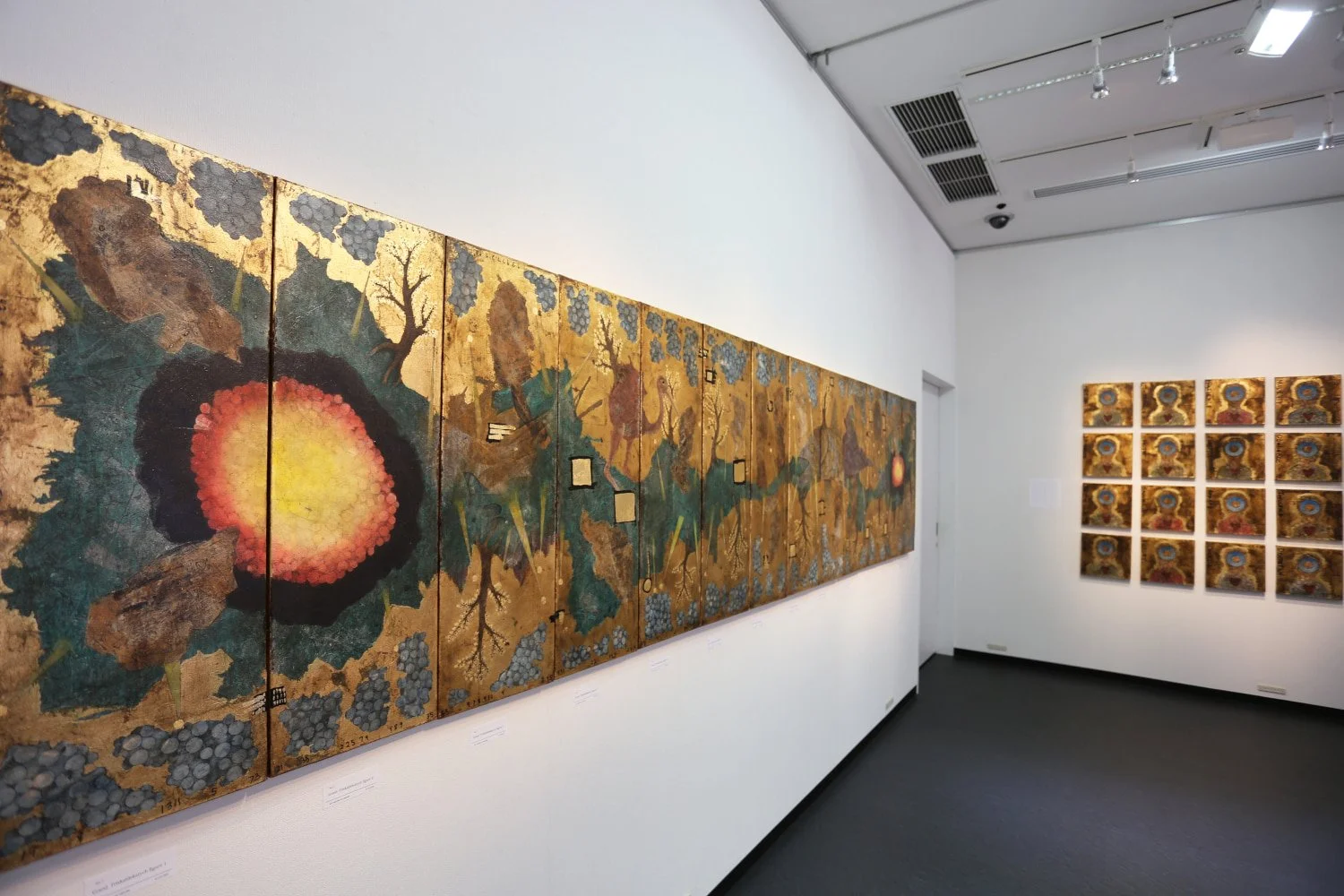
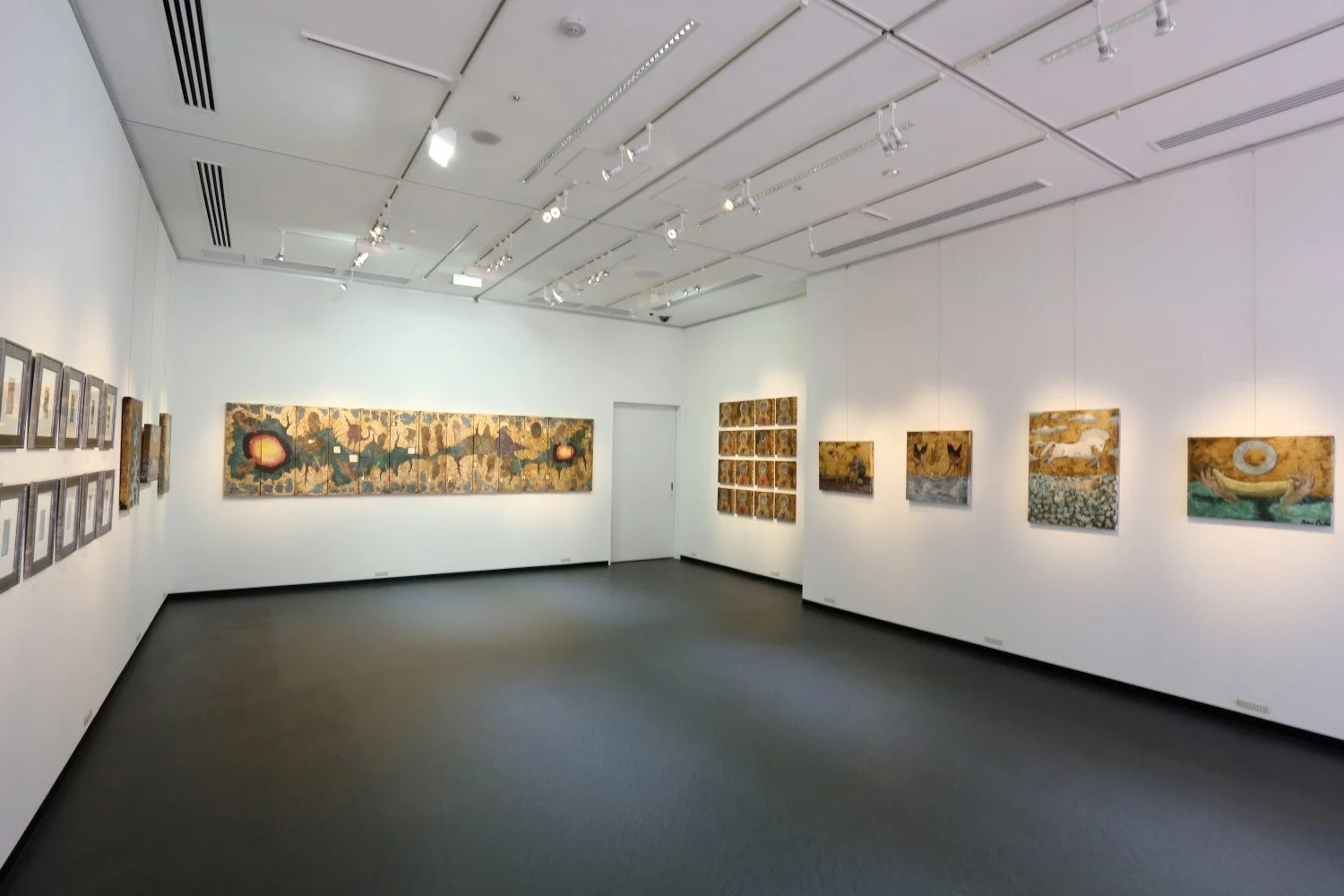
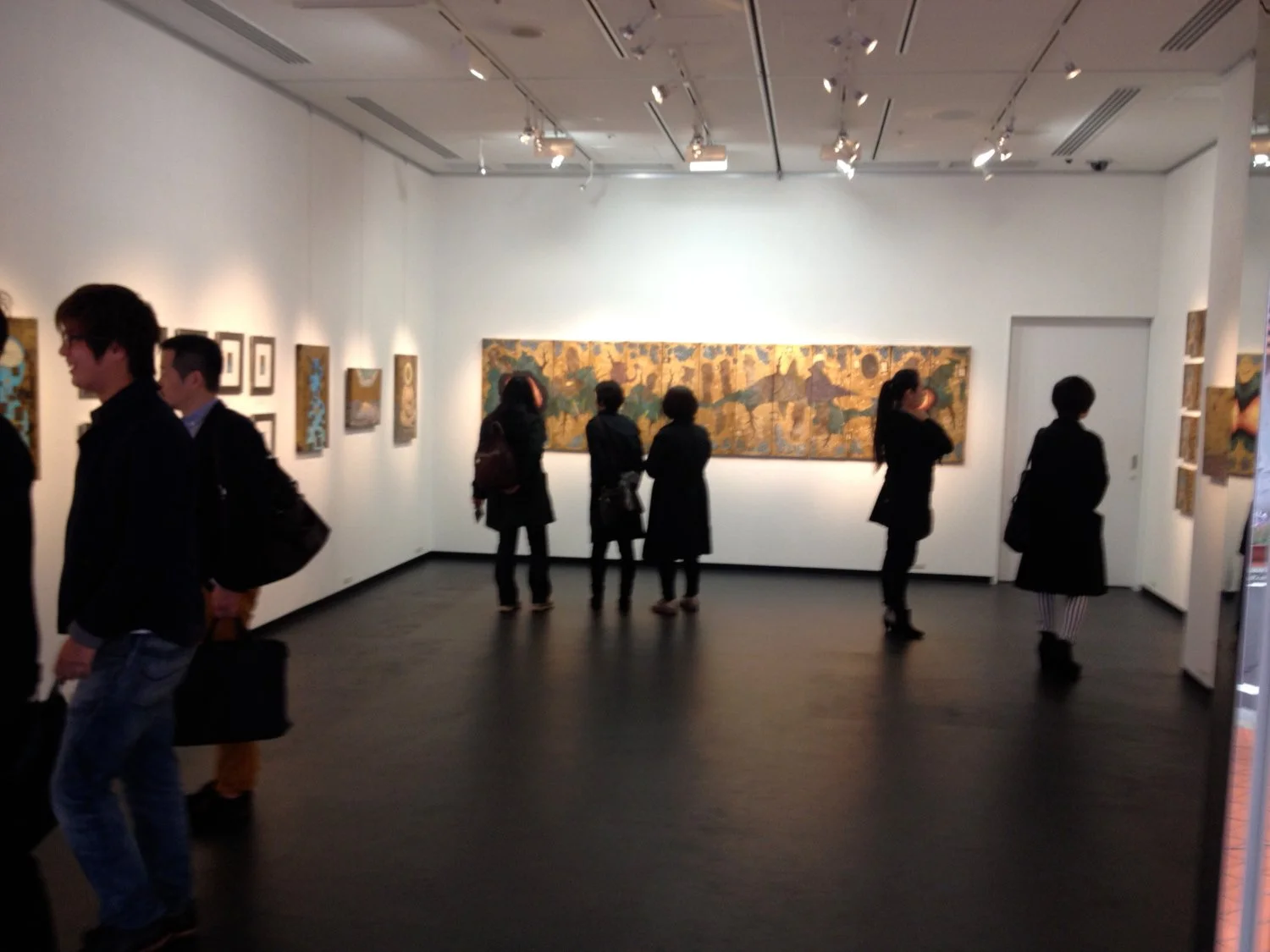
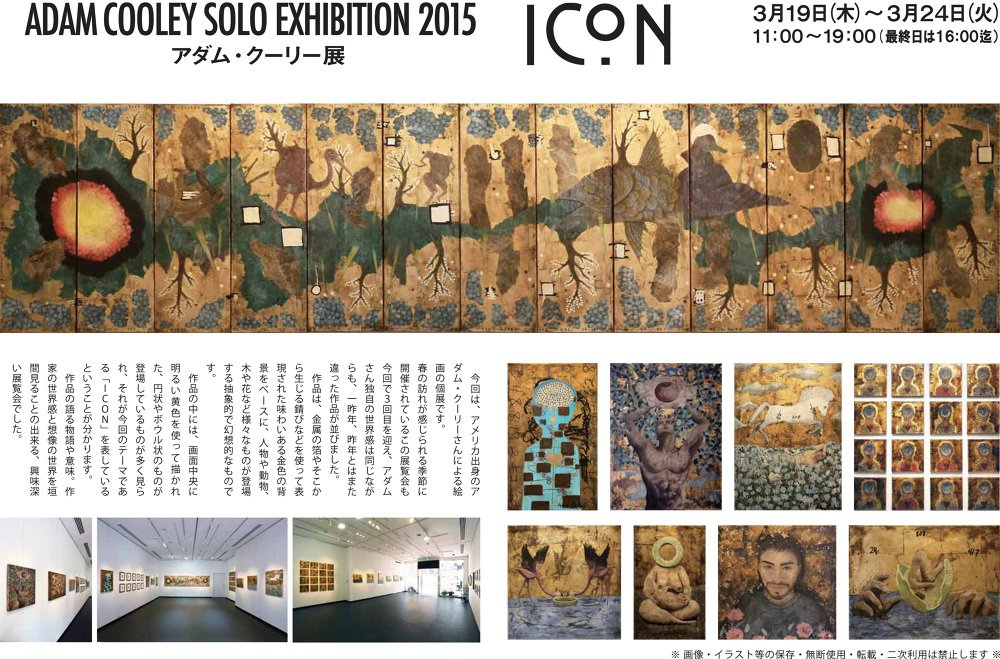
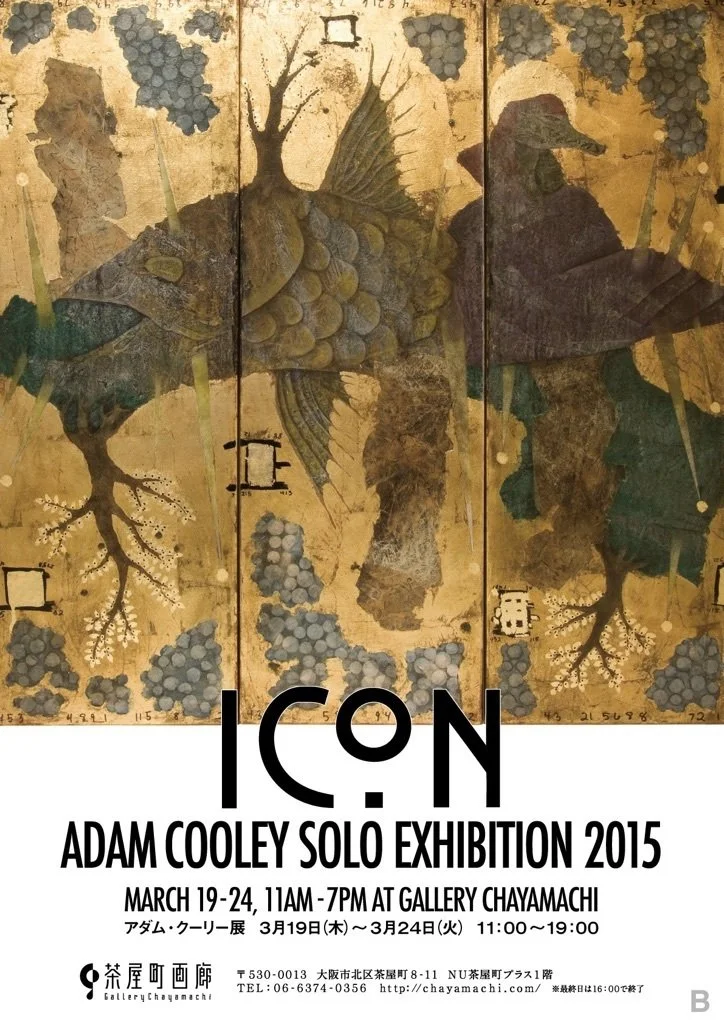
The exhibition was anchored by The Grand Triskaidekatych, a thirteen-panel work stretching just over four meters in length, each panel one meter in height. Built up through Cooley's oxidizing and patina process using a mixture of gold, copper, silver, zinc and iron leaf, aged, burnished, rusted, removed and manipulated across the surface until the work holds the density of something geological rather than painted, the Triskaidekatych is among the most ambitious single works of Cooley's career. Its colors move from the subdued and monochromatic at the center through eruptions of fiery yellow and orange at each end of the composition, the surface dense and mesmerizing at every point. Along its center runs a green land-like structure populated by shrouded figures, birds, an alligator robed in purple with a gilt halo, a headless chicken, a great fish. Numbers mark the tops and bottoms of each panel with the regularity of something official, something that has been counted and recorded. The entire work can be inverted and read from either orientation without losing its coherence, a formal decision that says something quietly radical about the nature of narrative and which end of a story constitutes its beginning.
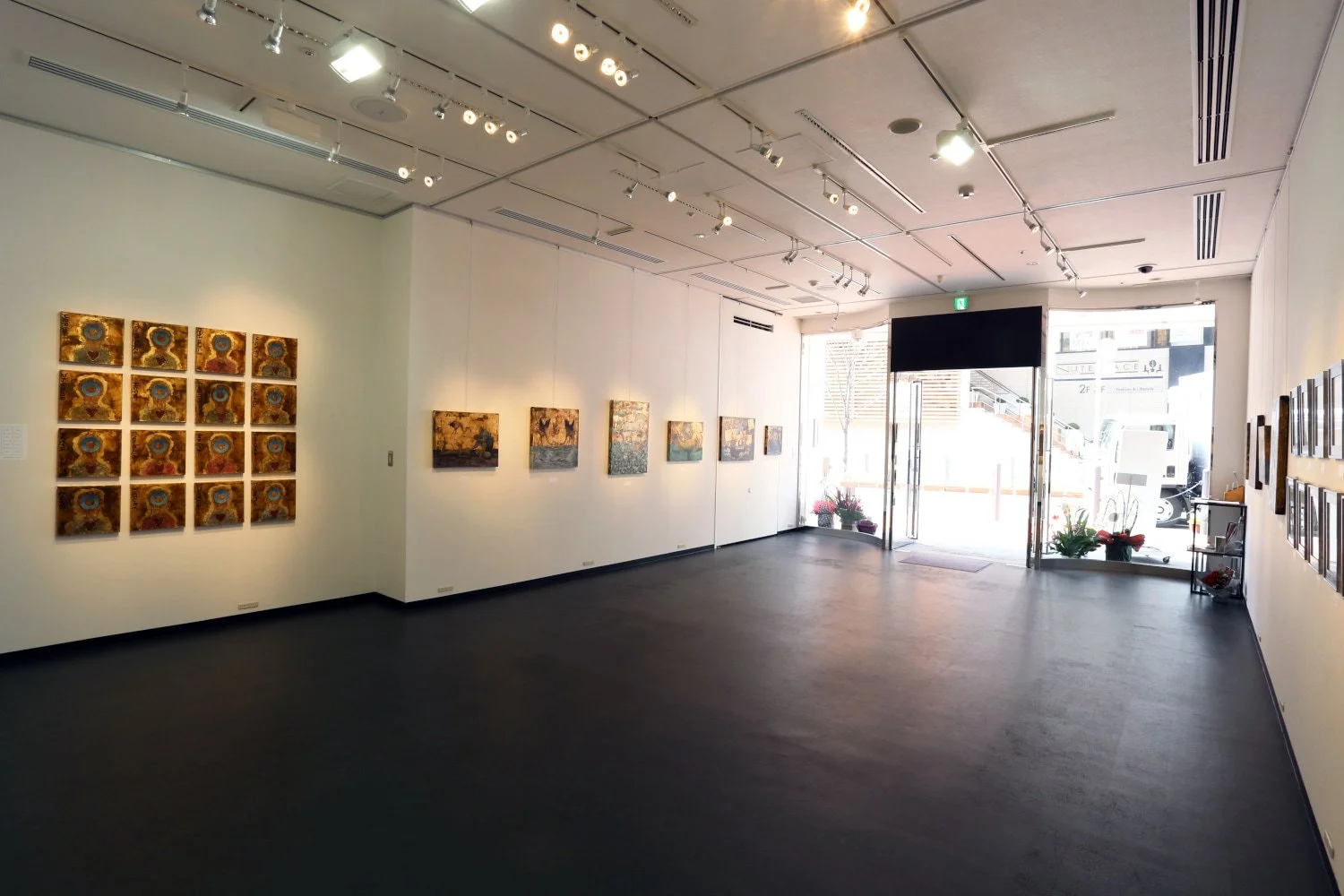
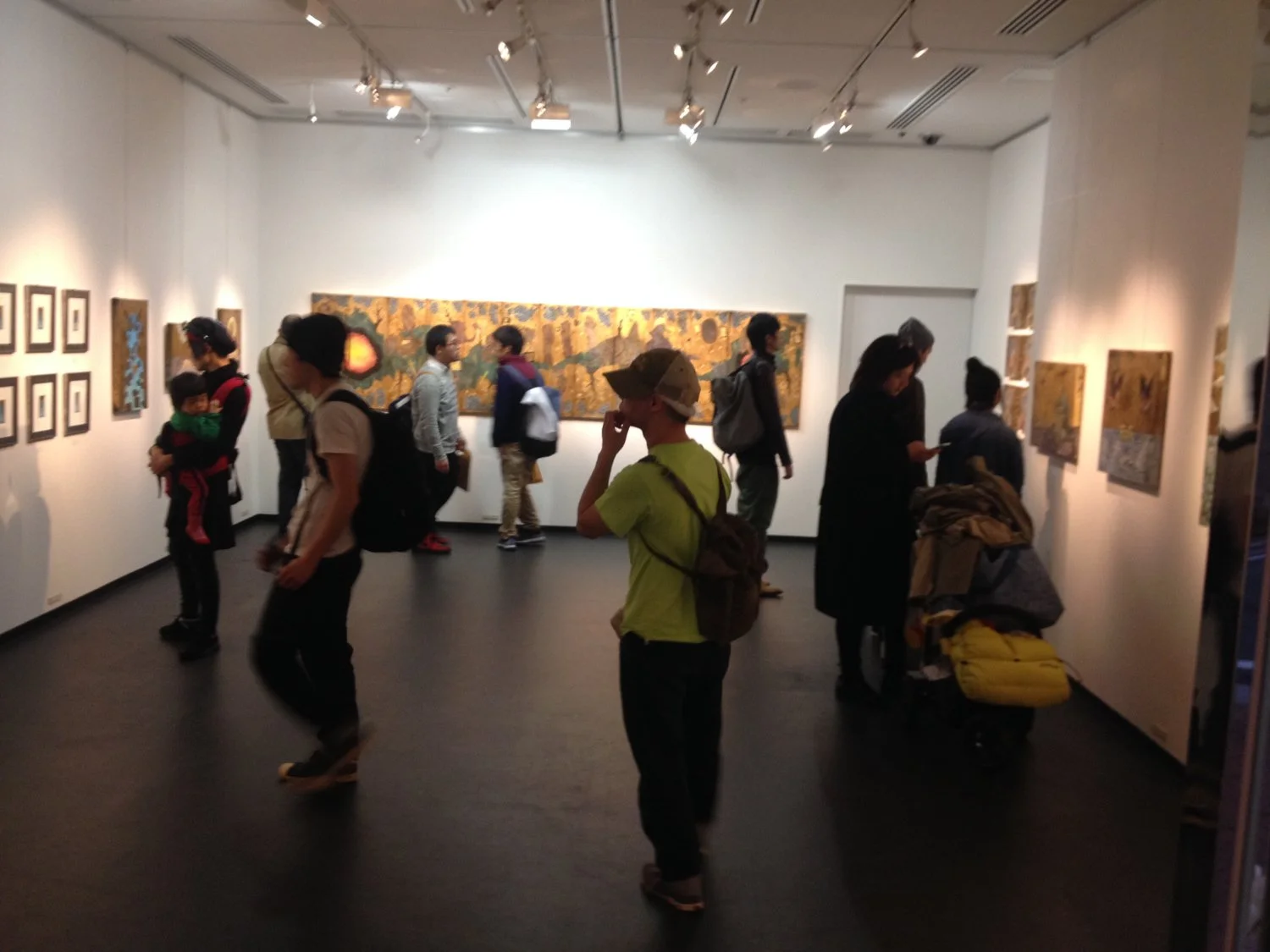
Alongside The Grand Triskaidekatych hung individual works, figurative, symbolic and densely layered, that shared its material richness and its refusal to resolve into easy meaning. Animals and humans occupy the same pictorial plane without hierarchy or explanation. Gold leaf catches and holds the gallery light in the way that gilded surfaces do, generating a warmth that belongs to the room rather than to any individual painting. Figures move through landscapes that answer to their own internal geography, neither fully of the waking world nor entirely elsewhere, inhabiting the threshold that Cooley's work has always known how to find and hold. These were paintings that had arrived somewhere and knew it, images distilled to an essential clarity that made the exhibition's title feel less like a claim than a simple statement of fact.
ICoN was Cooley's fourth solo exhibition at Gallery Chayamachi, and the one in which the full range of his visual language was most completely and confidently on display. Several works from the exhibition went on to form part of Mechanical Animals, Cooley's concurrent show at the Daimaru Department Store in Kyoto, two exhibitions running in the same year across two cities, each one illuminating the other without either one depending on it.