111 Stars
Gallery Chayamachi
Osaka, Japan
March 17-22, 2016

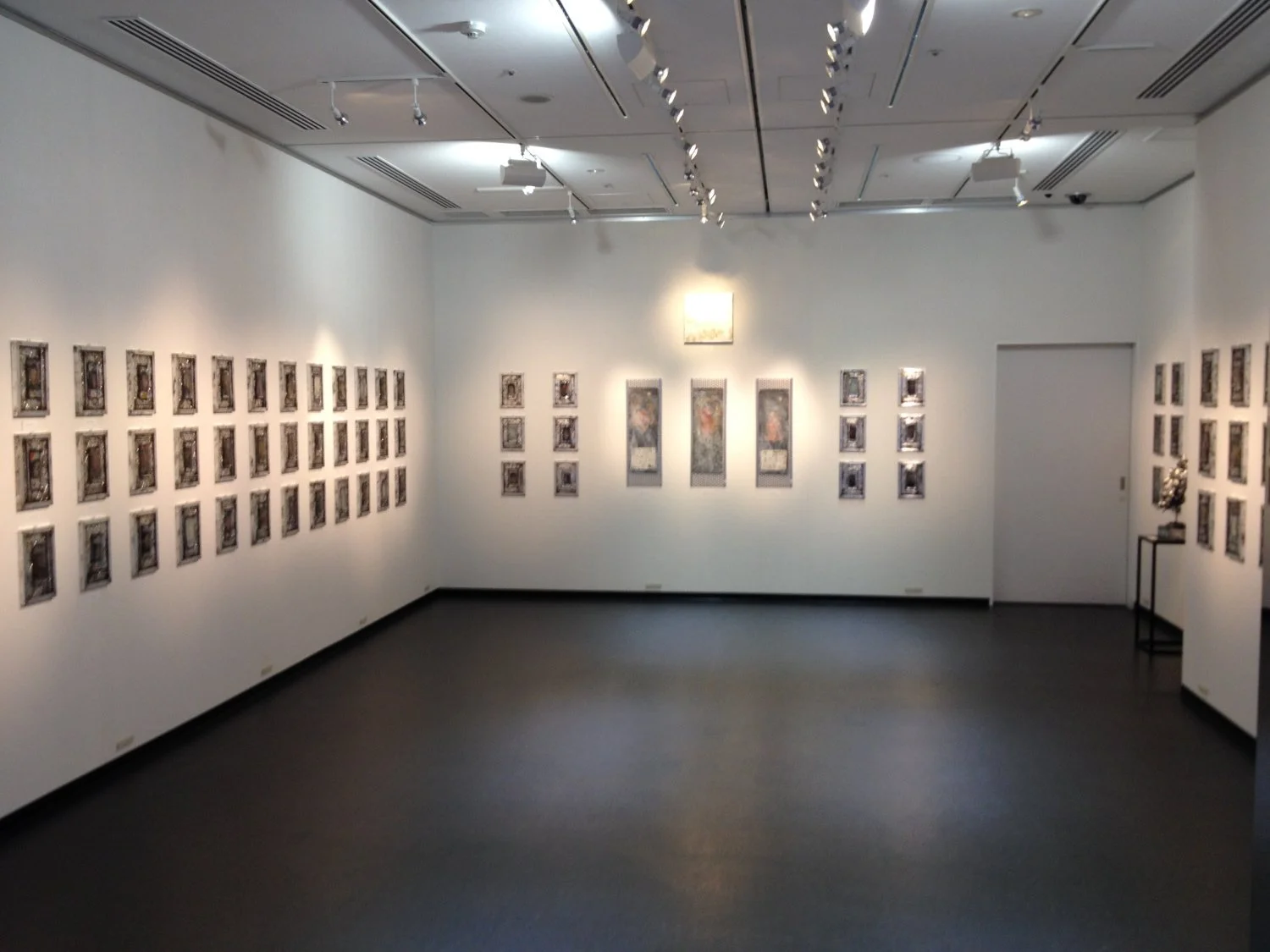
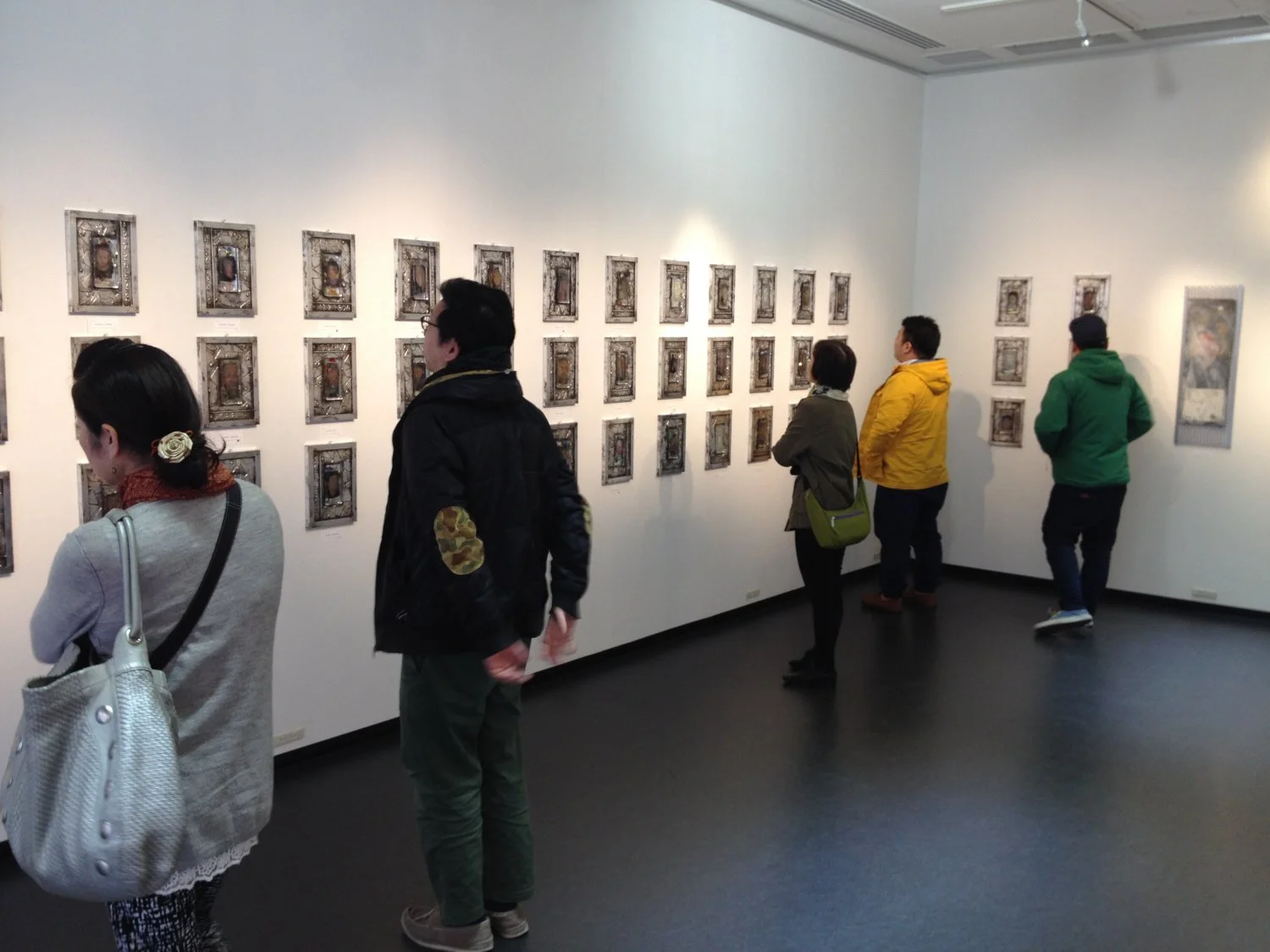
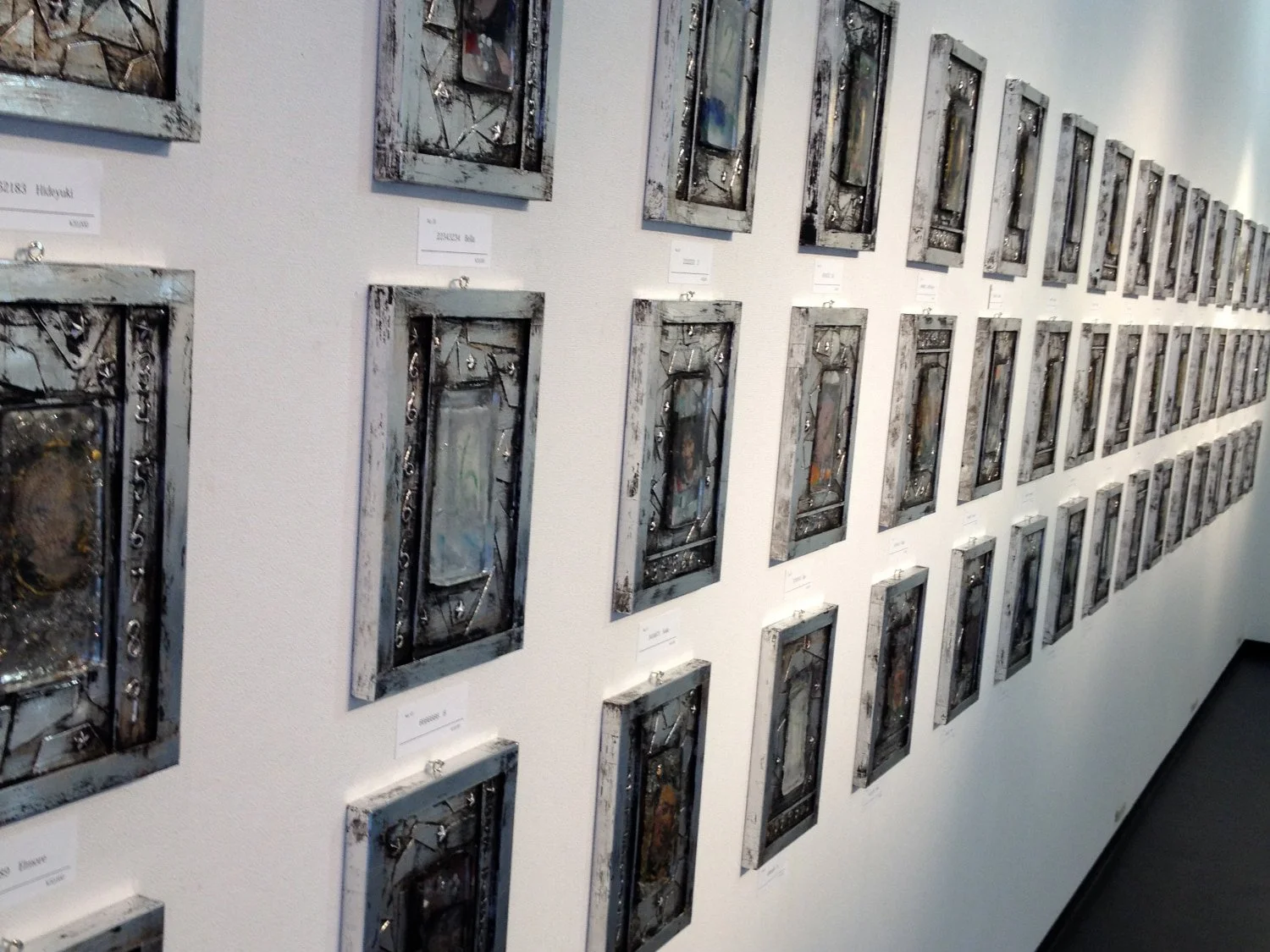
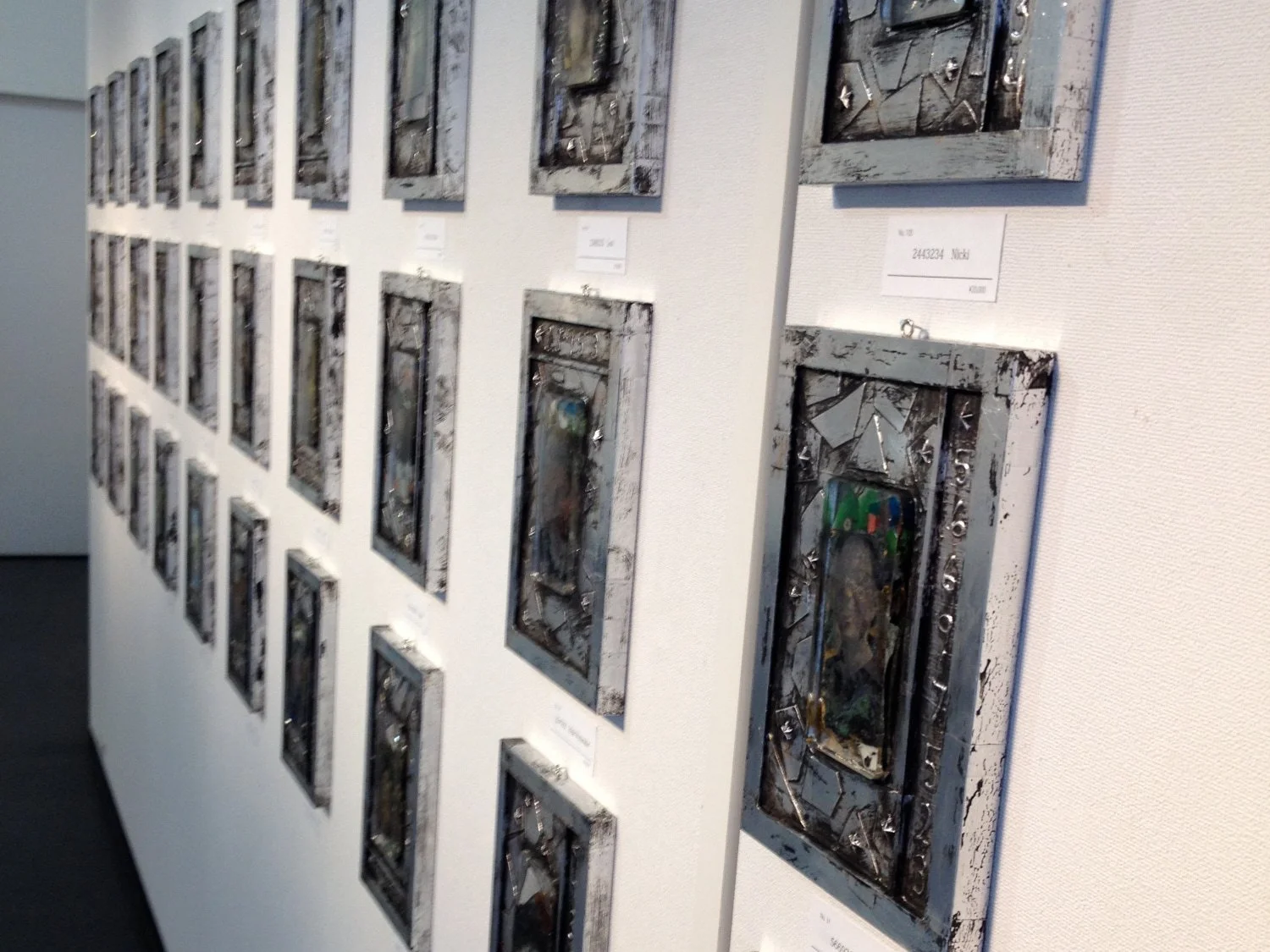
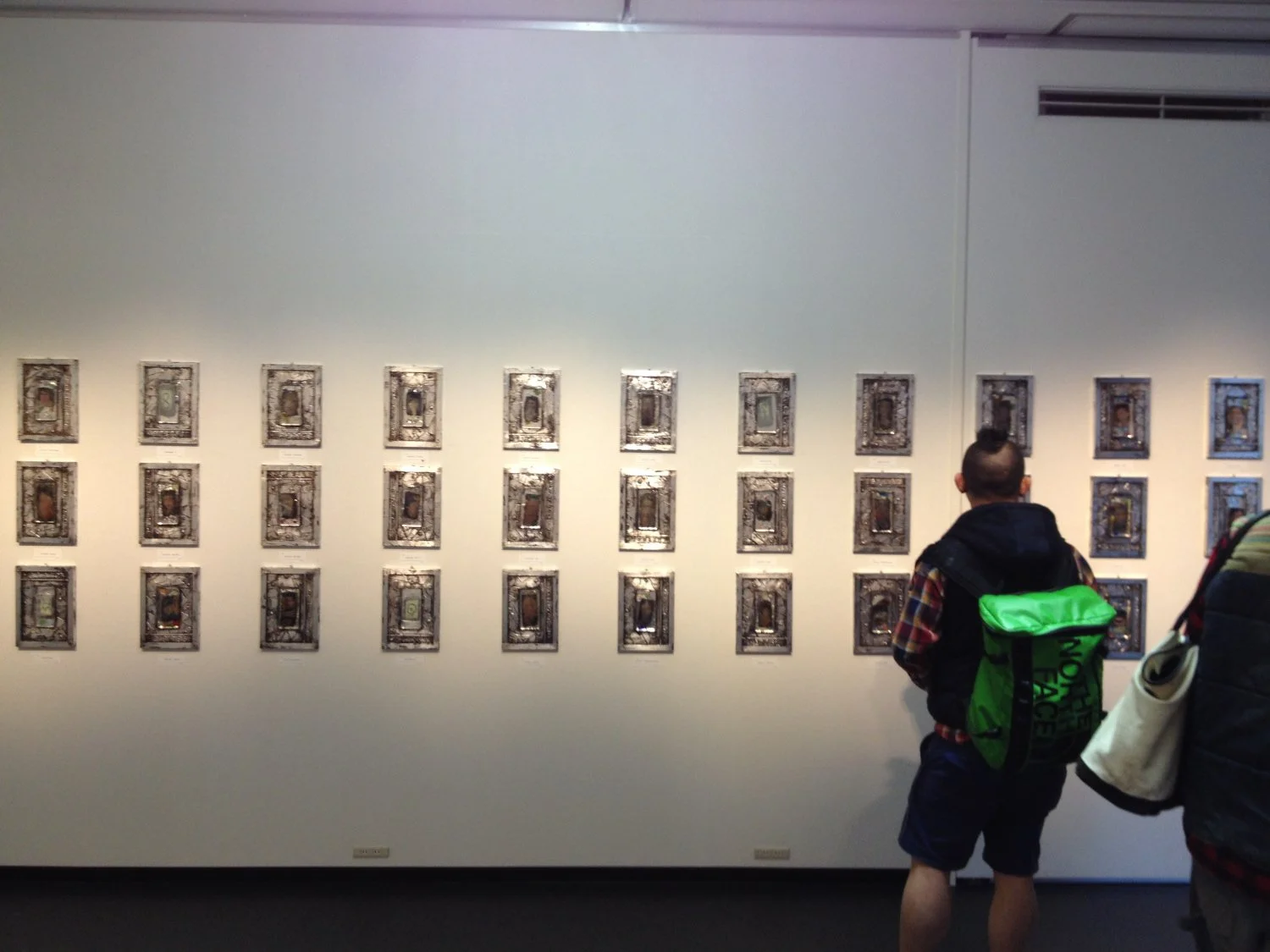
To be preserved is not the same as being held close. The 111 small works that lined the walls of Gallery Chayamachi each contained a portrait, a real person, someone known or encountered by the artist, painted on canvas and encased in resin along with fragments of shattered glass. Each was then mounted inside a handmade frame of wood and aluminum, the frame itself integral to the work, inseparable from it, designed and built by Cooley as a single object rather than a container for one. The result was intimate and remote at the same time: 111 people the artist knew, fixed behind glass and resin, kept. The question the works posed, quietly and without resolution, was whether keeping and holding are the same act, or whether the impulse to preserve something is also, always, a way of placing it at a distance.
The frames ran in dense grids across the white walls of the gallery, their metallic surfaces catching the light with a consistency that gave the installation a precision bordering on the ceremonial. Individually, each portrait carried the warmth of a specific face, a specific relationship, the particularity of someone the artist had known well enough to paint. Collectively they produced something closer to an archive, or a monument, the accumulation of 111 individual presences becoming a single overwhelming fact. There is a weight to that number that the installation earns rather than simply asserts. The number 111 was not chosen arbitrarily. It carried significance within Cooley's longstanding personal system of numbers, a private logic that has run as a quiet thread through the body of his work across decades, present in almost every piece but never decoded for the viewer. Here, for once, the number was the work's public face as well as its private logic, announced in the title and then demonstrated, portrait by portrait, frame by frame, across every wall of the room.
The materials reinforced everything the portraits proposed. Resin holds things suspended, neither fully exposed nor fully protected, visible but unreachable. Shattered glass, embedded in the resin alongside each painted face, introduced a violence into the preservation that the smooth surfaces of the frames did not soften. These were not simply portraits behind glass. They were portraits caught in something, held in a moment of fracture that the resin had frozen permanently. The effect was beautiful and faintly unsettling in equal measure, which is precisely the territory the work was made to inhabit.
At the centre of the space stood the exhibition's sculptural anchor, a bust of wood and aluminum, spined and complex, a figure bristling with protrusions that suggested both protection and threat simultaneously. Where the framed portraits receded into the walls, covering them so completely that the walls themselves became the work, the bust occupied the room directly, three-dimensional and assertive, giving the installation's cold atmosphere a focal point that was neither portrait nor monument but something between the two. It held the room the way a figure holds a conversation: not by speaking loudest but by being impossible to ignore.
111 Stars was Cooley's fourth solo exhibition at Gallery Chayamachi, and among the most formally rigorous bodies of work he had presented there. A single material logic, wood, aluminum, resin, glass, pursued without deviation from the smallest framed portrait to the large freestanding sculpture at the room's centre, gave the exhibition a unity that felt less like a curatorial decision than a philosophical commitment. Every object in the room was made from the same impulse and answered to the same set of questions about what it means to hold someone, to fix them in place, to look at them through something that keeps you from getting too close.