The Fairy Ring
Gallery Chayamachi
Osaka, Japan
March 23-28, 2017
There is a well-known fact about sunflowers: they turn to face the sun. Young plants track it across the sky from morning to evening, orienting themselves each day toward the source of light. It was this quality, the act of turning, of choosing a direction, that drew Cooley to the subject at a particular moment. The political ground had shifted in ways that felt, to many, like a darkening, and the studio had become a place of necessary refuge. The sunflower, with its instinct for orientation, its refusal to face anything other than the light, became the symbol of that refuge and the subject of an entire body of work.
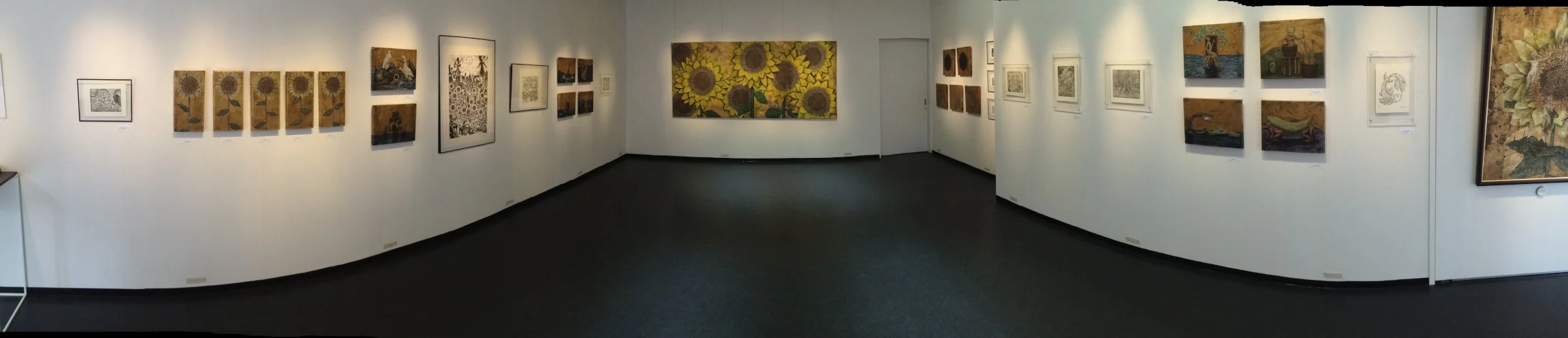
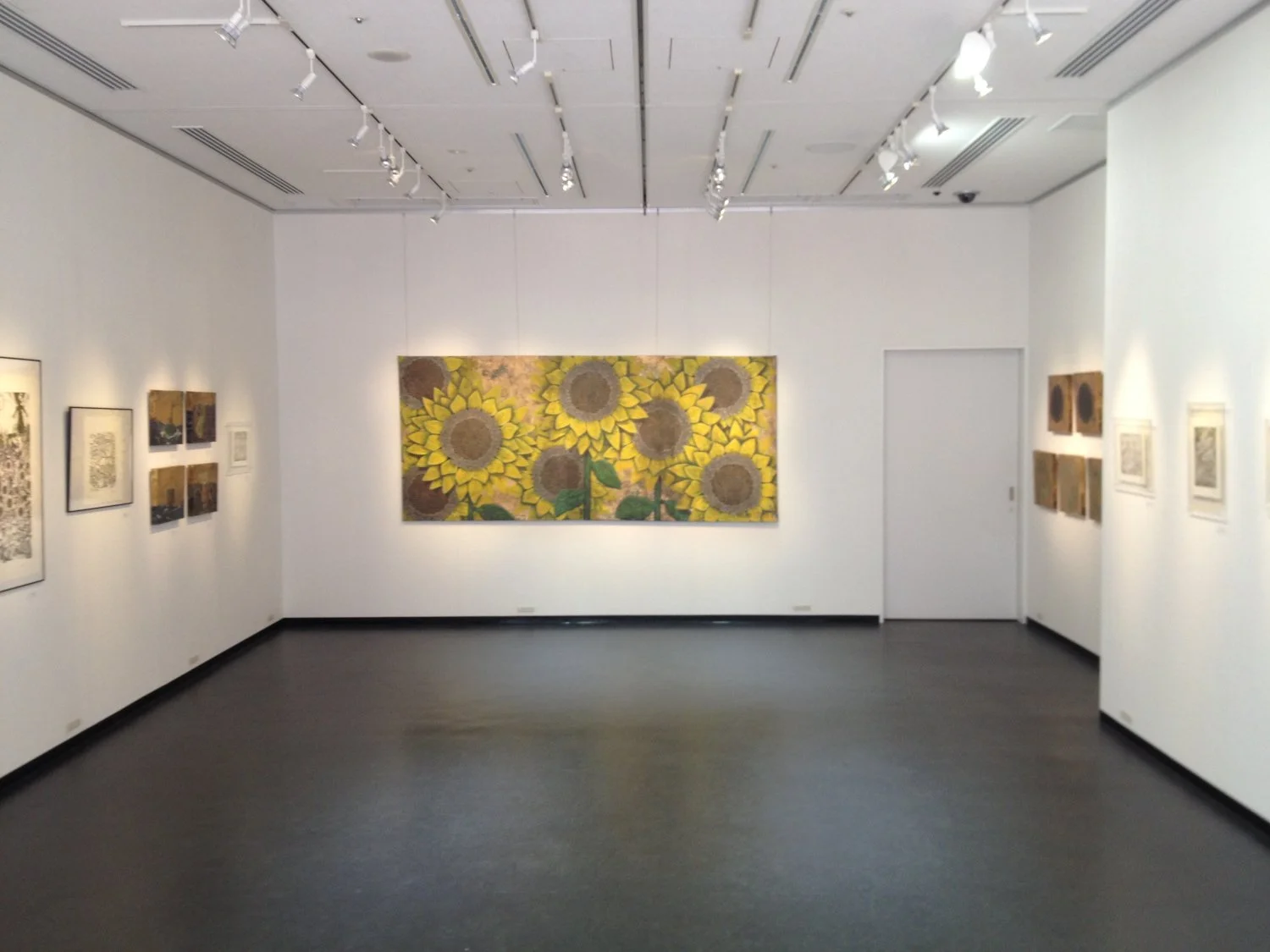
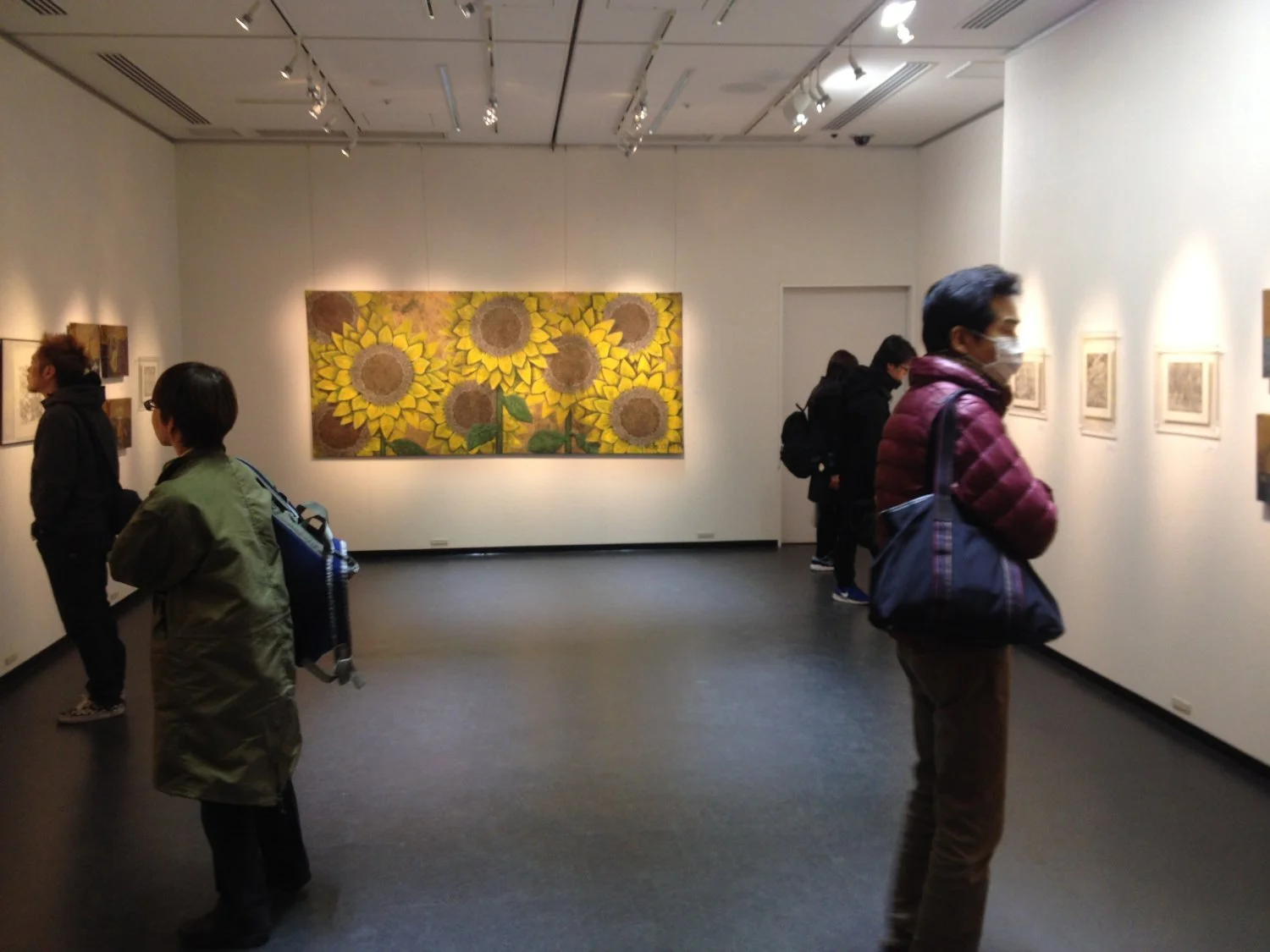
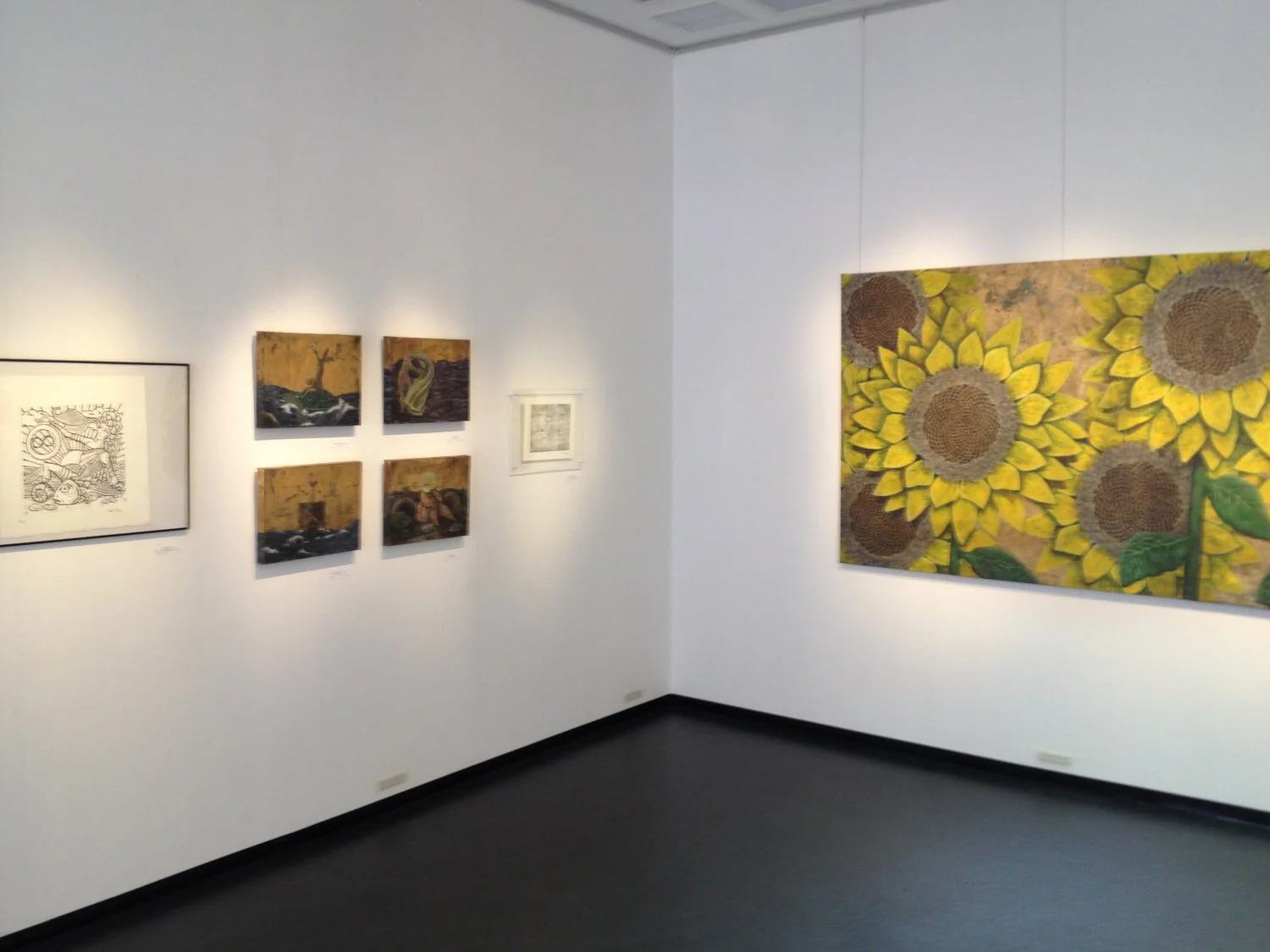
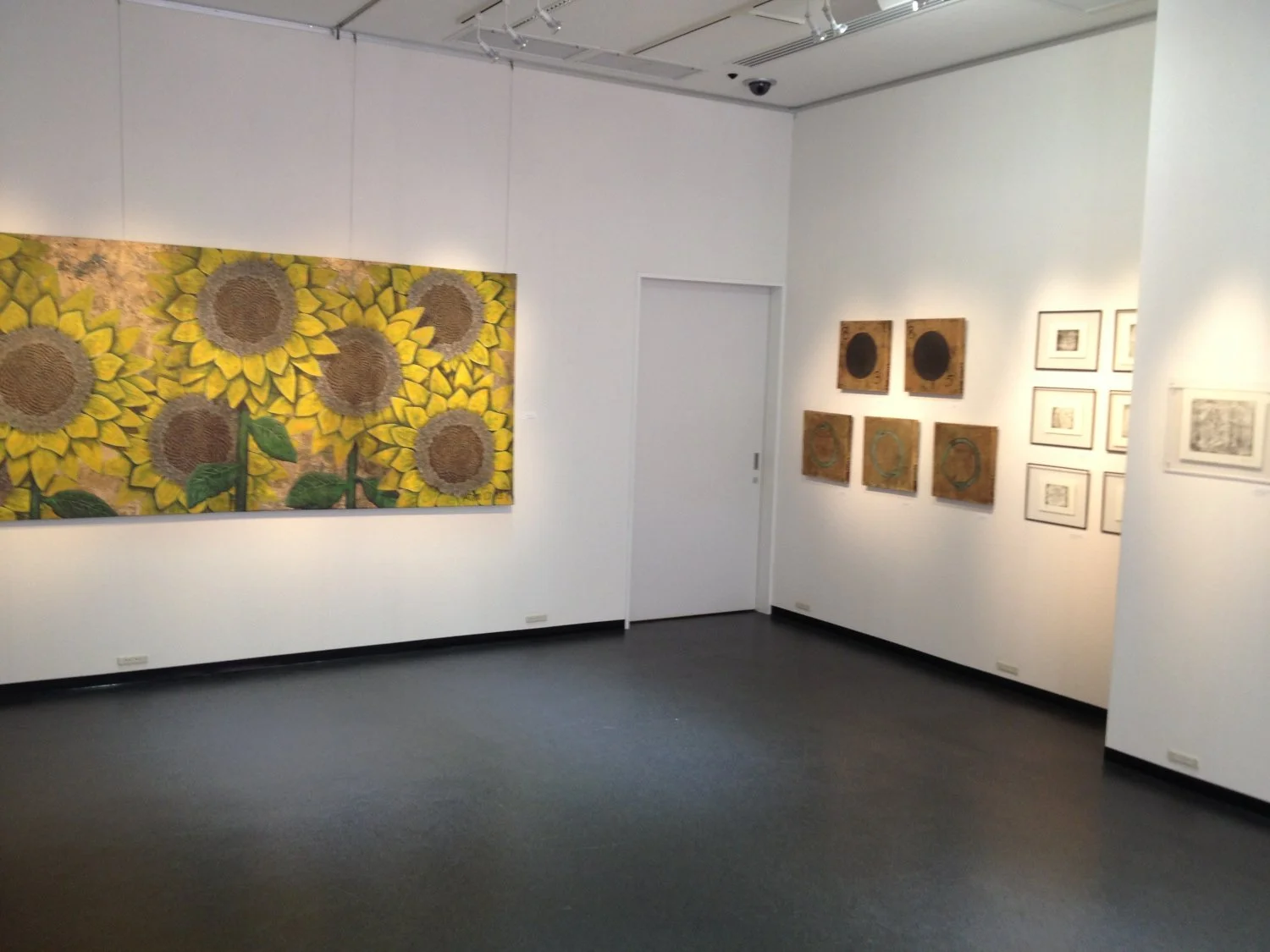
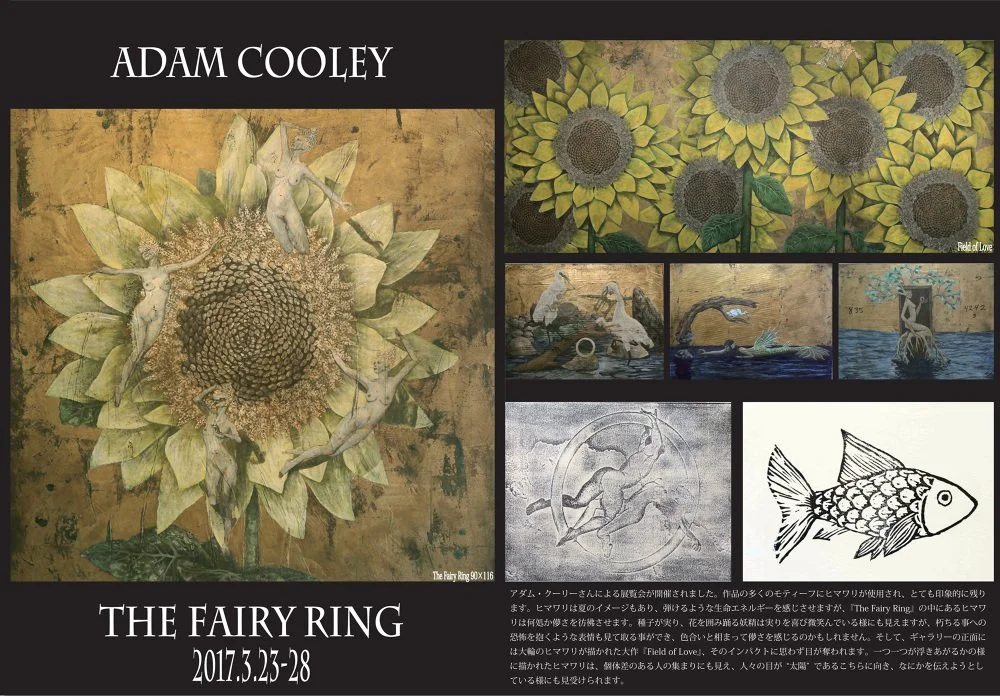
What began as a single large sunflower became something stranger and more layered as the work progressed. Gold leaf was applied to the grounds, and the canvases began to illuminate the room in which they were made, the surfaces catching and holding light in the way that gilded things do, as though the painting itself were generating warmth rather than simply reflecting what fell on it. Then the fairies arrived: small, joyful, free-spirited figures dancing and hovering among the petals, their presence transforming works that might have been botanical studies into something closer to devotional objects, or fever dreams, or both simultaneously. The exhibition's anchor work, Field of Love, a large-scale multi-panel sunflower painting, met visitors as they entered Gallery Chayamachi, its gold ground and inhabited petals filling the front wall with a warmth that was difficult to walk past without stopping.
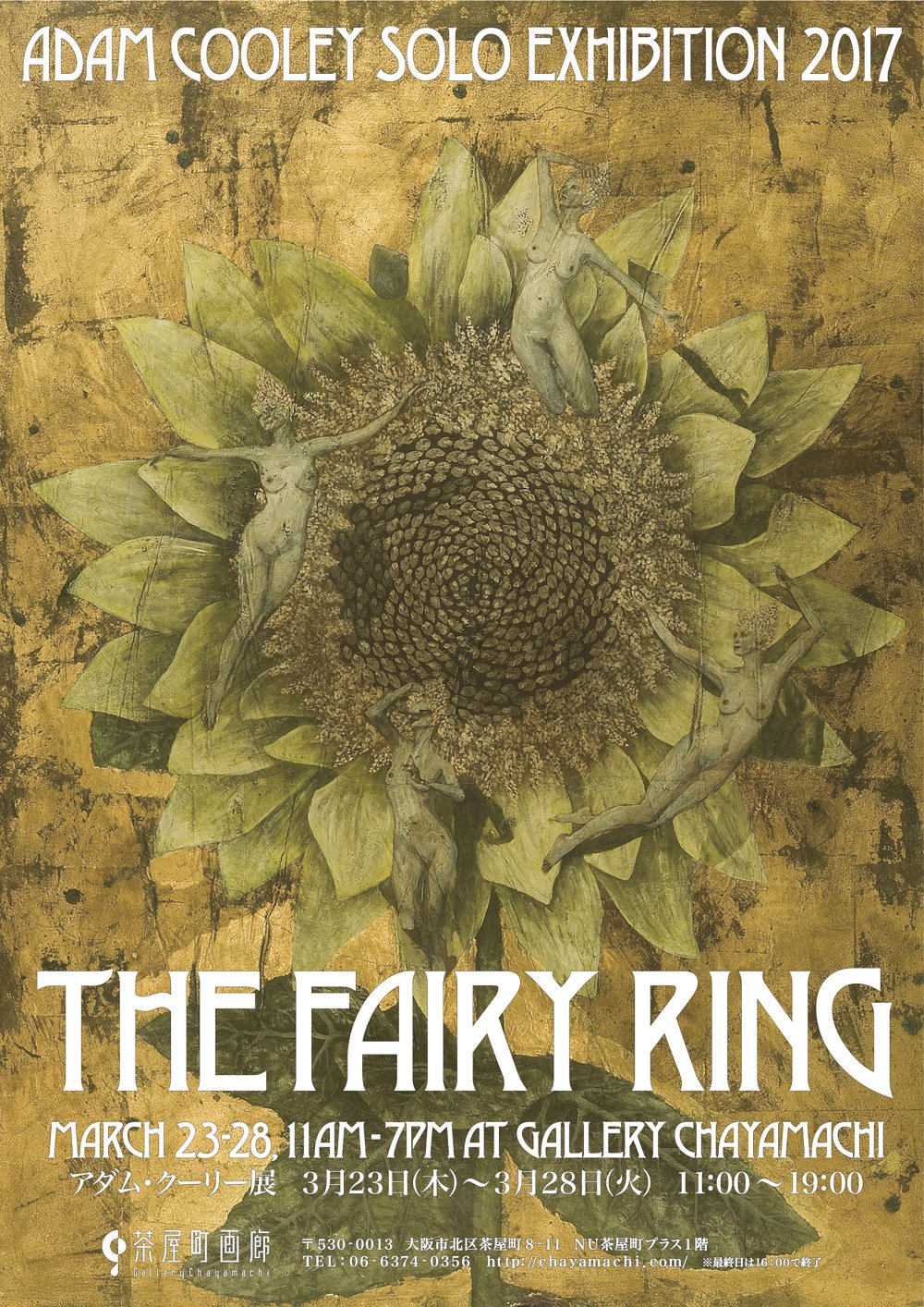
The titular painting, The Fairy Ring, makes the logic of the entire exhibition explicit. The sunflower fills the canvas entirely, its face rendered with the precision and patience of someone who has looked at the thing for a very long time, the spiral geometry of its centre detailed with an almost scientific attention. Around its petals, barely larger than the flower's own seeds, the fairy figures dance and stretch and hover, their scale making the sunflower vast and the world they inhabit vaster still. The gold ground behind everything gives the image a sacred quality, the sunflower becoming something between a specimen and an icon, a natural form elevated by attention and gold leaf into the territory of the genuinely otherworldly. That tiny figures should feel so fully present against something so immense is one of the painting's central pleasures, and one of its deepest arguments: that scale has nothing to do with significance.
But The Fairy Ring was not only warmth and gold. Running alongside the paintings was a series of lithographs and linocut prints, stark and dense, their surfaces gritty and uncompromising in a way that the gilded canvases were not. Where the paintings offered movement and light and the particular pleasure of the fantastical made luminous, the prints held their ground in black and white, their atmosphere closer to the earthbound than the celestial. The pairing was entirely deliberate. Sweetness requires salt to be fully tasted, and the prints provided it, grounding the exhibition in a different register without diminishing what the paintings offered. The two bodies of work occupied the same room without resolution, each one making the other more fully itself by contrast.
Gallery Chayamachi, situated in the NU Chayamachi building in Osaka's Kita ward, had been a recurring home for Cooley's work across multiple years, a relationship built through sustained commitment on both sides. The Fairy Ring marked a significant moment within that ongoing dialogue: a show that arrived from a specific emotional necessity, that found its subject in the simple instinct of a plant turning toward light, and that resolved itself, on the walls at least, into something that gave that instinct the weight and strangeness it deserved.