Sea of Love
Gallery NAO
Roppongi, Tokyo, Japan
February 27 - March 10, 2018

The sea has always been a place where the rules change. Below the surface, depth distorts and direction loses its certainty, and the creatures that inhabit that world operate according to logics that the world above cannot fully account for. It was this quality, the ocean as a space where transformation is not exception but condition, that gave Cooley's first solo exhibition in Tokyo its name and its centre of gravity.
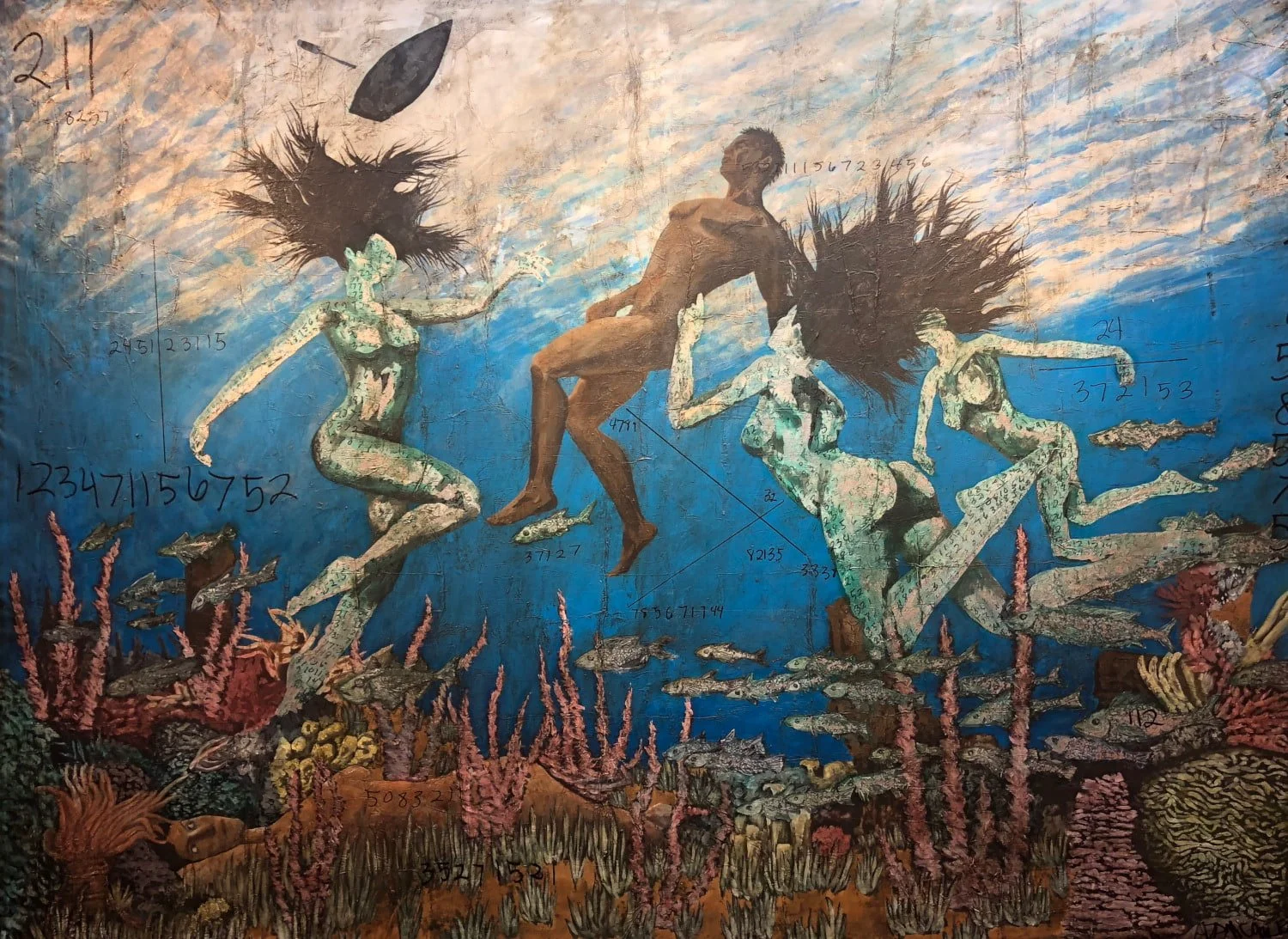
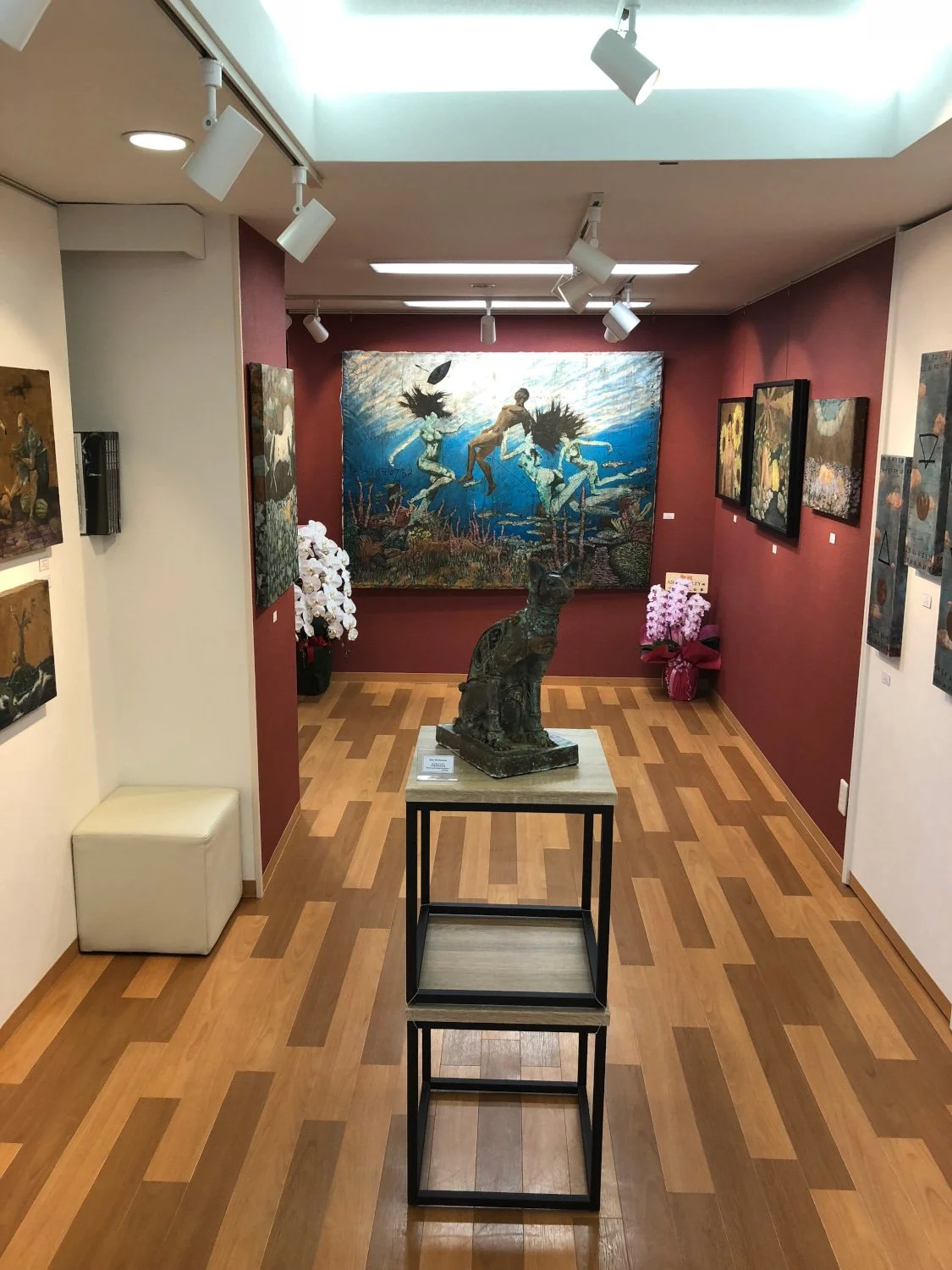
The anchor painting, Sea of Love, dominated the back wall of Gallery NAO's intimate red-walled space: a large-scale canvas depicting a sailor drawn beneath the waves, the underside of his boat visible at the upper left, a lone vessel on a surface he can no longer reach. Three sirens surround him in the blue depths, their hair billowing outward in dark masses, their bodies composed of numbers rather than flesh, the figures built from the same private notation that moves through all of Cooley's work. Fish move among the coral below, indifferent to what is unfolding above them. At the ocean floor, a female figure watches the scene, her form continuous with the seabed itself, made of the same material as the world she inhabits, entirely aware.
The myth of the siren is one of the oldest accounts of what beauty does when it operates without restraint. Cooley's version does not moralize. The sailor is drawn down, the sirens circle, the fish continue about their business, and the figure on the floor watches with the patience of something that has seen this before. The numbers that compose the sirens' bodies give them a quality the traditional image does not have: they are not creatures of flesh and appetite but of pattern and system, their power encoded rather than embodied.
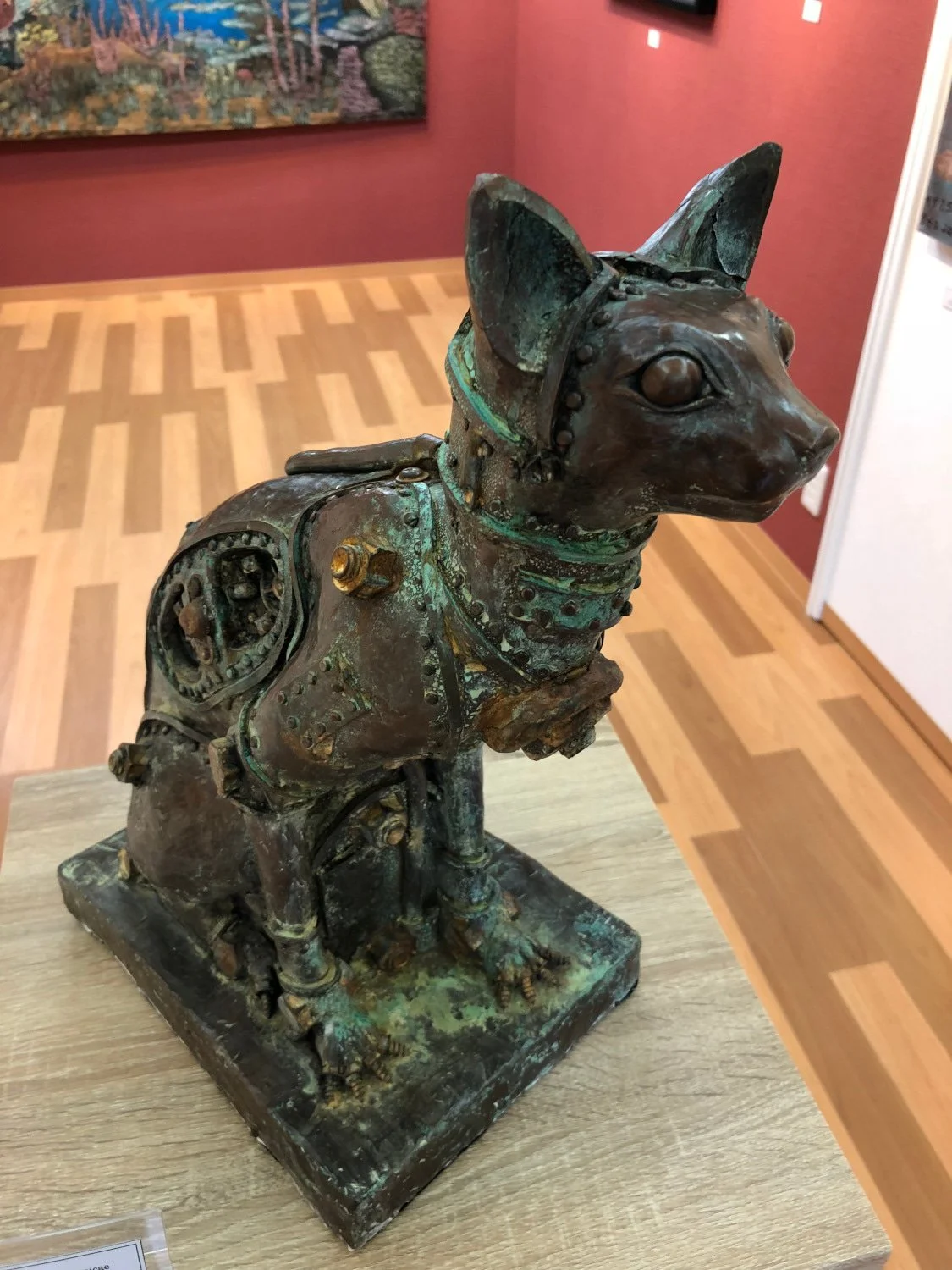
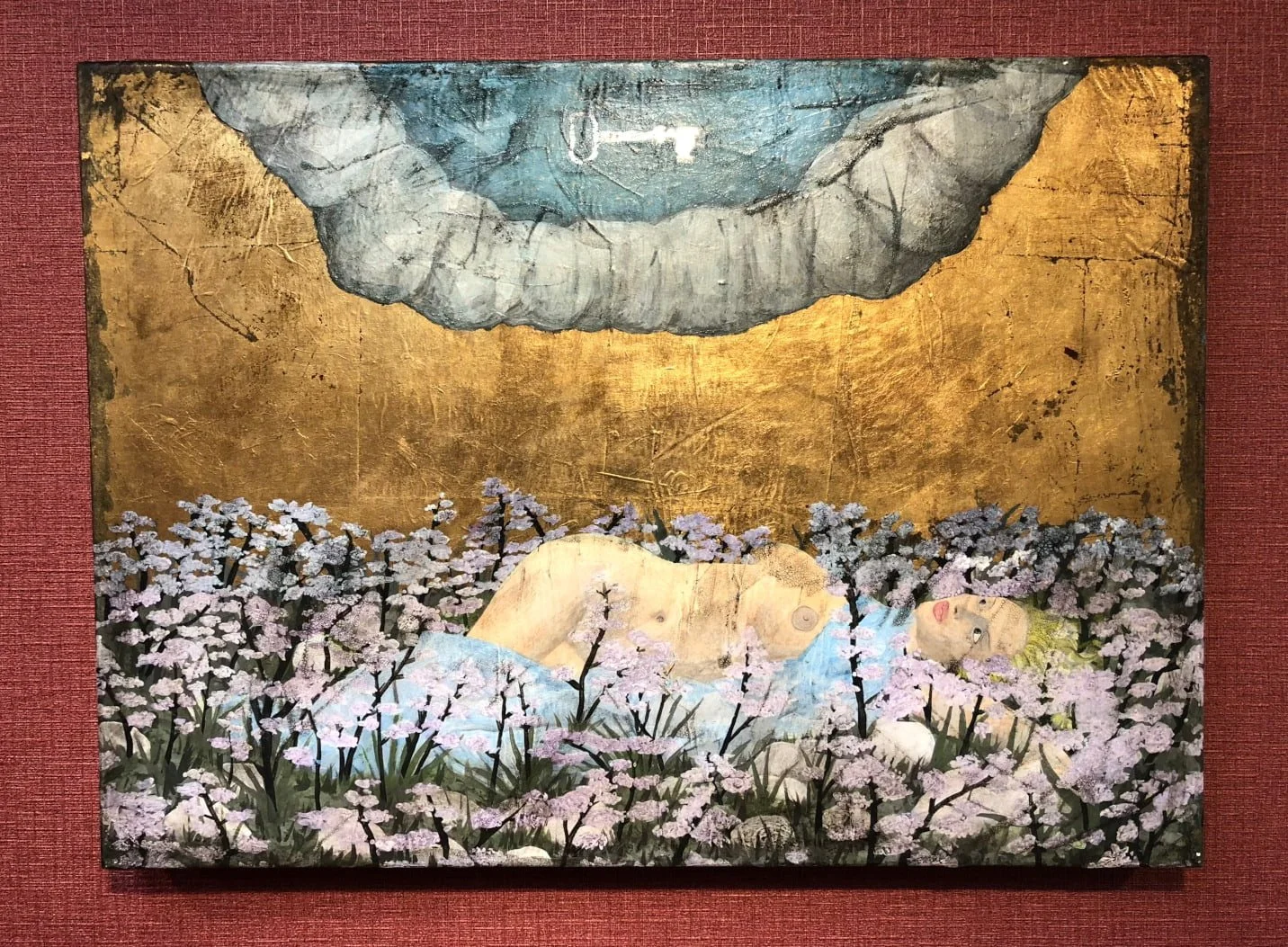
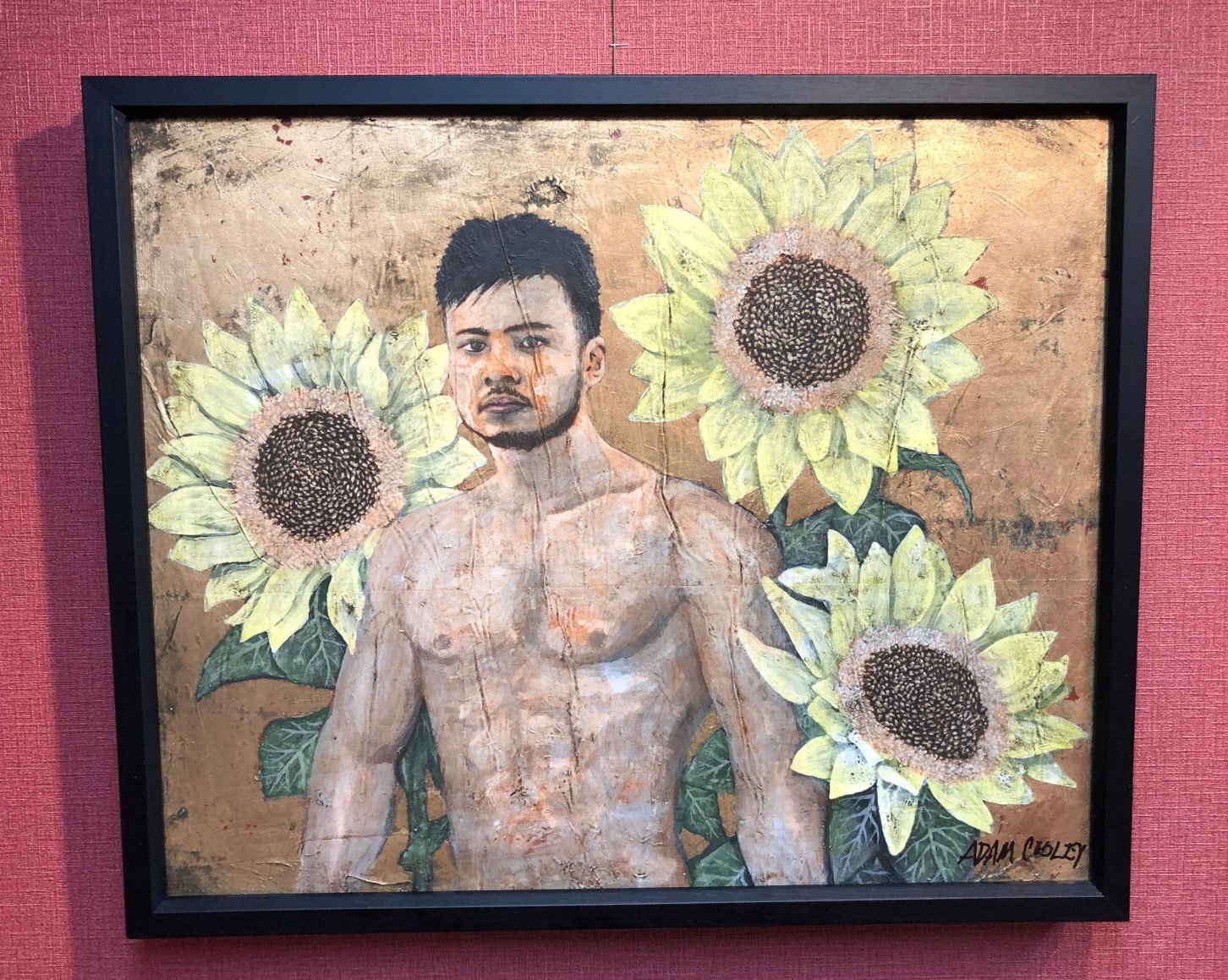
Around this painting the gallery's curator assembled approximately thirty works drawn from across Cooley's practice alongside new pieces made for the occasion, the selection shaped by the atmosphere the anchor painting established. The deep red walls of Gallery NAO gave the room a warmth that drew the works together, the gold grounds and layered surfaces finding a common register in that particular light.