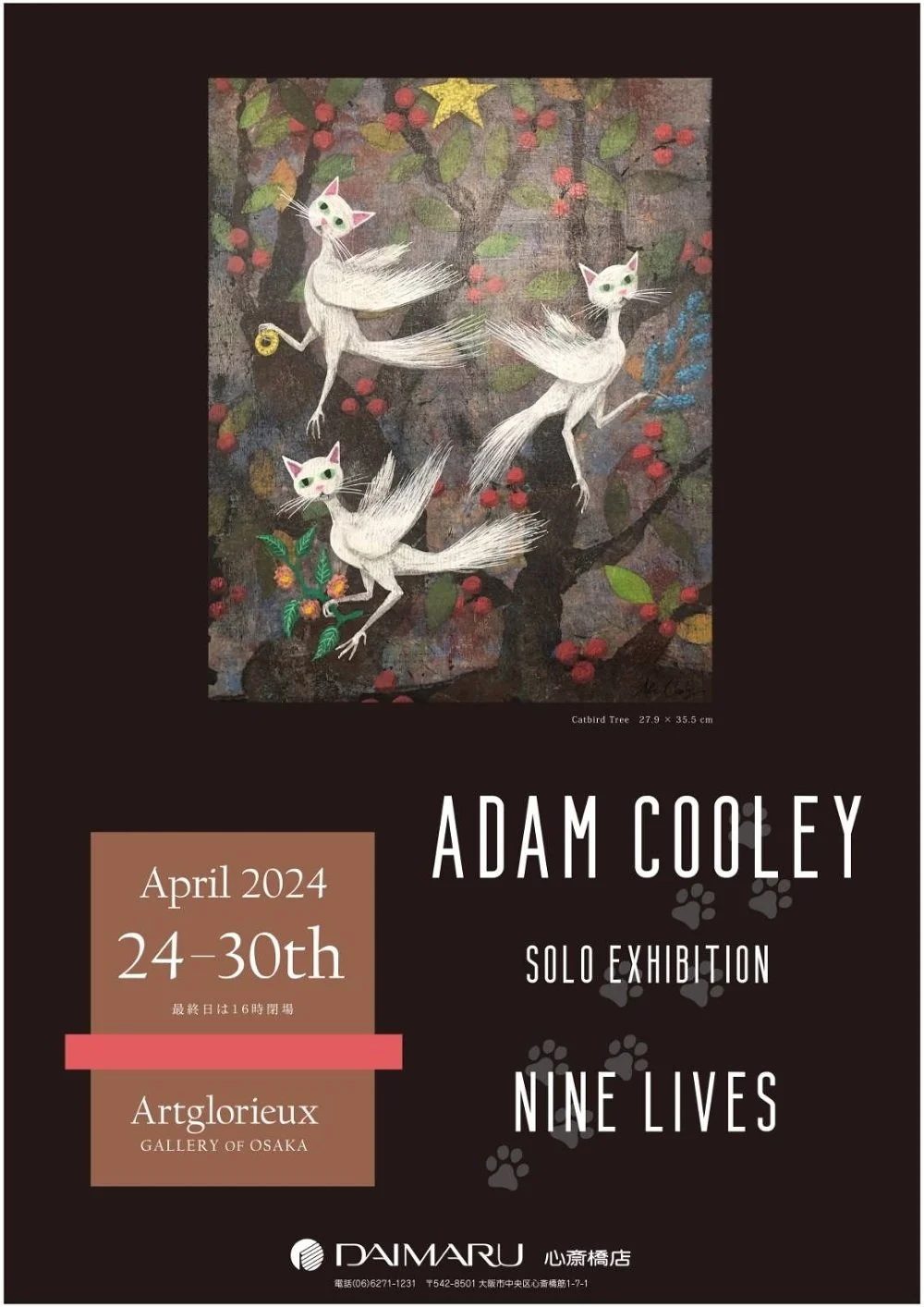
Nine Lives
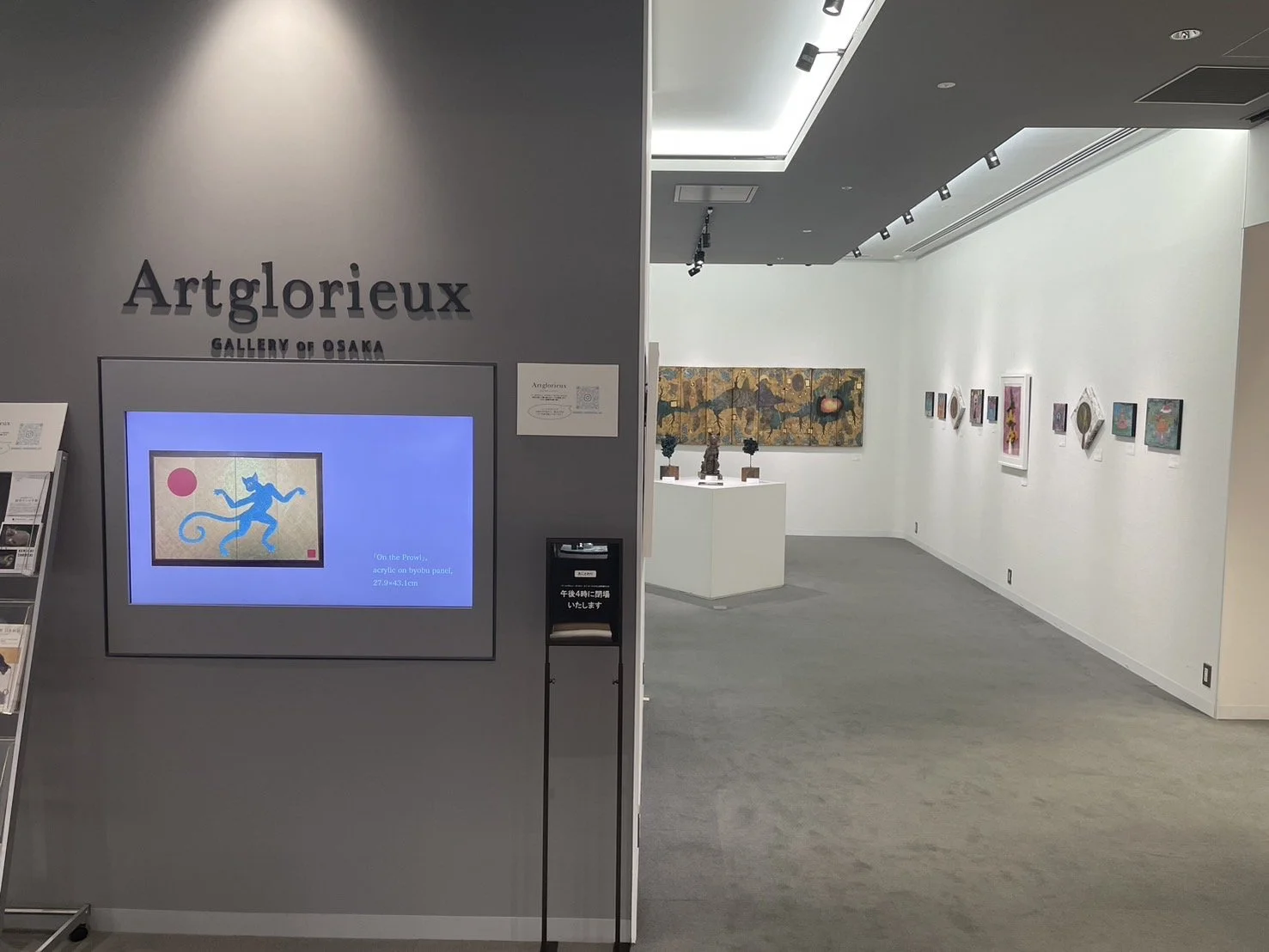
Artglorieux Gallery of Osaka, Daimaru Shinsaibashi
Osaka, Japan
April 24-30, 2024
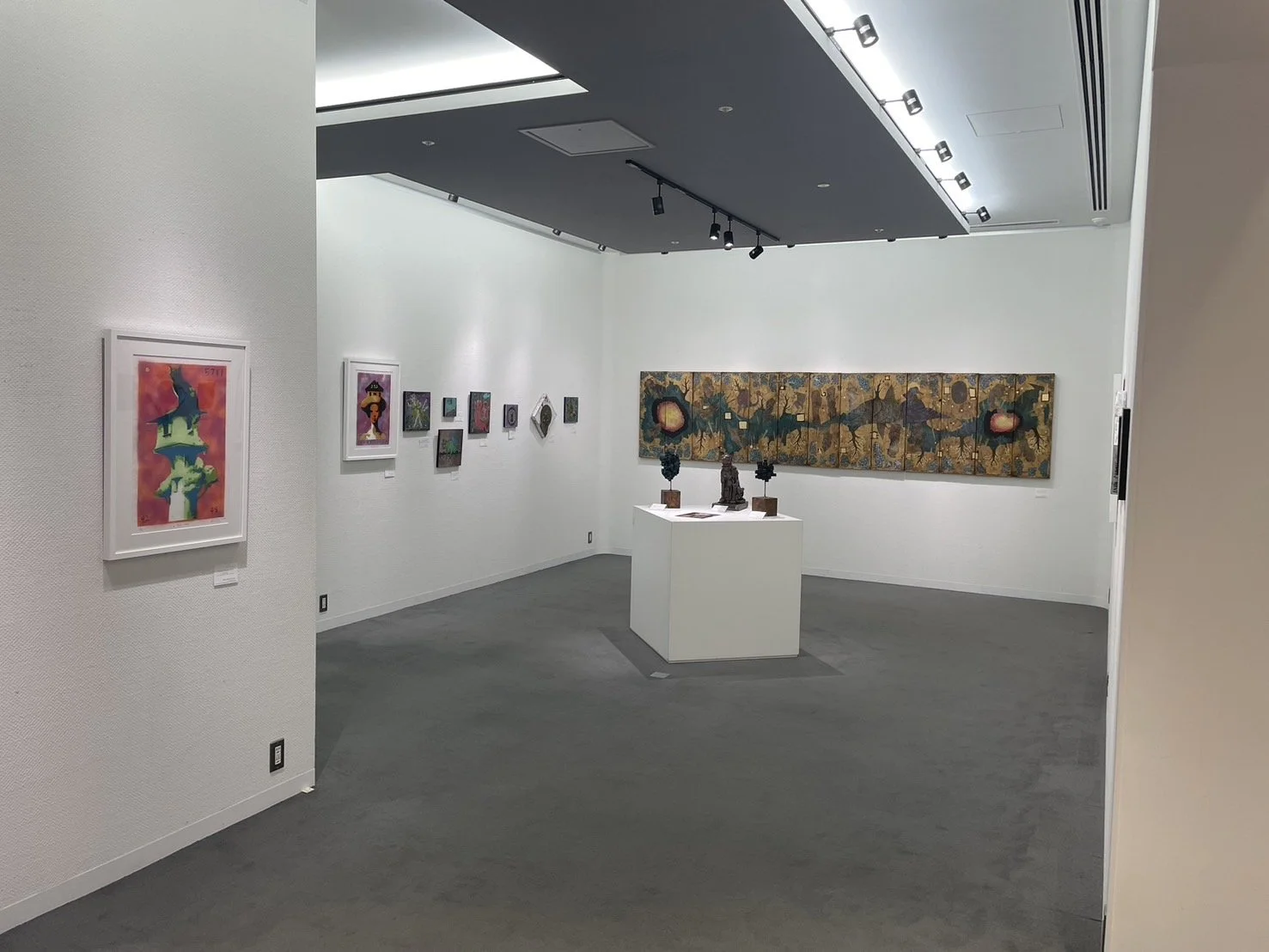
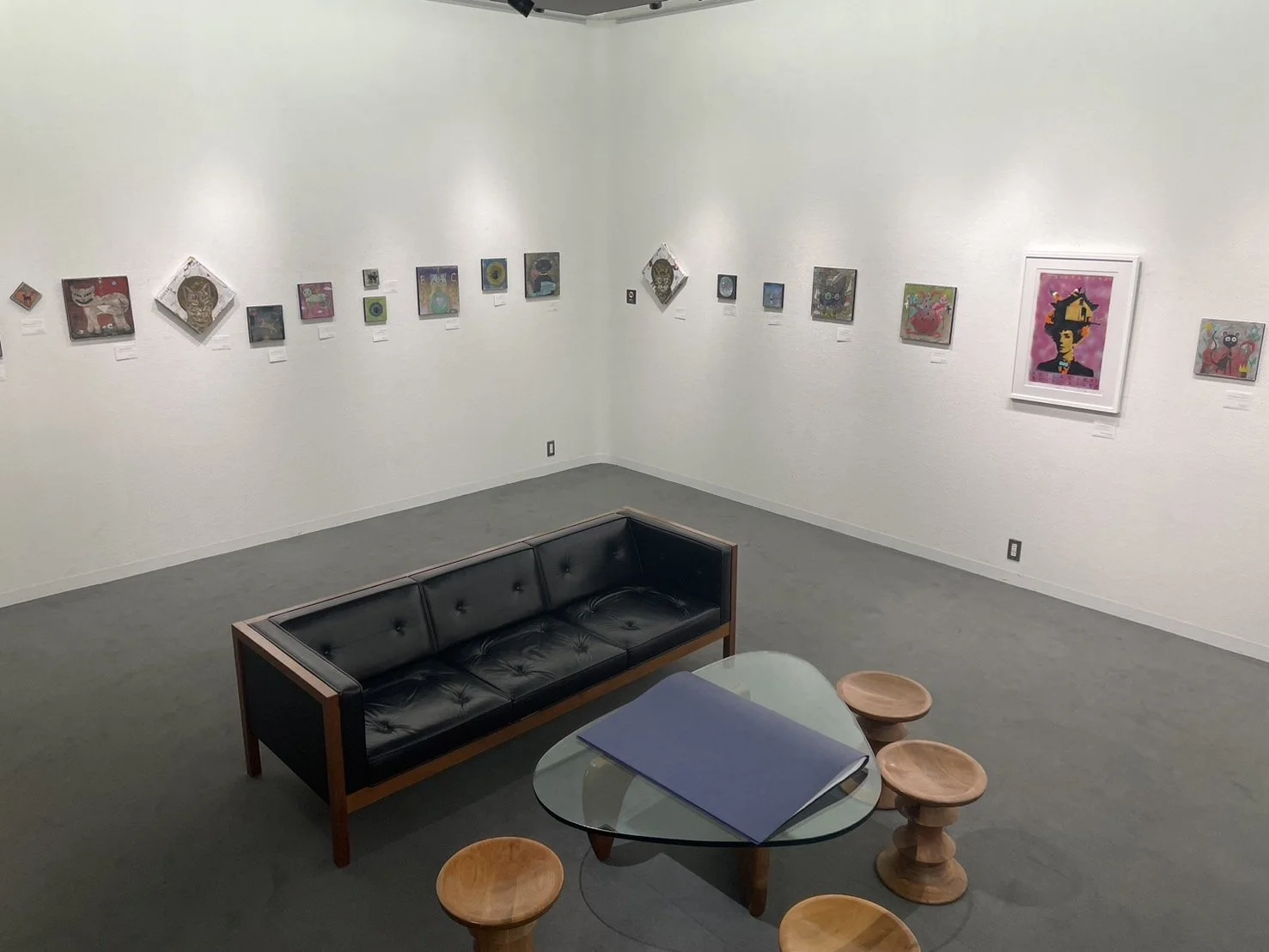
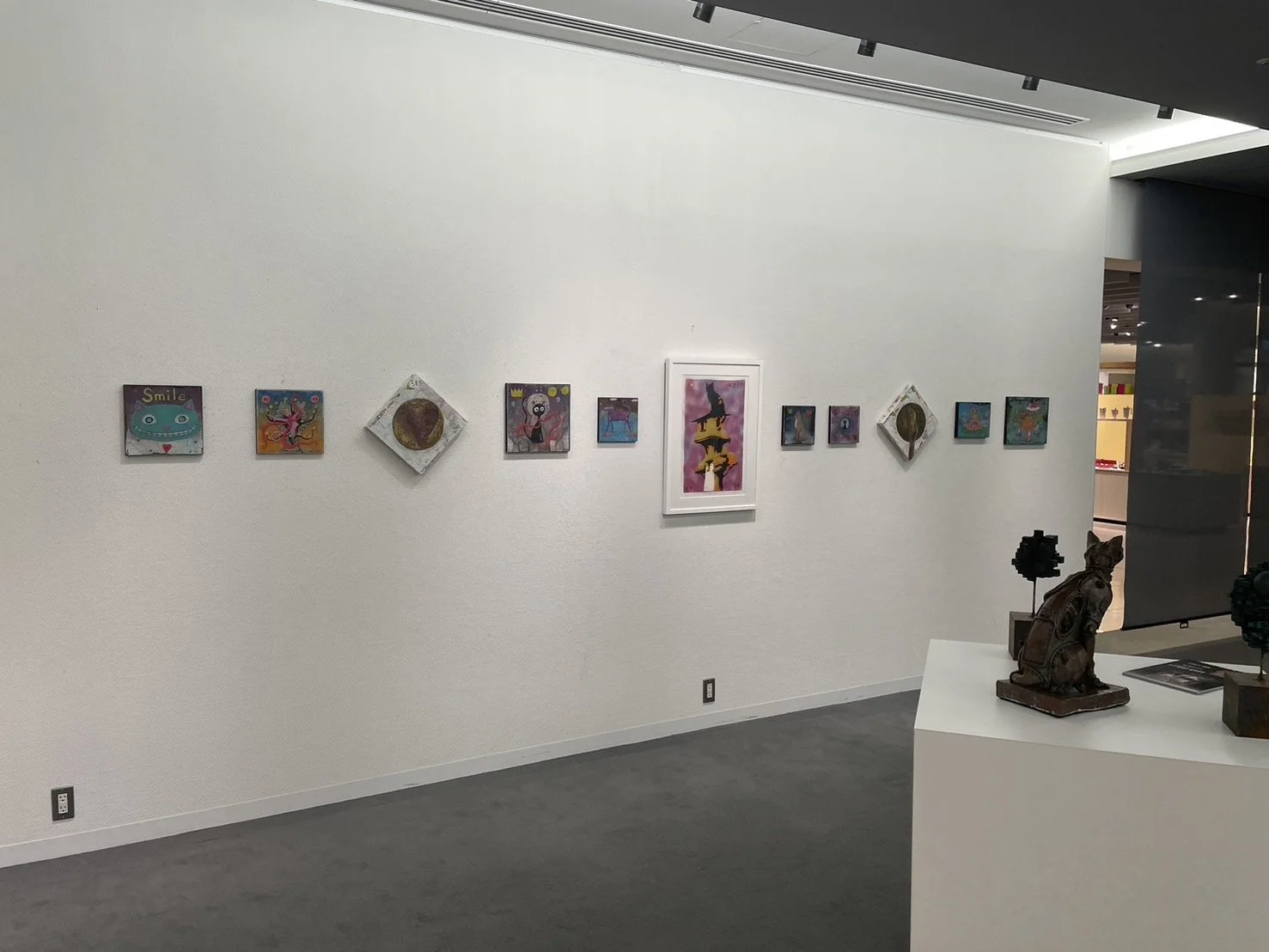
To enter the gallery was to feel immediately observed. From every wall, from every corner, eyes looked back: curious eyes, playful eyes, ancient eyes that belonged to creatures whose relationship with human beings predates recorded history and has never been fully resolved. Approximately one hundred works filled Artglorieux Gallery of Osaka across seven days in April 2024, and the cumulative effect of that many painted cats regarding the viewer from that many directions was something between pleasure and unease, which is precisely the territory the cat has always occupied.
The cat is the most anthropomorphized creature in human culture, more so even than the dog. We read intention into its stillness, personality into its indifference, meaning into its gaze. Every civilization that has lived alongside cats has also made images of them, from the sacred Bastet of ancient Egypt through the supernatural Bakeneko and Nekomata of Japanese folklore to the endlessly reproduced digital cat of contemporary life. The compulsion to depict the cat is as old as image-making itself, and the reason is the one Cooley identifies precisely: we see ourselves in them, whether we intend to or not. Something in the cat's opacity, its capacity to be entirely present and entirely elsewhere at the same moment, mirrors something we recognize in ourselves and cannot quite name.
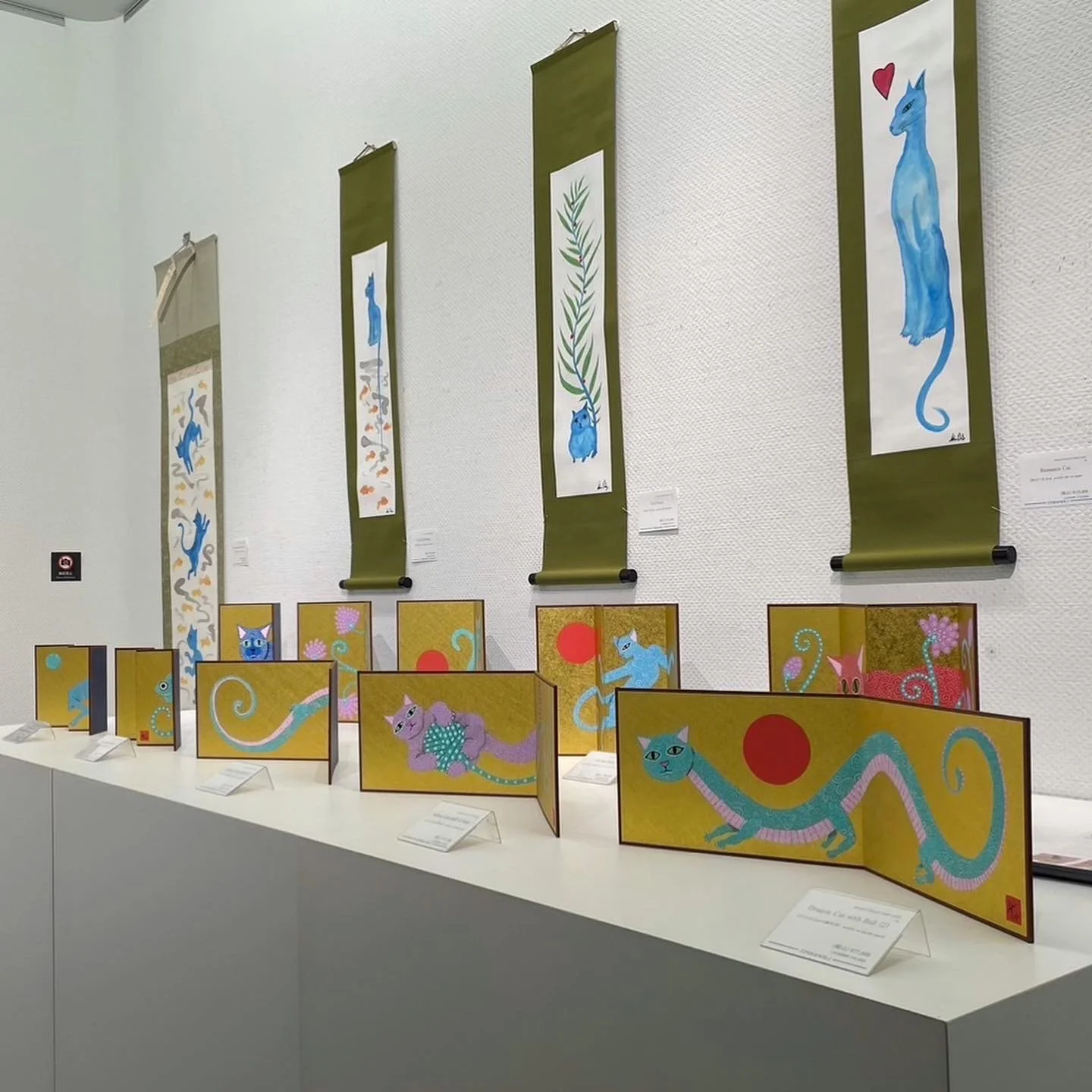
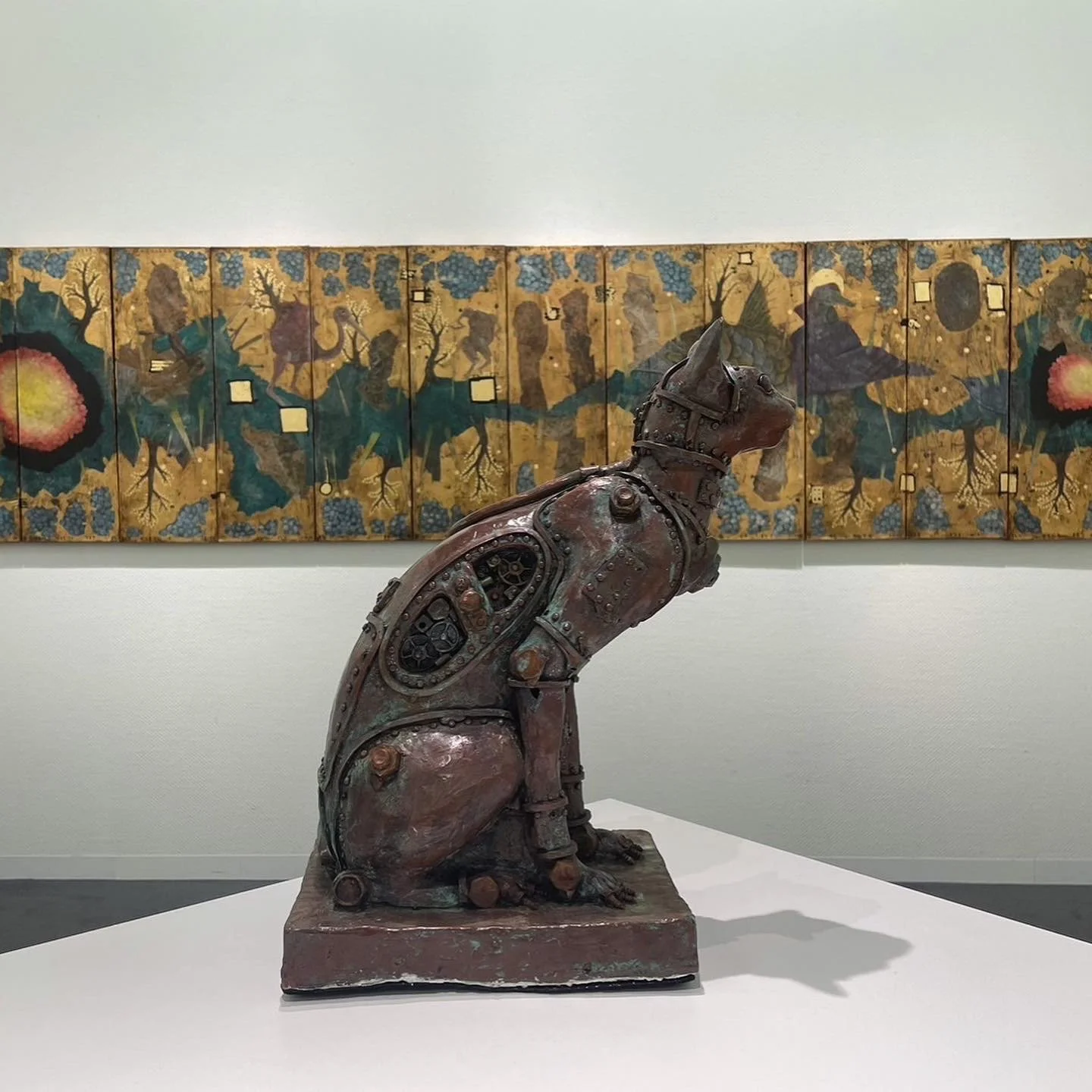
Nine Lives brought these threads together across a body of work that ranged from large gold leaf paintings in the tradition of Japanese byobu screens, their vivid patterned cats placed against burnished grounds with the formal authority of icons, to the layered atmospheric panel works of the Monstrous Dreams series, where the Bakeneko and Nekomata and Maneki Neko occupy the same dark and ambiguous territory as the rest of that series' supernatural inhabitants. Sculptures occupied the plinths. Kakejiku scrolls hung among the paintings. Works in spray paint on archival paper brought a different visual register into the room alongside the acrylic and wax panels. The exhibition moved across scale and medium and mood without losing its coherence, because the coherence was never formal: it was the cat itself, watching from every surface, the subject that held everything together.
There was, as Cooley has noted, something that ran through the exhibition like a puzzle, a story that assembled itself differently depending on where you stood and which pair of eyes you met first. That quality, the sense of a meaning that shifts rather than resolves, belongs to the subject as much as to the work. The cat has never offered a final interpretation, and Nine Lives was wise enough not to offer one either.