Flower of Love
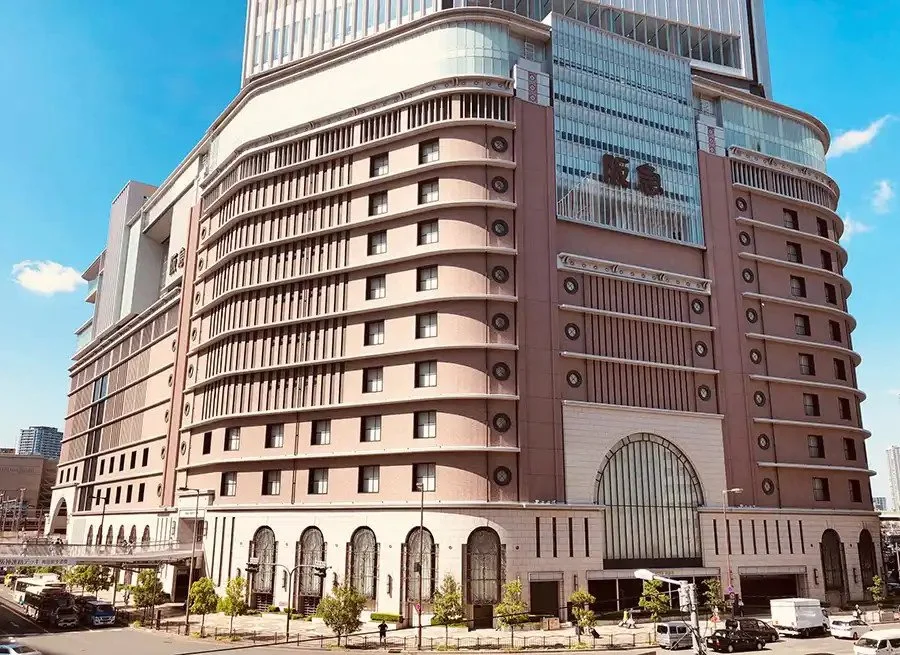
Hankyu Department Store, Umeda
Osaka, Japan
December 5-11, 2018
Love, in the Japanese philosophical tradition, is not a feeling reserved exclusively for other people. The concept of kami, the animating spirit that inheres in all things, suggests a world in which the boundaries between the human and the nonhuman are more permeable than Western thought typically allows. A flower possesses something. An animal possesses something. Even an object, sufficiently attended to, possesses something. Flower of Love took that belief as its foundation and followed it as far as it would go.
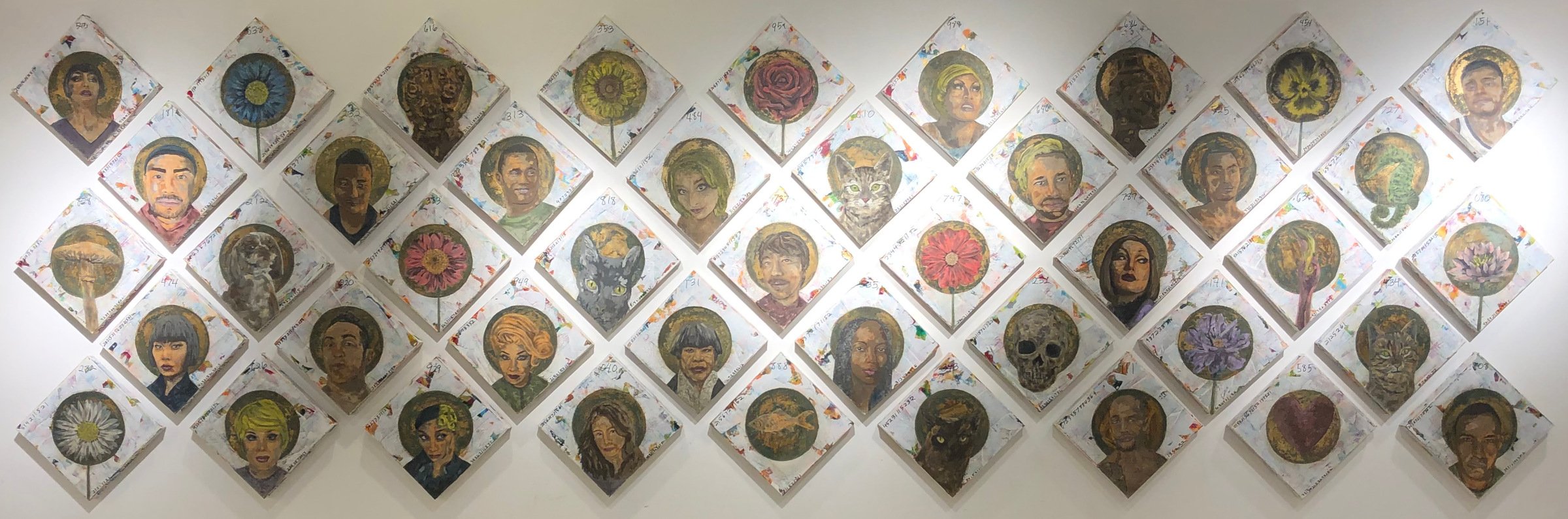
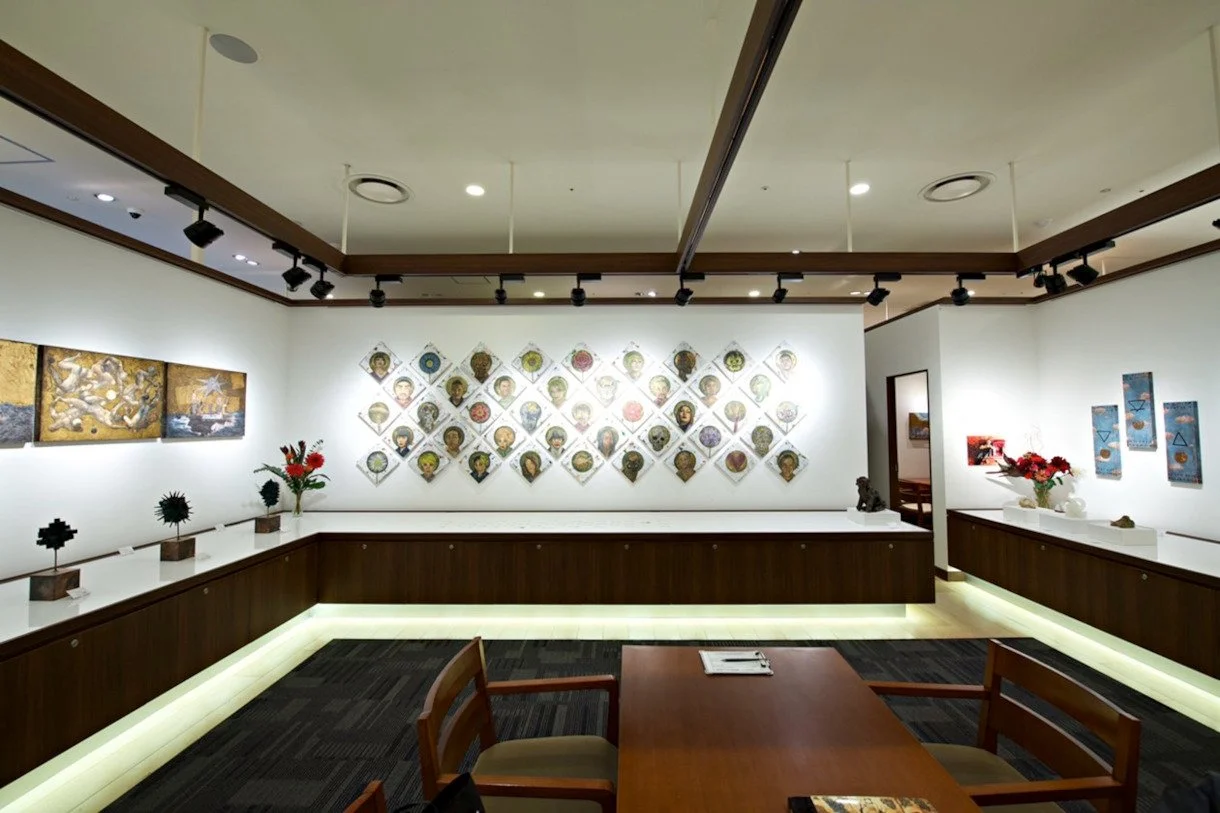
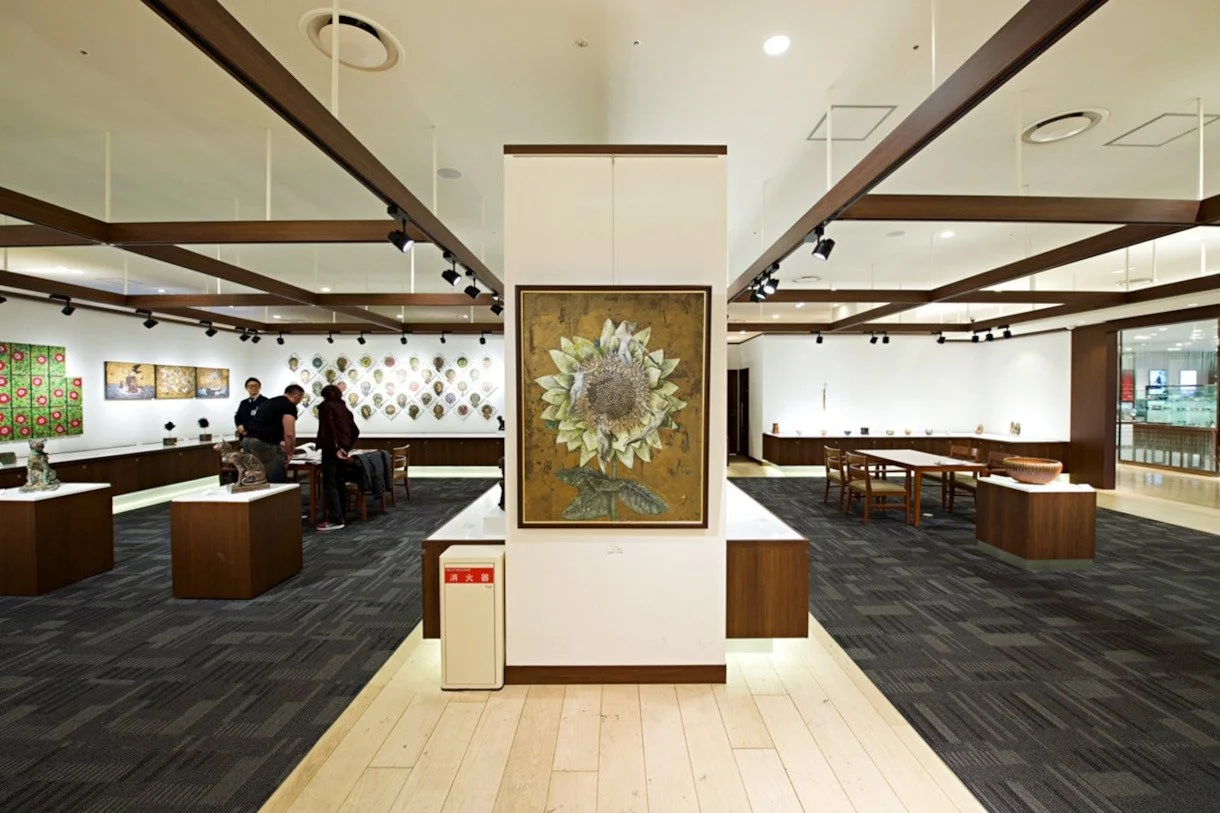
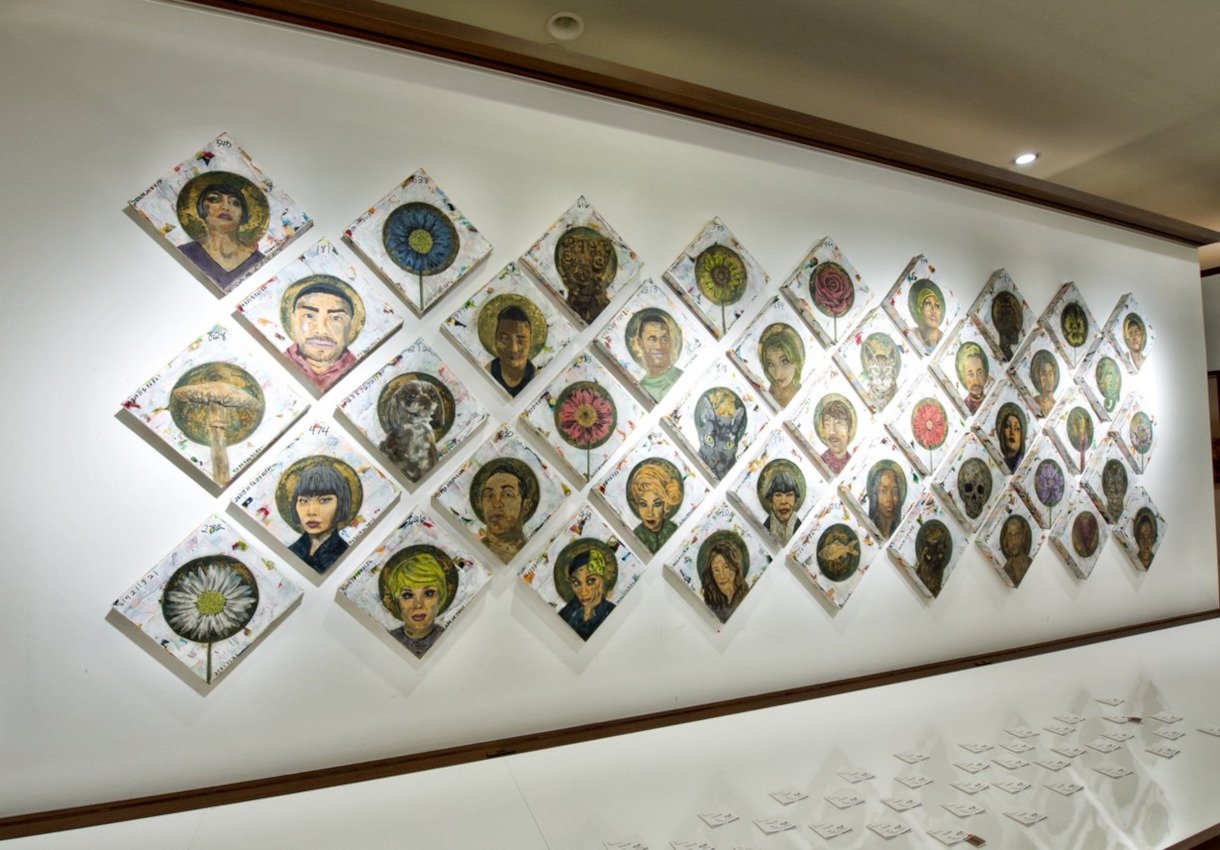
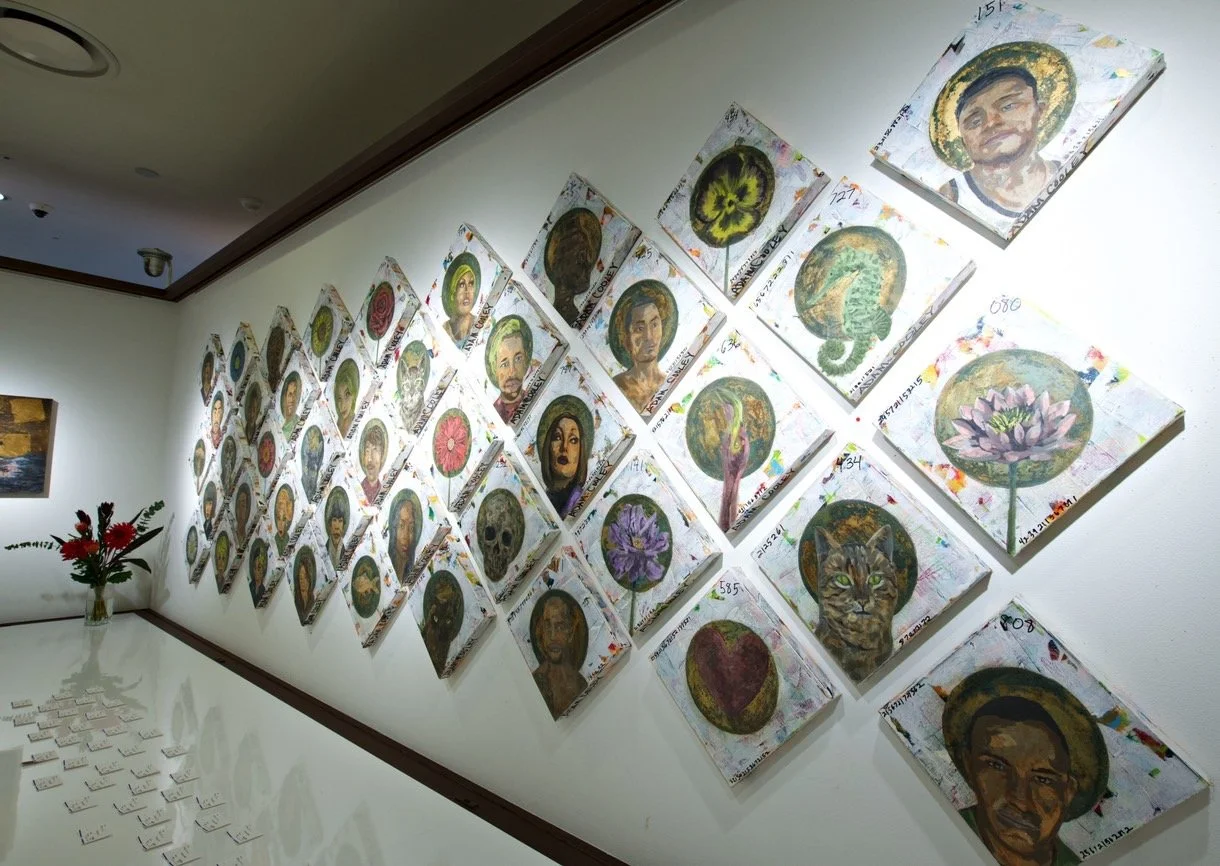
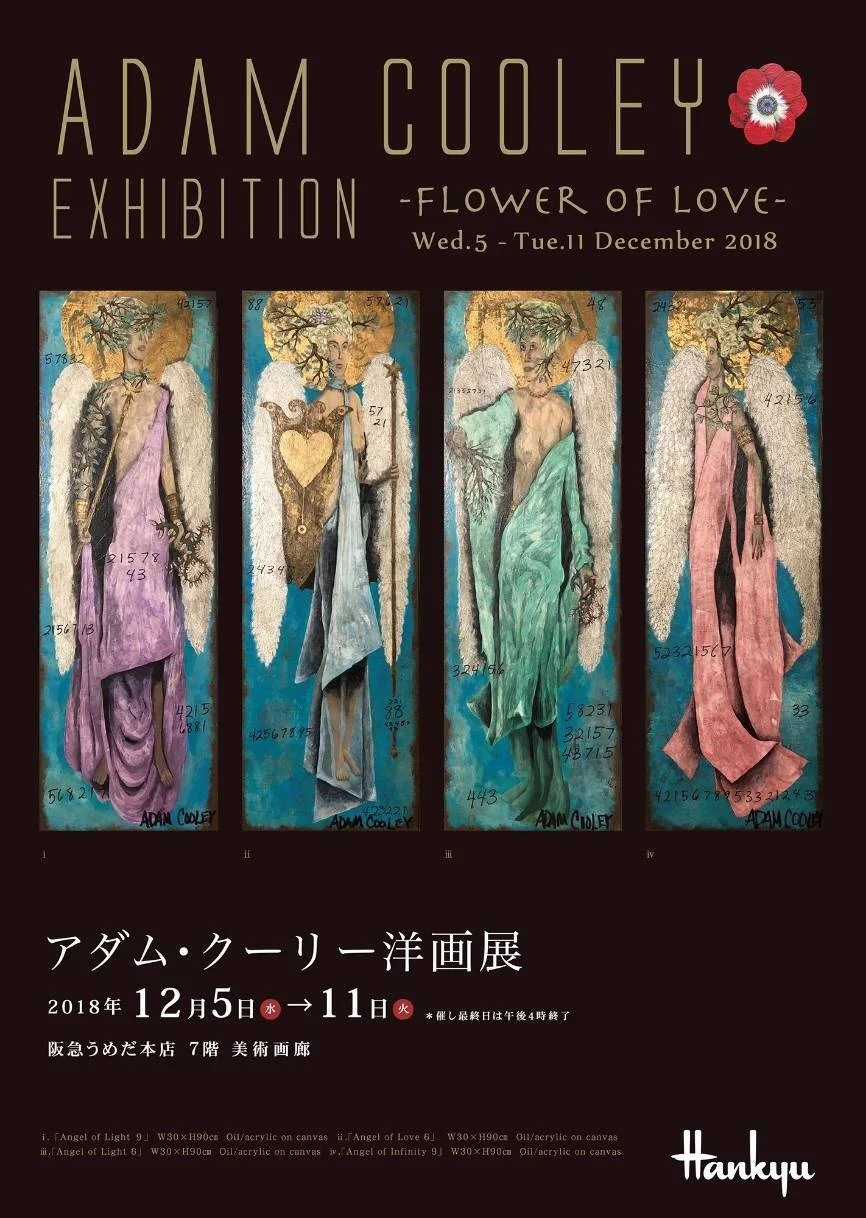
The exhibition was immense in both scale and ambition. Close to 170 works filled the seventh floor gallery of Hankyu Umeda: paintings, sculptures, and two major installations that gave the show its defining visual logic. The eight large angel figures, each approximately 90 centimetres tall, robed in colours ranging from soft rose to deep teal, their gold leaf halos burnished and their surfaces alive with Cooley's characteristic numbers, formed one pole of the exhibition. The Flower of Love portrait installation, a large diamond-grid arrangement of individual panels covering an entire wall, formed the other.
The portrait panels are the exhibition's conceptual heart. Each pairs a face with a flower or symbolic element, painted on white speckled grounds with numbers moving through the composition. The faces are people Cooley knows: friends, acquaintances, figures from his life in Japan. But the series extends the definition of portrait deliberately and without apology. Flowers appear as portraits. Animals and pets appear as portraits. And among the human faces is a portrait of Erica, the android created by roboticist Hiroshi Ishiguro of Osaka University, included after Cooley entered into correspondence with Ishiguro and his team. Several transgender individuals are among the portraits as well, an extension of the same impulse toward the full range of what a person can be.
What unifies all of these subjects, human and animal and botanical and artificial, is the approach Cooley brought to each one: not how the subject appears to the world, but how they might see themselves in a mirror, the view from inside rather than from without. Applied to a friend, this produces a portrait of unusual intimacy. Applied to Erica, it produces something that neither portraiture nor philosophy had quite been asked to do before.
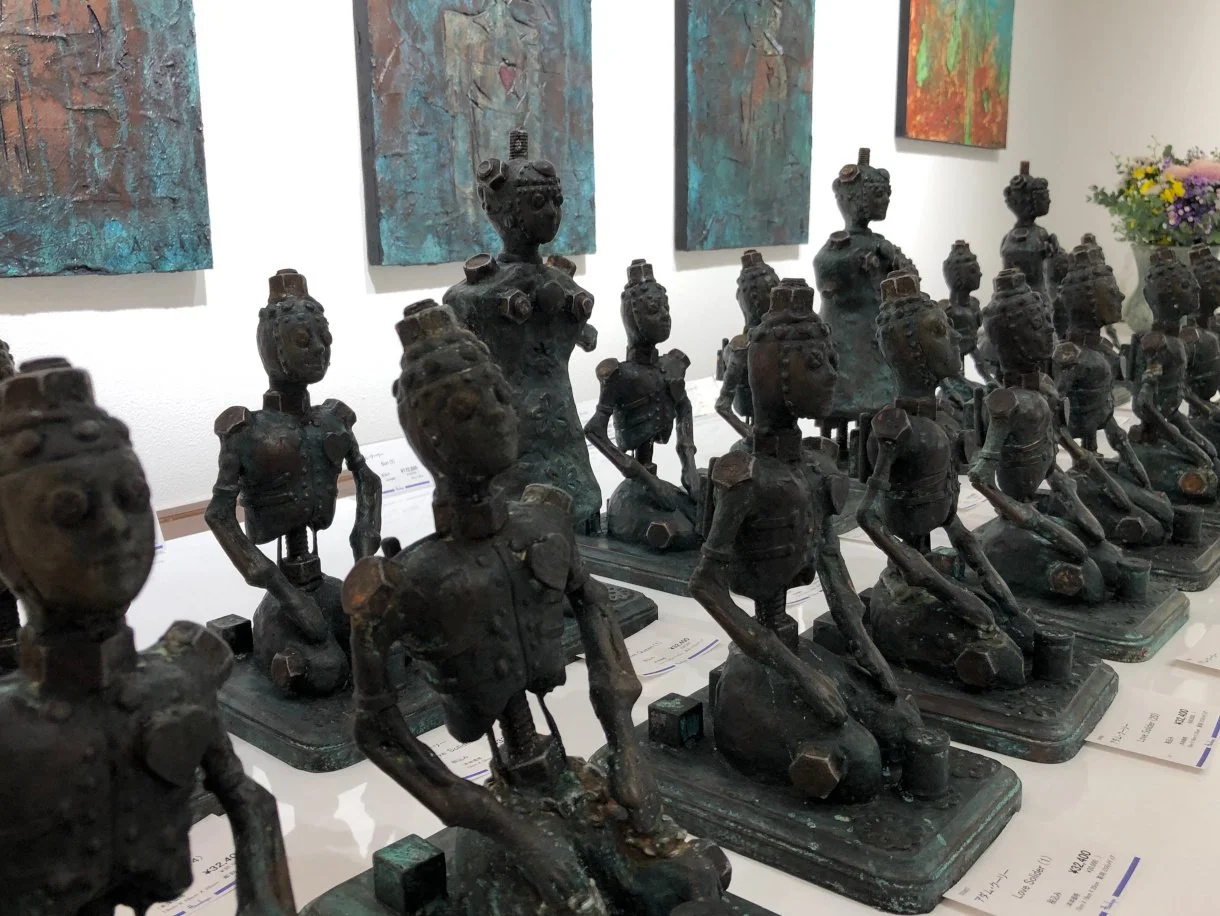
The Love Soldiers, a procession of patinated bronze figures lined along a plinth in the gallery, brought the sculptural dimension of the show into direct conversation with the paintings. Dark and verdigris-covered, formally ceremonial yet visually strange, they occupied the room with the gravity of objects that belong to a tradition slightly different from any tradition that actually exists. The red poppy grid paintings brought vivid botanical colour into a space that was already operating across multiple scales and materials, the whole constituting the most comprehensive single presentation of Cooley's practice to that point in his career.
The exhibition drew coverage in Gallery magazine, one of Japan's most respected art publications, and works remained on display across multiple floors of the Hankyu building for months after the show formally closed. It was the kind of exhibition that a building absorbs rather than simply hosts.