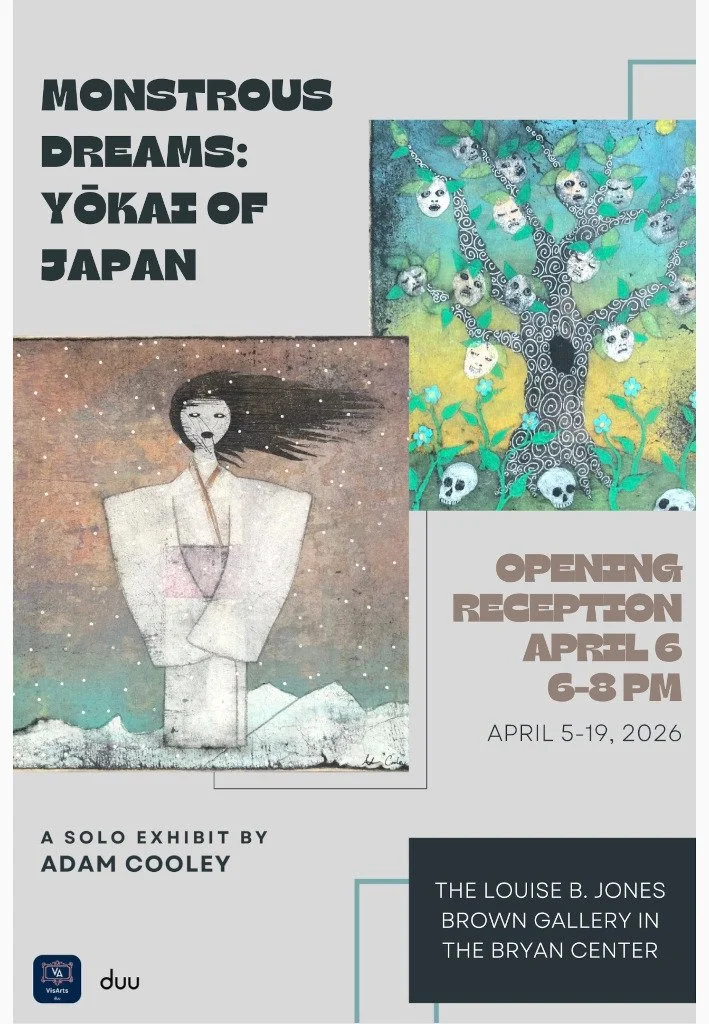
Monstrous Dreams: Yōkai of Japan
Louise B. Jones Brown Gallery, Bryan Center, Duke University
Durham, North Carolina
April 5-19, 2026
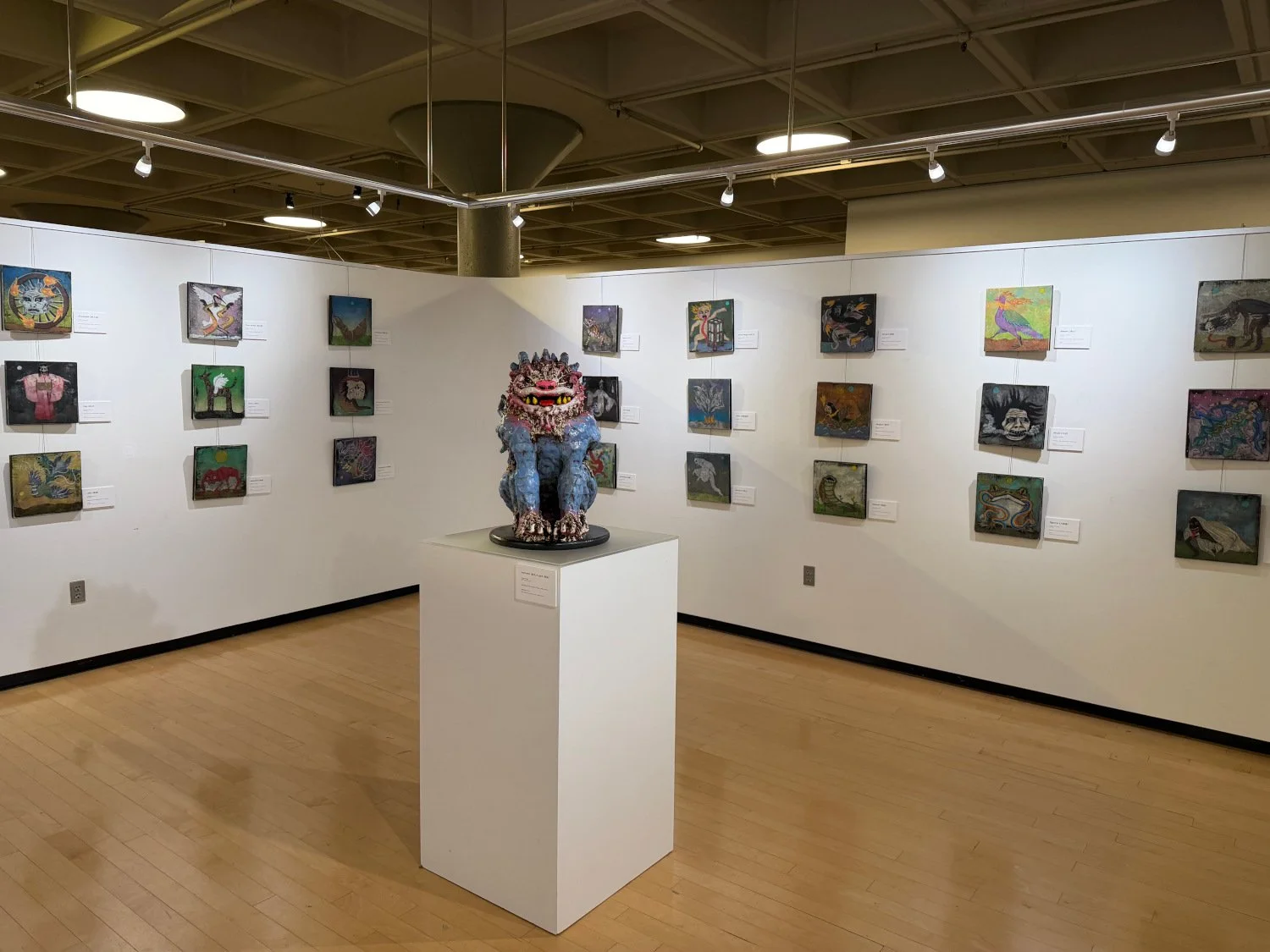
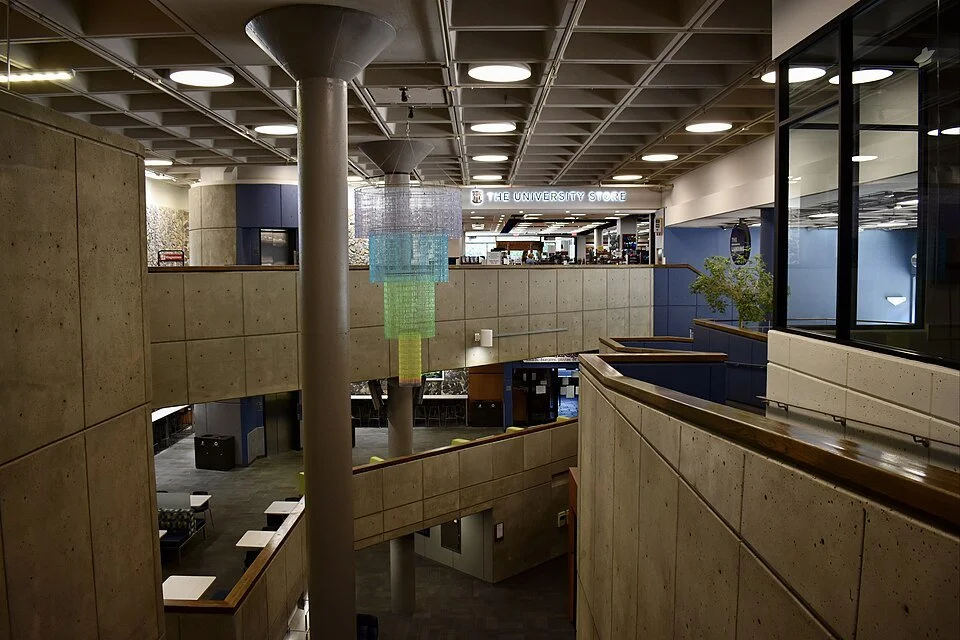
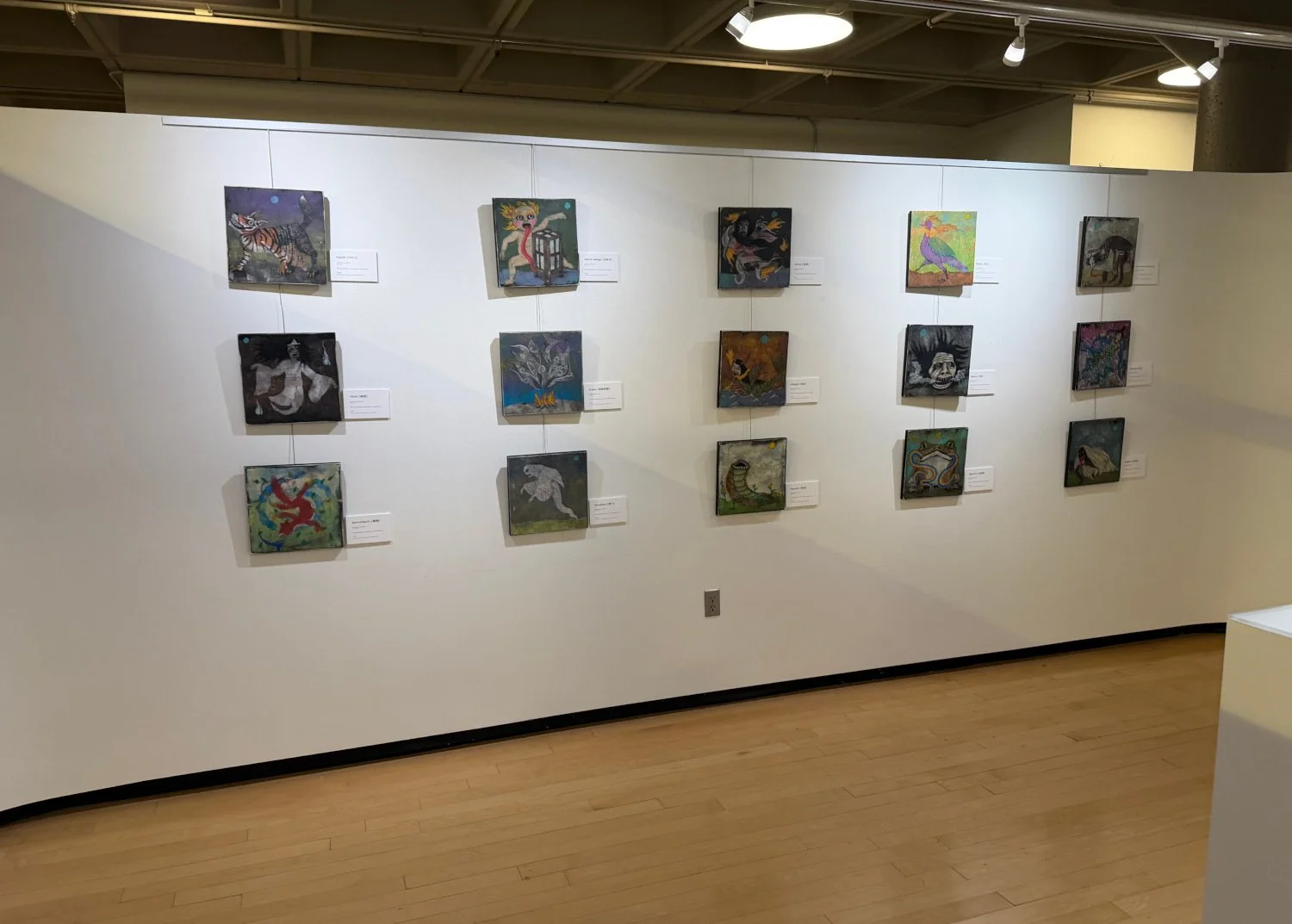
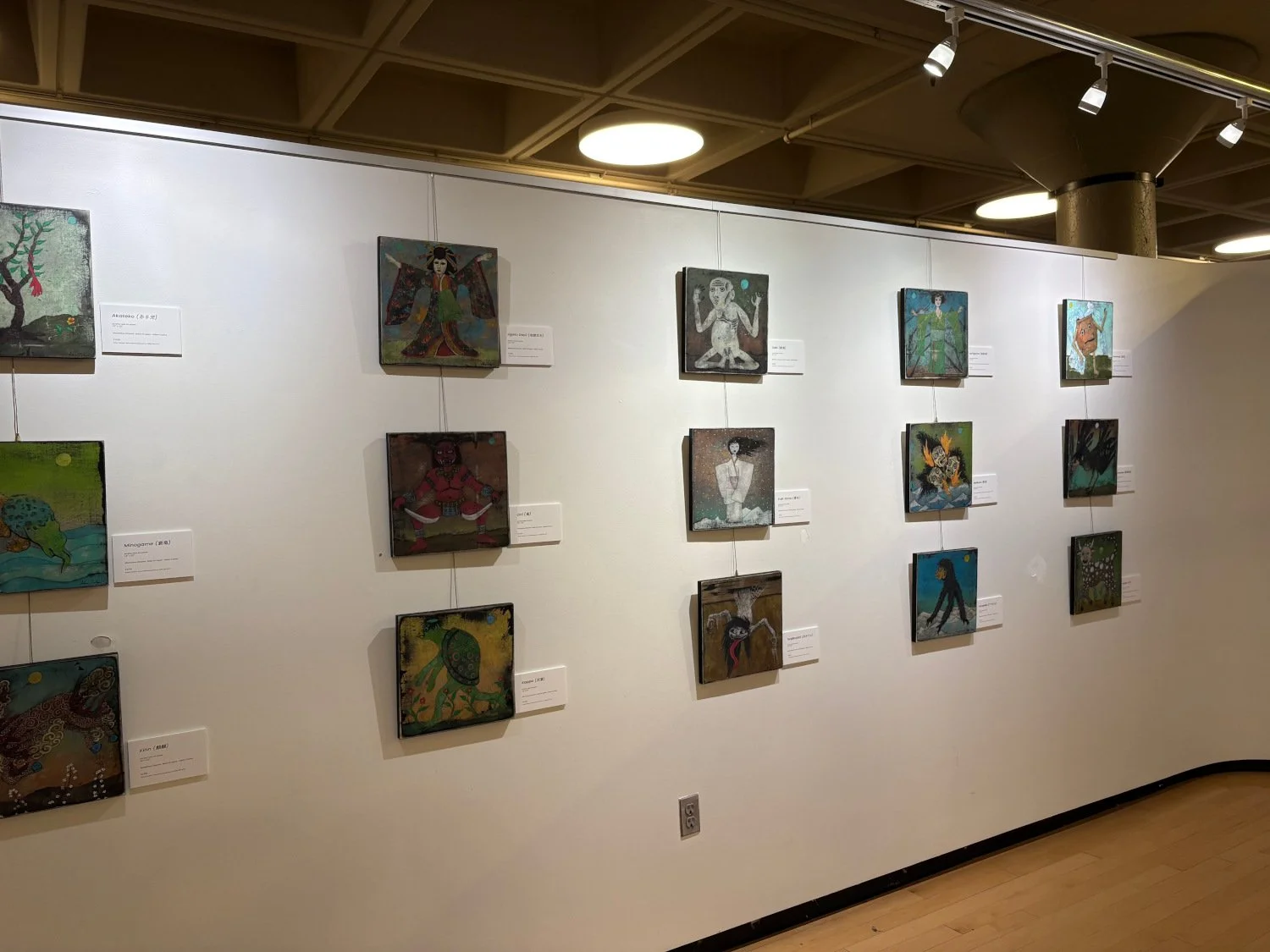
The Louise B. Jones Brown Gallery sits within the Bryan Center at Duke University, a building whose architecture carries the particular confidence of a campus that has thought carefully about the relationship between its spaces and the people who move through them. The gallery itself has curved walls that give it a quality unlike the standard rectilinear white cube, a room that invites movement, that draws visitors around its perimeter and back toward its center, that makes the act of looking at work an act of physical navigation as much as visual attention. For an exhibition about beings that inhabit boundaries and resist fixed positions, it was the right room entirely.
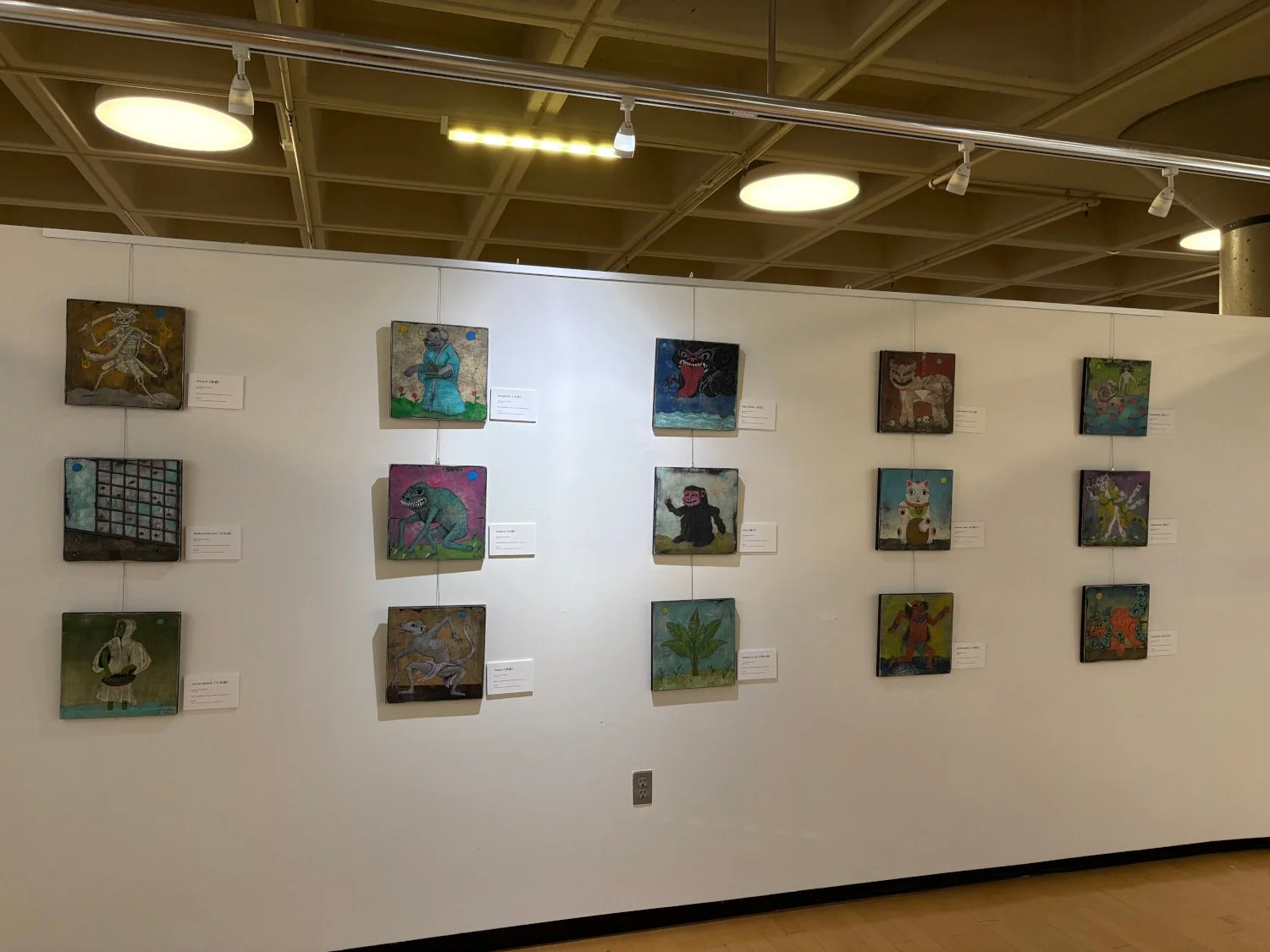
Over a hundred paintings from a body of work that had grown to more than two hundred came to Duke in April 2026, distributed across the curved and straight walls of the gallery so that each piece occupied its own territory without crowding its neighbours. The Kitsune, Japan's shape-shifting fox spirit, stood in its red robes against a ground of deep blue and yellow. The Tengu looked out from its panel with the self-possession of a creature that has inhabited Japanese imagination for over a thousand years. Figures from the widely recognized corners of the yōkai tradition hung alongside beings drawn from its more regional and particular edges, the famous and the obscure given equal weight and equal space, each one rendered in acrylic and wax on panel through Cooley's sustained process of layering and abrasion, the surfaces worked until the images assert themselves with the quality of something genuinely found.
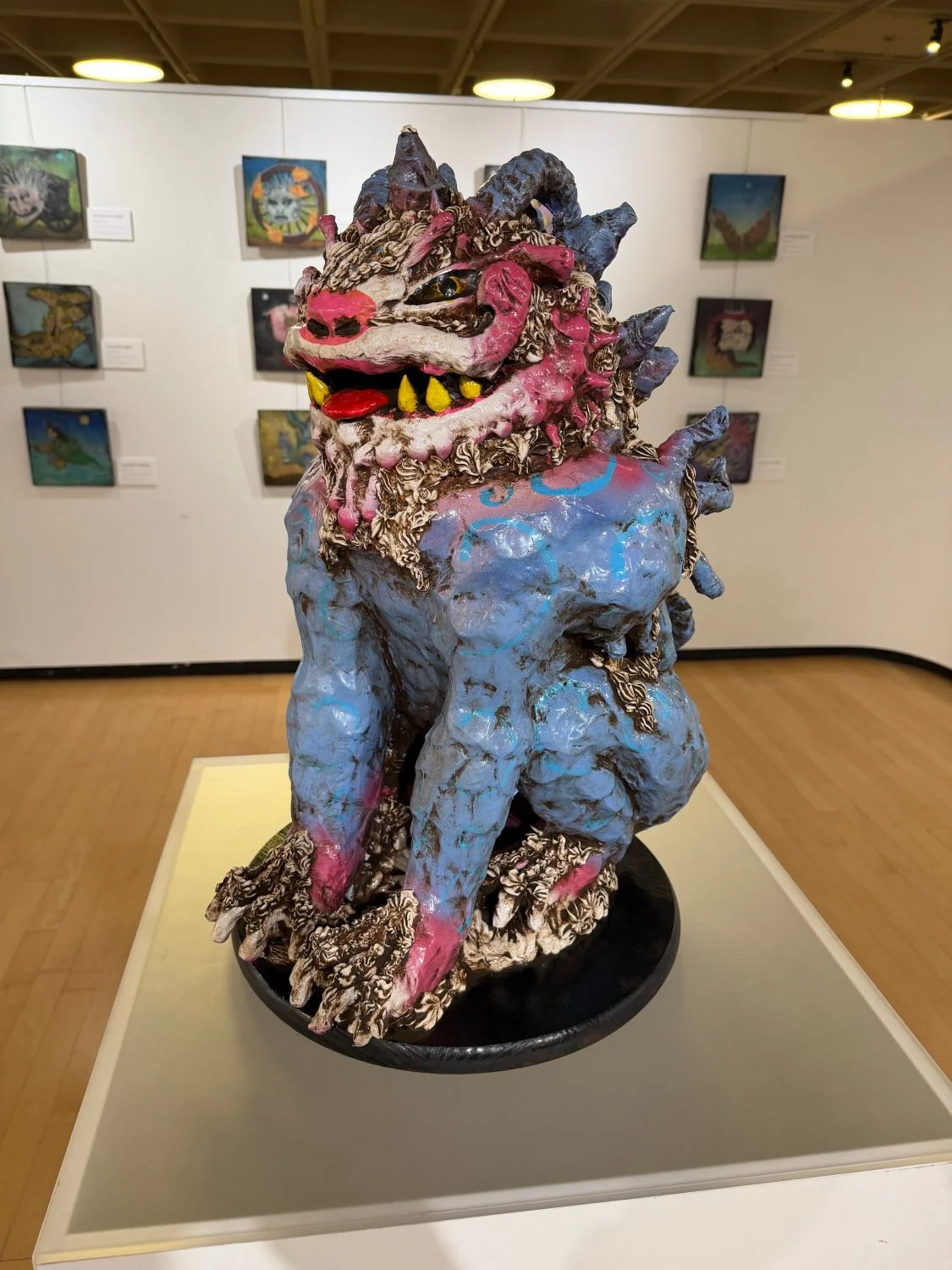
In each of the gallery's rooms stood a Komainu sculpture on a plinth, the guardian lion-dogs of Japanese temple and shrine architecture present throughout the exhibition rather than concentrated in a single point. Their placement gave each room its own anchor, a three-dimensional presence that the paintings on the surrounding walls acknowledged without competing with. Visitors moving through the space encountered the guardians as they moved from room to room, the sculptures marking each threshold in the way that Komainu have always marked thresholds, belonging fully to neither the space they guard nor the world beyond it.
Duke's campus draws to its galleries an audience of genuine curiosity, students and faculty and community members accustomed to encountering work that asks something of them, and the Brown Gallery gave Monstrous Dreams the room and the audience it needed. The beings that have haunted Japanese imagination for centuries found, in this particular space in Durham, North Carolina, viewers willing to stand in front of them and look.