Monsters Re-Visited: The Fantastic Creatures of Japan
Romanian-American University
Bucharest, Romania
October 30, 2024
Yōkai have always been travelers. Their persistence across centuries lies not in remaining fixed but in moving, across regions, across eras, across the cultural contexts that receive and remake them. They are among the most adaptable inhabitants of any mythology, capable of crossing into entirely unfamiliar territory and finding, in each new place they arrive, an audience that recognizes something in them without quite being able to say what.
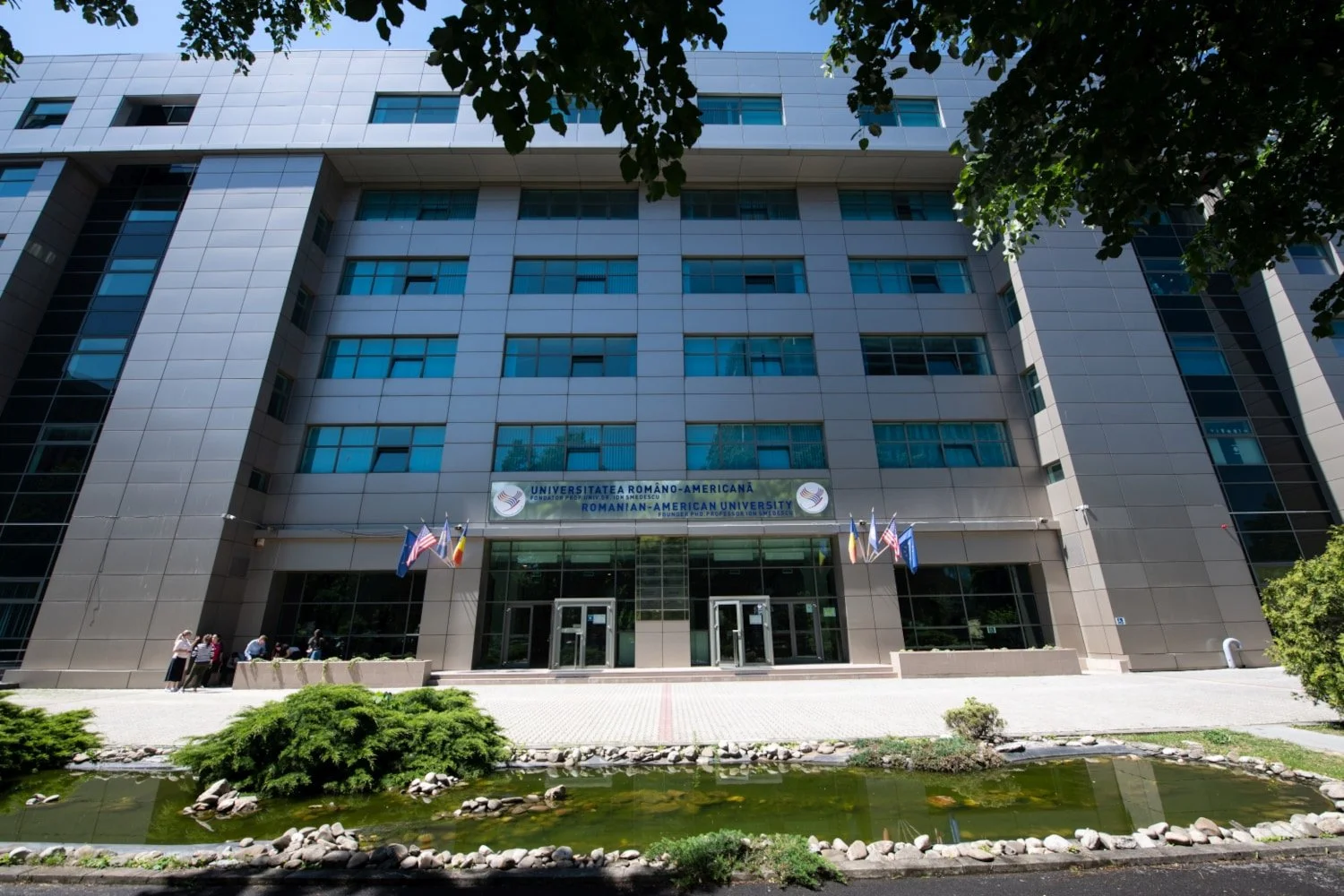
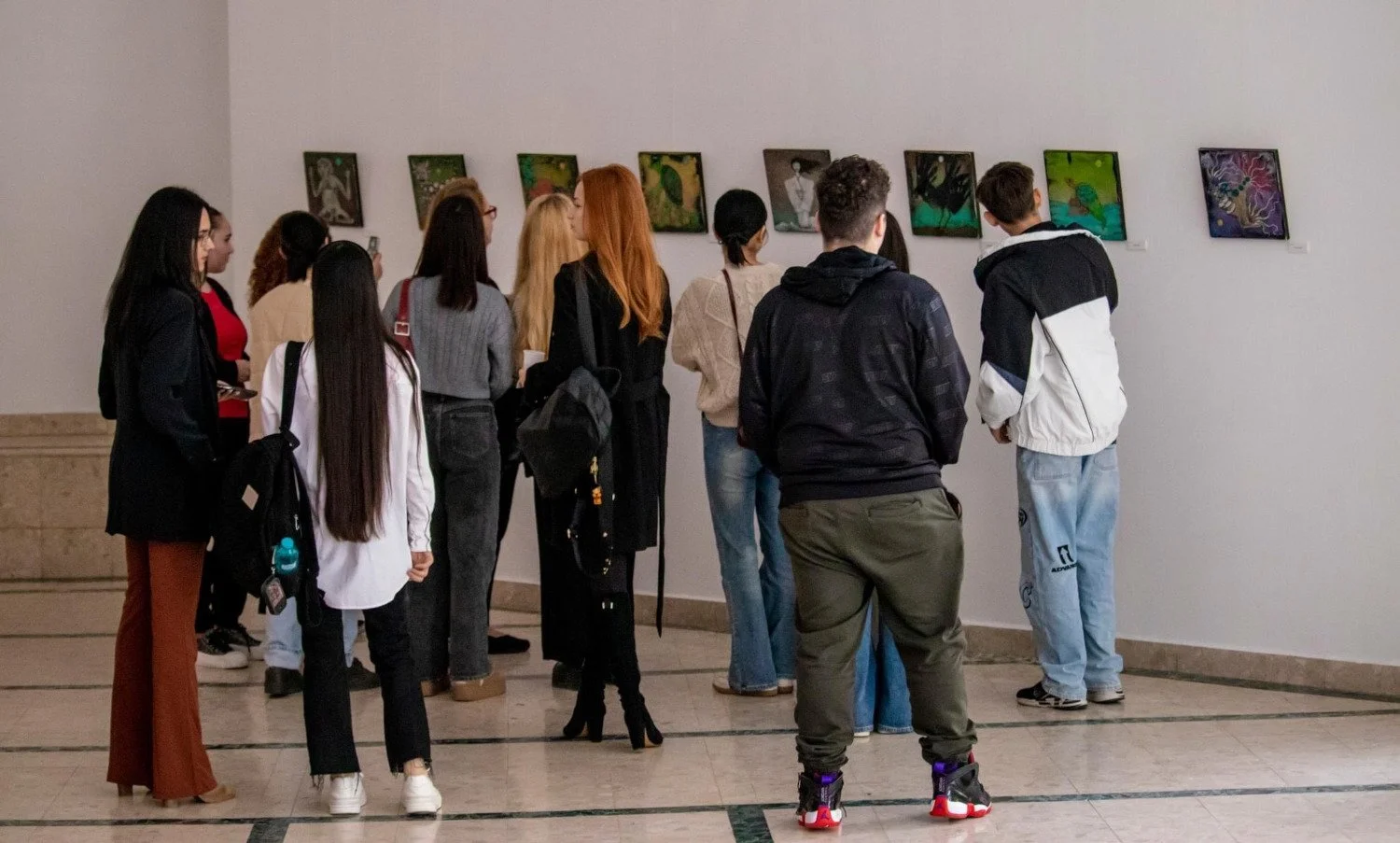
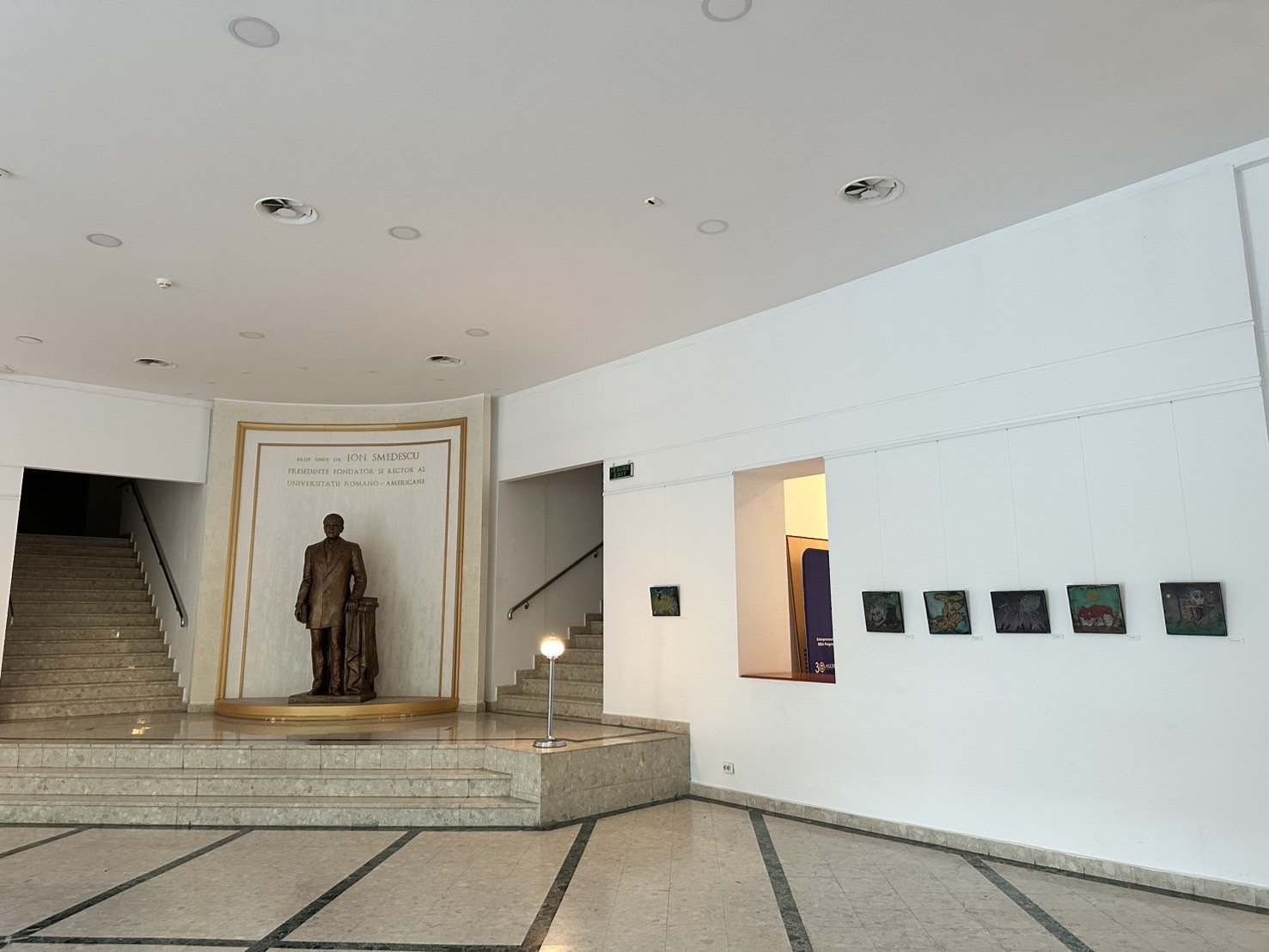
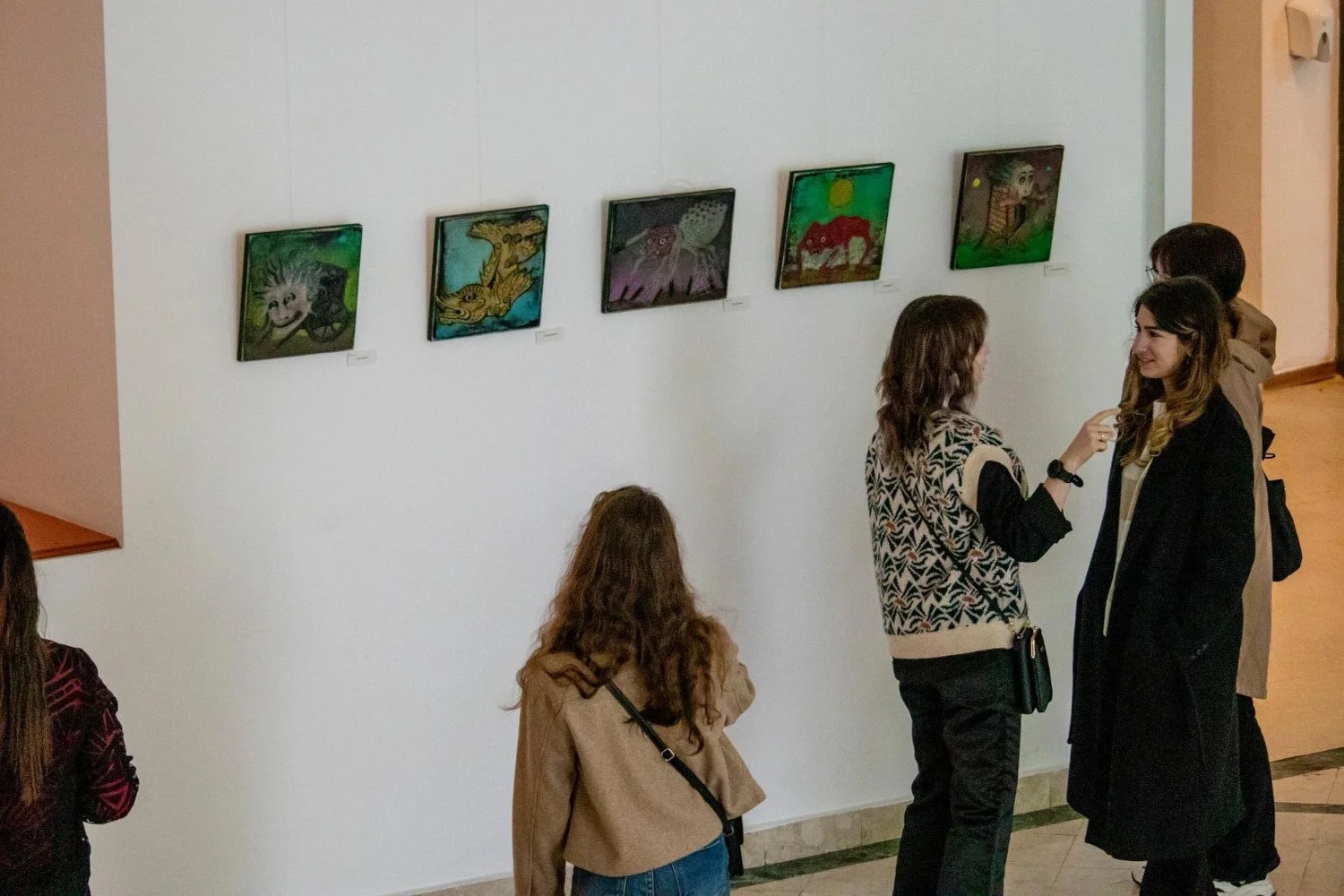
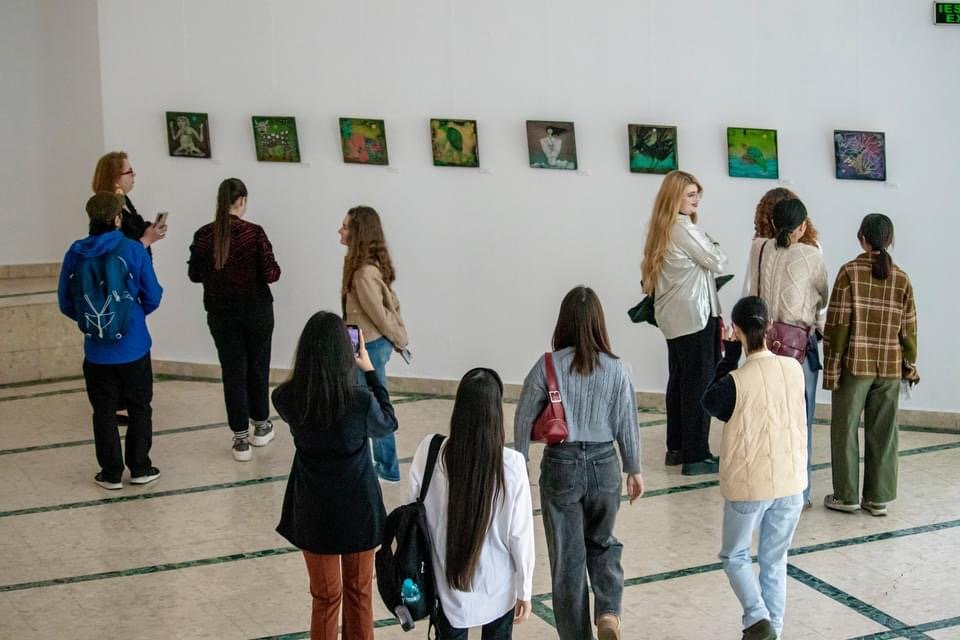
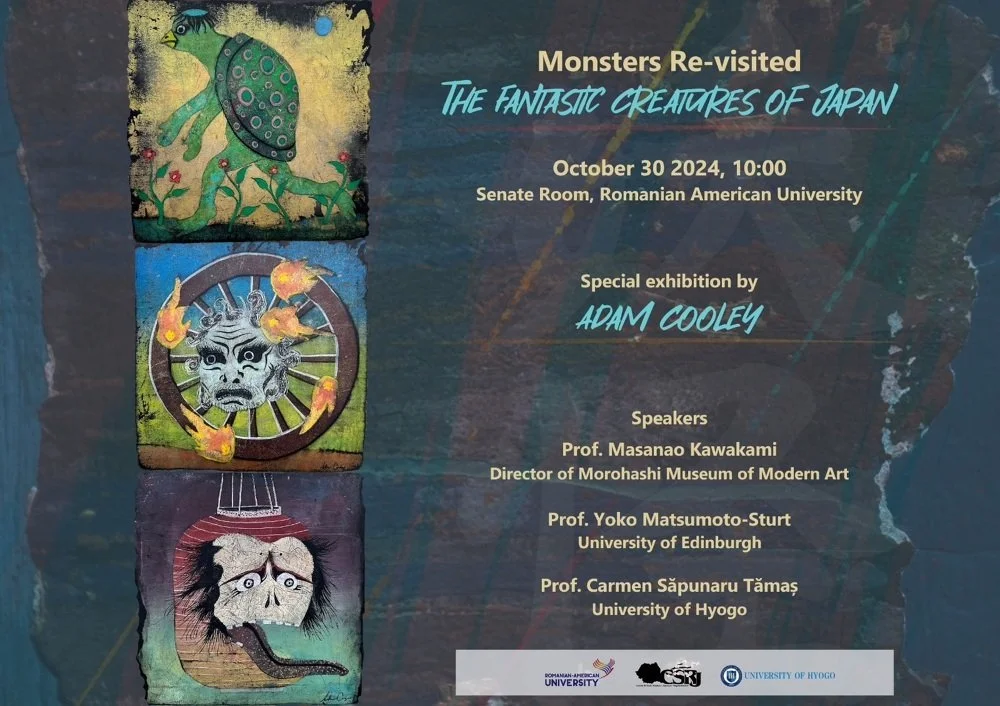
Bucharest is a long way from the mountain forests and coastal villages where Japan's supernatural beings first took form. The Senate Room of the Romanian-American University, where the paintings from Monstrous Dreams were installed on October 30, 2024, belongs to a cultural landscape shaped by entirely different histories, different folklore traditions, different ways of understanding the relationship between the human world and whatever lies beyond its edges. And yet the works arrived there and held the room with the same authority they had brought to every previous setting, the dark-bordered panels and their layered, abraded surfaces carrying their population of beings into a context that had never encountered them before and finding, without effort or explanation, that they were understood.
The presentation was accompanied by a symposium bringing together scholars from institutions across multiple countries, their discussions placing the paintings within wider questions about what yōkai represent in contemporary Japanese society and what their imagery carries when it moves into entirely unfamiliar cultural ground. That those questions could be meaningfully addressed in Bucharest, in a room full of people for whom the tradition was entirely new, says something about the nature of the work itself. Cooley's paintings do not require prior knowledge of Japanese folklore to communicate. They operate at a level that precedes cultural specificity, in the territory of the uncanny and the beautiful and the genuinely strange, where every tradition has its own inhabitants and where the creatures of one mythology find their counterparts in another without needing to be introduced.
For an audience encountering yōkai for the first time, the paintings offered both introduction and interpretation simultaneously, the view from inside a tradition and outside it at once, held together in a single image by an artist whose position between cultures has always been the condition rather than the subject of the work.